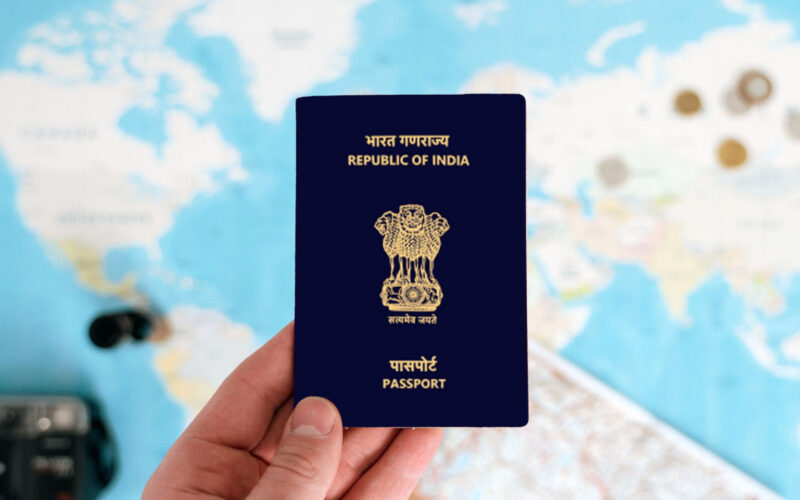
In a landmark move reflecting India’s evolving approach to immigration and minority protection, the Union Home Ministry has issued an order under the recently enacted Immigration and Foreigners Act, 2025, allowing certain religious minorities to stay in India without a passport or other valid travel documents. The provision covers Hindus, Sikhs, Buddhists, Jains, Parsis, and Christians who entered India from Afghanistan, Bangladesh, and Pakistan on or before December 31, 2024, seeking refuge from religious persecution. This policy brings substantial relief to individuals who were previously constrained by the limitations of the Citizenship Amendment Act (CAA), which applied only to those who arrived on or before December 31, 2014. While the new order does not guarantee citizenship, it addresses critical gaps in legal recognition, residency rights, and safety for minority communities who migrated in the decade following 2014.
Extended Stay Without Passport: Implications for Minority Communities
The Home Ministry clarified that the new provision under the Immigration and Foreigners Act, 2025, specifically applies to religious minorities from Afghanistan, Bangladesh, and Pakistan. Hindus, Sikhs, Buddhists, Jains, Parsis, and Christians who fled persecution or feared religious oppression and arrived in India before the end of 2024 will no longer be required to possess a valid passport or travel document to reside legally within India. This change is particularly significant for Hindus from Pakistan and Bangladesh who crossed into India after 2014 and had been facing legal and bureaucratic uncertainties regarding their status. While the Citizenship Amendment Act had extended a pathway to citizenship only for those arriving before 2014, the new order primarily ensures legal protection for those who entered later, allowing them to settle without the constant threat of deportation or legal complications related to undocumented status.
The order also underscores India’s broader humanitarian and policy-driven approach to minority rights in the region. Religious minorities escaping persecution have historically faced complex legal and social barriers upon arrival, often navigating challenges in accessing residency, employment, and educational opportunities. By allowing these groups to stay without a passport, the government addresses not only immediate safety concerns but also longer-term issues of legal recognition and integration. While the measure stops short of granting citizenship automatically, it provides stability and reassurance for thousands of individuals who had previously lived in uncertainty regarding their residency status.
Moreover, this policy aligns with India’s ongoing regional and global commitment to protecting vulnerable populations, highlighting the government’s effort to balance international obligations with domestic legal frameworks. It also reflects recognition of the unique challenges faced by minority populations in neighboring countries, where political instability, religious intolerance, and targeted persecution have forced large-scale migration. By extending legal stay without passport requirements, India is not only providing humanitarian relief but also reinforcing the country’s stance as a refuge for oppressed communities from the surrounding region.
Broader Legal and Policy Framework: Immigration, Borders, and Special Provisions
The Immigration and Foreigners Act, 2025, which came into effect from August 2025, introduced several important updates to India’s legal framework for foreign nationals, including those from neighboring countries. The Home Ministry’s recent order clarifies that while general entry into India requires valid passports and visas, exemptions are extended to minority communities arriving from Afghanistan, Bangladesh, and Pakistan before December 2024. These exemptions are limited to residence and do not guarantee citizenship but remove major legal barriers to remaining in India.
The order also reiterates longstanding provisions for citizens of Nepal and Bhutan. Indians traveling to or entering from these neighboring countries, as well as Nepali and Bhutanese citizens entering India by land or air, continue to be exempted from visa or passport requirements. These provisions reflect India’s unique geopolitical and cultural ties with its immediate neighbors and are complemented by additional regulations for members of India’s armed forces. Military personnel, including members of the naval, army, and air forces, along with their families traveling on official government transport, are similarly exempted from passport and visa requirements.
The legal adjustments under the Immigration and Foreigners Act, 2025, also clarify scenarios involving cross-border travel beyond immediate neighbors. Citizens of India entering from countries other than Nepal and Bhutan are required to carry valid passports, with the exception of travel from China, Macau, Hong Kong, and Pakistan, where stricter regulations are maintained. These distinctions highlight India’s nuanced approach to border management, national security, and immigration policy, balancing humanitarian concerns for persecuted minorities with the broader imperative of maintaining secure and regulated entry points.
For minority communities from Afghanistan, Bangladesh, and Pakistan, this order provides both legal clarity and practical assurance. Many individuals and families who migrated after 2014 but before 2025 had faced uncertainties in accessing employment, education, healthcare, and other essential services due to their undocumented status. By allowing legal stay without passports or travel documents, the government effectively removes bureaucratic obstacles that could have limited integration and socio-economic participation. In effect, the new policy represents a significant evolution of India’s immigration framework, bridging the gap left by earlier legislation like the CAA and aligning with broader humanitarian and security objectives.
Additionally, the Ministry of Home Affairs emphasizes that these provisions are consistent with India’s commitment to protecting vulnerable populations while simultaneously ensuring border security and compliance with international norms. By providing clarity regarding residency and documentation requirements, the government addresses critical legal ambiguities that had previously left many migrants vulnerable to detention, deportation, or exploitation. The updated framework also supports administrative efficiency, allowing authorities to focus resources on cases requiring scrutiny, rather than unnecessarily targeting individuals who have arrived legally under these protective provisions.
This strategic legal balance—between humanitarian protection and border security—demonstrates India’s commitment to nuanced policy-making in the realm of immigration and refugee management. While citizenship remains a separate legal process governed by existing frameworks, the allowance for stay without passports acknowledges the evolving realities of migration, regional instability, and the need for proactive intervention to safeguard human rights. It also underscores the government’s recognition of religious persecution as a legitimate basis for protection, reflecting India’s historical and constitutional commitment to minority rights, pluralism, and refuge for oppressed communities in South Asia.
The Immigration and Foreigners Act, 2025, along with the Home Ministry’s order, also complements ongoing initiatives for integrating minority migrants into the social, educational, and economic fabric of India. By reducing legal barriers and documentation requirements, the government enables easier access to employment opportunities, enrollment in educational institutions, and participation in public and community services. This approach not only promotes humanitarian objectives but also supports social cohesion and regional stability, as displaced communities gain a sense of security and belonging within the host country.
In essence, the policy marks a significant evolution in India’s immigration and minority protection landscape. By extending legal stay without requiring passports or travel documents for Hindus, Sikhs, Buddhists, Jains, Parsis, and Christians from Afghanistan, Bangladesh, and Pakistan who arrived before December 2024, India balances humanitarian priorities with legal and administrative pragmatism. While citizenship eligibility remains subject to existing provisions, the measure provides crucial protection and clarity, particularly for post-2014 migrants previously excluded from CAA benefits. The provision exemplifies India’s proactive and adaptive approach to immigration policy, regional diplomacy, and human rights, reflecting the country’s continued role as a safe haven for persecuted minorities in South Asia.
The new rules also reinforce India’s longstanding policy of differential treatment based on regional, historical, and cultural ties, maintaining flexibility for citizens from immediate neighbors while addressing specific vulnerabilities of persecuted communities from Afghanistan, Bangladesh, and Pakistan. As India continues to implement the Immigration and Foreigners Act, 2025, it is likely that these provisions will play a key role in shaping legal, social, and humanitarian frameworks for minority protection, migration management, and cross-border integration in the coming years.
Overall, the Home Ministry’s recent order provides substantial relief and legal clarity for thousands of individuals and families seeking refuge from religious persecution. By allowing legal stay without passports or travel documents, the government addresses longstanding gaps in protection for minority migrants, while supporting broader national interests in immigration management, social integration, and regional diplomacy. This initiative also reflects India’s commitment to providing a safe, regulated, and legally recognized environment for vulnerable populations, strengthening the country’s position as a regional leader in humanitarian protection and refugee management.