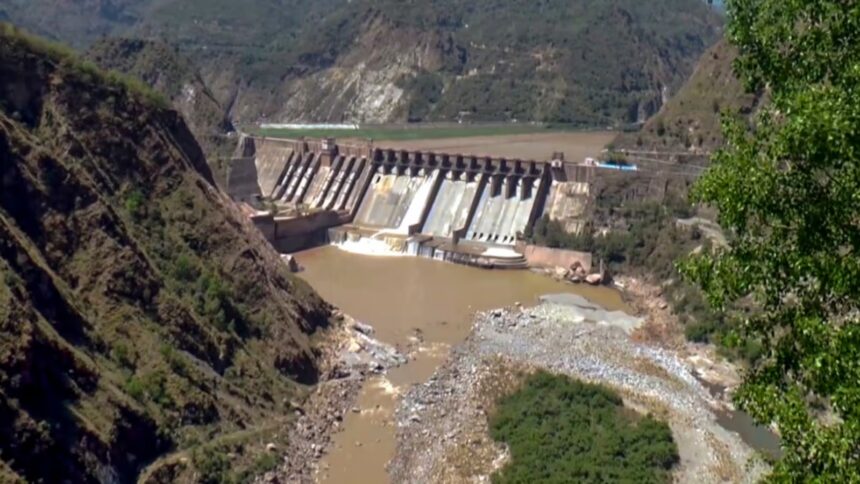
India has officially kickstarted the process of building the 1,856 megawatt Sawalkote Hydro Project on the Chenab river in Jammu and Kashmir, a move seen as a clear signal to Pakistan following the suspension of the Indus Waters Treaty. The government has invited tenders for the long-pending hydroelectric initiative, signaling a strategic shift in New Delhi’s approach to its water-sharing arrangement with Islamabad amid escalating tensions.
The central government on Wednesday invited bids for the construction of the massive 1,856 MW Sawalkote hydroelectric project, to be built near Sidhu village in Ramban district of Jammu and Kashmir. The project, which had been in limbo since it was first conceptualized in the 1960s, is now being revived as part of a larger push to expedite several long-stalled hydro projects in the region following India’s decision to put the Indus Waters Treaty on hold.
Strategic Shift Post-Treaty Suspension
The decision to revive the Sawalkote project comes in the wake of the April 22 Pahalgam terror attack, which claimed the lives of 26 individuals. In response, India suspended the Indus Waters Treaty—a decades-old water-sharing pact with Pakistan—and began reassessing its hydro-political strategy. The tender for the Sawalkote project reflects the government’s intent to assert greater control over its share of the Indus river waters and redirect these resources toward national development.
Home Minister Amit Shah reinforced this shift in Parliament, stating that the treaty was one-sided and India’s farmers had just as much right to the waters. He assured that soon, water from the Indus river would be reaching parts of Kashmir, Punjab, Haryana, Rajasthan, and even Delhi for drinking and agricultural use.
According to official documents, the last date for submission of online bids for the Sawalkote project is September 10. The project will be executed under the guidance of the Union Ministry of Power and the Ministry of Jal Shakti, which are jointly overseeing the execution of several strategic hydroelectric projects in the region.
Mega Hydro Push in Jammu and Kashmir
The revival of the Sawalkote project is part of a broader initiative to develop Jammu and Kashmir’s hydroelectric potential, which has long remained underutilized. Besides Sawalkote, the government is also pushing forward with the construction of the Kirthai I and II projects, which will together generate 1,320 MW, and the 1,000 MW Pakal Dul project, along with three other smaller installations totaling 2,224 MW. Once completed, these six projects will significantly boost the region’s power generation capacity, potentially reaching up to 10,000 MW.
These hydro projects not only aim to meet the domestic and agricultural water needs of several Indian states but also represent a strategic counter to Pakistan’s longstanding grievances over water access. Islamabad has long objected to Indian hydroelectric projects on the western rivers of the Indus system, arguing that they violate the 1960 treaty. India, however, maintains that its hydro projects are fully compliant with the treaty and essential for meeting its developmental needs.
In a fiery speech in the Rajya Sabha during a special discussion on Operation Sindoor, External Affairs Minister S Jaishankar underlined India’s position by stating that the treaty will remain suspended unless Pakistan irrevocably renounces its support for terrorism. “Blood and water cannot flow together,” Jaishankar said, echoing a message of zero tolerance towards cross-border terrorism and laying the groundwork for a water doctrine rooted in national security.
The Sawalkote project, one of the largest in the region, will require state-of-the-art engineering and significant investment. Once completed, it is expected to not only stabilize the local power supply but also create jobs and spur economic activity in the region. Additionally, it will strengthen India’s infrastructural hold in Jammu and Kashmir, a region often under global and regional scrutiny.
This hydroelectric expansion comes at a time when climate change, water scarcity, and energy demands are forcing countries to rethink resource management strategies. India’s renewed focus on utilizing its full share of the Indus waters is seen as both a geopolitical maneuver and a developmental imperative.
Although Pakistan has made diplomatic appeals for India to reverse its decision and reinstate the Indus Waters Treaty, there has been no indication from New Delhi of a policy rollback. The tenders for Sawalkote and other projects confirm that India is committed to moving ahead with its plans, regardless of Pakistan’s objections.
Experts believe this could lead to fresh tensions between the two neighbors, especially if Pakistan chooses to escalate the matter internationally. However, given the existing global concerns about terrorism and India’s repeated emphasis on Pakistan’s role in supporting cross-border violence, India’s stance is likely to find more sympathy among global stakeholders.
As the bidding process for the Sawalkote project begins, all eyes will be on how quickly India can execute the construction. If successful, the project could become a landmark in India’s quest to modernize its water and energy infrastructure while sending a clear political message to its western neighbor.