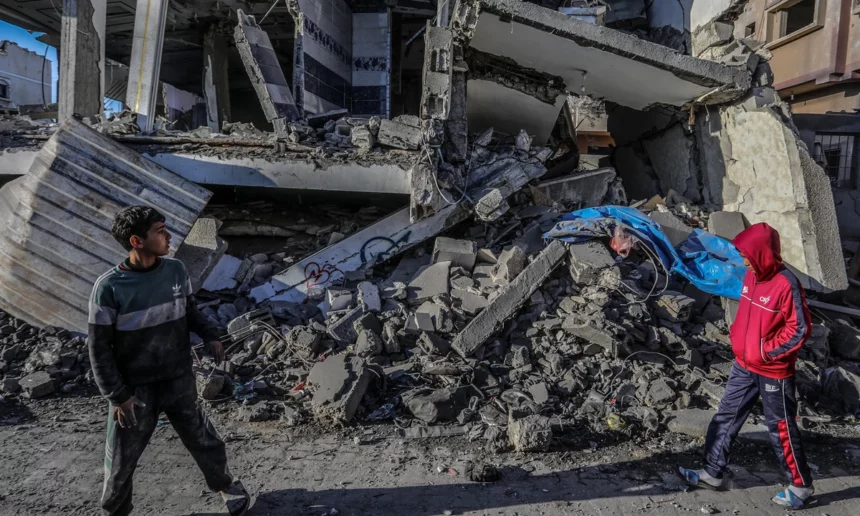
As the humanitarian crisis in Gaza worsens and international pressure mounts, Canada has announced its intention to recognize the State of Palestine at the upcoming United Nations General Assembly meeting in September. The move, declared by Prime Minister Mark Carney, marks a significant shift in Canadian foreign policy and aligns with similar recent declarations from France and the United Kingdom. These recognitions aim to pressure Israel to end its offensive in Gaza and re-engage in the two-state peace process, even as hostilities and famine deepen in the Palestinian enclave.
Carney emphasized the urgency of the situation on the ground, pointing to the starvation unfolding in Gaza as evidence of deteriorating prospects for Palestinian statehood. In his statement, he directly condemned the Israeli government for allowing the crisis to escalate. “The prospect of a Palestinian state is literally receding before our eyes,” he said, highlighting the international community’s growing frustration with Israel’s handling of the conflict.
International Momentum for Recognition
Canada’s decision follows closely on the heels of similar announcements by France and Britain. France declared its recognition of a Palestinian state last week, while Britain has signaled that it would do the same at the U.N. General Assembly in September if a ceasefire in Gaza is not in place by then. These developments represent a significant shift in the stance of Western nations traditionally seen as close allies of Israel.
Carney noted that Canada’s recognition is also contingent on reforms promised by the Palestinian Authority, including commitments to hold general elections in 2026. He stressed that Hamas, the militant group currently controlling Gaza, would not be allowed to participate in these elections.
The humanitarian situation in Gaza continues to deteriorate rapidly. On Wednesday, the Gaza health ministry reported seven additional hunger-related deaths, including that of a two-year-old girl with a pre-existing health condition. Meanwhile, the Hamas-run government media office claimed that Israeli forces killed at least 50 Palestinians in a span of three hours as they attempted to retrieve food from U.N. aid trucks.
Backlash from Israel and the U.S.
Unsurprisingly, Canada’s announcement has drawn sharp criticism from Israel and the United States. The Israeli Foreign Ministry said the recognition amounts to a “reward for Hamas” and undermines current efforts to reach a ceasefire and secure the release of hostages held by Hamas. Israeli Prime Minister Benjamin Netanyahu reiterated that a Palestinian state, as currently envisioned, would pose a security threat to Israel. He insisted that any future peace arrangement must leave security control in Israeli hands.
A White House official, speaking anonymously, echoed similar concerns, stating that President Donald Trump views any recognition of Palestine at this time as premature and counterproductive. U.S. Special Envoy Steve Witkoff is expected to visit Israel to discuss the situation and push for measures to ease the crisis in Gaza.
Currently, the State of Palestine holds non-member observer status at the U.N., a designation it has maintained since 2012 and is recognized by more than three-quarters of U.N. member states. Analysts say that while Canada’s move is largely symbolic, it adds to the growing international consensus that Israel must return to negotiations for a two-state solution.
Some Israeli officials have responded by threatening further annexation of Palestinian territories. Zeev Elkin, a member of Israel’s security cabinet, suggested that Israel might consider annexing parts of Gaza to increase pressure on Hamas. Meanwhile, far-right Israeli Finance Minister Bezalel Smotrich called for the re-establishment of Jewish settlements in Gaza, labeling the territory an “inseparable part of the Land of Israel.”
Families of Israeli hostages have also spoken out, arguing that recognition of Palestine before the release of their loved ones constitutes a betrayal. The Hostages Family Forum issued a statement calling the move a “violation of international law” and one that “legitimizes horrific war crimes.”
Growing Humanitarian Emergency
Inside Gaza, the humanitarian crisis continues to spiral. A father in Deir al-Balah reported that his two-year-old daughter died of starvation due to the unavailability of specialized milk needed to treat her brain condition. Her death is part of a rising toll of starvation-related fatalities, which the Gaza health ministry now places at 154 since the start of the war, including at least 89 children.
Though Israel recently agreed to daily 10-hour pauses in military operations to allow aid convoys safe passage, aid organizations say the relief is far from sufficient. The U.N. Office for the Coordination of Humanitarian Affairs stated that while more food has entered Gaza in recent days, the quantity still falls drastically short of what’s needed.
The war, which began on October 7, 2023, after Hamas launched deadly attacks on southern Israel, has since escalated into one of the most destructive conflicts in recent memory. Israeli authorities report that 1,200 people were killed in the initial attacks, including over 700 civilians. Another 251 were taken hostage. In retaliation, Israel’s offensive has killed more than 60,000 Palestinians, according to the Gaza health ministry, and has left much of the enclave in ruins.
Observers suggest that Canada’s recognition of Palestine—alongside similar moves by France and Britain—may increase diplomatic pressure on Israel to change course. However, without a shift in U.S. policy or significant changes on the ground, the recognitions may remain symbolic gestures in a conflict that continues to resist resolution.
In Gaza, the announcements are seen as long-overdue acknowledgments of Palestinian suffering and legitimacy. One resident, Saed al-Akhras, described the recognitions as “a real shift in how Western countries view the Palestinian cause.” Expressing deep frustration, he added, “Enough! Palestinians have lived for more than 70 years under killing, destruction and occupation, while the world watches in silence.”
Still, for many involved in the conflict, recognition alone is unlikely to bring peace. With ceasefire negotiations stalled and hostilities continuing, the path to a two-state solution remains as fraught as ever.