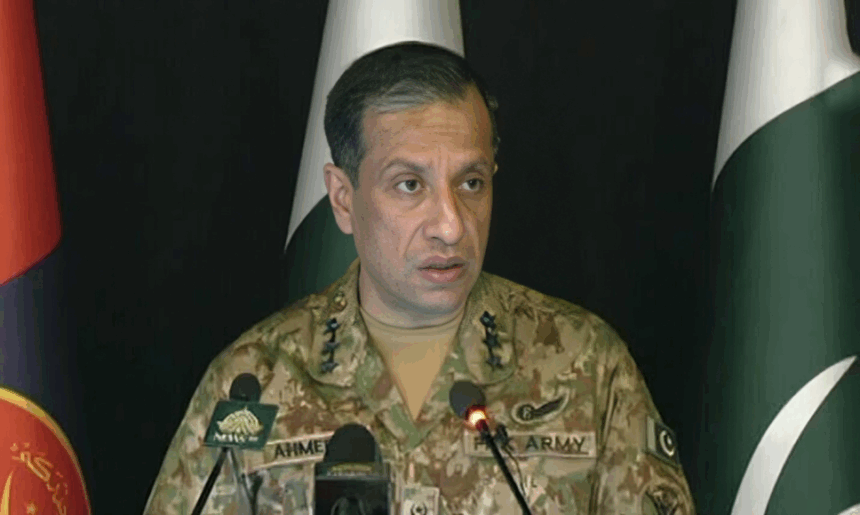
Pakistan’s military spokesperson Lieutenant General Ahmed Sharif Chaudhry has issued a chilling warning to India over the recent suspension of the Indus Waters Treaty, echoing the hostile rhetoric of terrorist Hafiz Saeed. Speaking at a public event in Pakistan, Ahmed Sharif Chaudhry threatened, “If you block our water, we’ll choke your breath,” words strikingly similar to those used by the Lashkar-e-Taiba founder known for his incendiary speeches against India. This statement comes amid rising tensions following India’s decision to suspend key parts of the 1960 water-sharing agreement after a deadly terror attack in Jammu and Kashmir’s Pahalgam.
Echoes of Terrorist Rhetoric in Official Statement
Lieutenant General Ahmed Sharif Chaudhry made these remarks during a speech at a Pakistani university, directly responding to India’s suspension of the Indus Waters Treaty following the April 22 terror attack in Pahalgam that claimed 26 lives. His declaration not only signals Pakistan’s aggressive posture but also closely mirrors the inflammatory words of Hafiz Saeed, the mastermind behind the 2008 Mumbai attacks. A video circulating on social media platform X captures Hafiz Saeed repeating the identical threat, reinforcing the connection between Pakistan’s military stance and extremist narratives.
The Indus Waters Treaty, brokered by the World Bank and signed in 1960, regulates water distribution from the Indus River and its tributaries between India and Pakistan. Despite frequent tensions, the treaty has largely ensured cooperation in water sharing. However, India’s suspension of treaty obligations marks a significant escalation, reflecting the country’s frustration with Pakistan’s alleged support for terrorism.
India’s Firm Response and Countermeasures
New Delhi has repeatedly emphasized that “blood and water cannot flow together” and that “talk and terror cannot go together,” underscoring a no-compromise approach toward cross-border terrorism. The treaty suspension was part of a broader set of retaliatory measures against Islamabad, including “Operation Sindoor” on May 7, which targeted nine terror hideouts in Pakistan and Pakistan-Occupied Kashmir.
This series of actions highlights India’s growing determination to take a tougher stance in response to ongoing terror threats emanating from Pakistan, while Pakistan’s military spokesperson’s aggressive rhetoric fuels the already heightened tensions between the two neighbors.