Gujarat has recorded a sharp escalation in its fiscal deficit for the financial year 2024–25 (provisional), with the gap widening to ₹49,964.9 crore from ₹23,493.26 crore in 2023–24. The development signals an aggressive expansion in state spending coupled with a significant reliance on borrowing to bridge the shortfall between revenue and expenditure.
The fiscal deficit represents the difference between a government’s total revenue receipts and its total expenditure. When expenditure exceeds revenue, the government must borrow to finance the gap. According to data presented in the Finance Department’s Socio-Economic Review 2025–26, Gujarat’s fiscal deficit as a proportion of Gross State Domestic Product (GSDP) nearly doubled from 0.96 percent in 2023–24 to 1.81 percent in 2024–25.
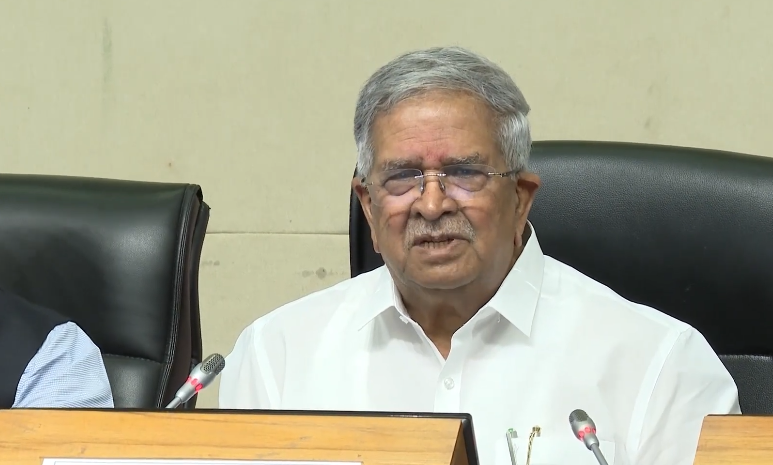
Finance Minister Kanu Desai tabled the 2026–27 budget amid growing scrutiny over the state’s rising debt burden. While the deficit remains within the 3 percent ceiling mandated under the Fiscal Responsibility and Budget Management (FRBM) Act, the rapid pace of borrowing has triggered political debate and raised questions about fiscal sustainability.
The widening deficit reflects a combination of declining revenue cushion and expanded capital investment commitments. The state’s revenue surplus — the excess of recurring revenue over routine expenditure — fell sharply from ₹33,477.03 crore in 2023–24 to ₹18,942.93 crore in 2024–25. This reduction significantly weakened Gujarat’s internal capacity to finance development spending without resorting to debt.
At the same time, capital expenditure rose substantially. Capex increased from ₹84,482.23 crore to ₹98,105.81 crore over the year. Capital expenditure includes investment in long-term assets such as roads, bridges, irrigation systems, industrial infrastructure and public institutions. Such spending is often justified as growth-enhancing, but it also requires upfront financial resources.
With a diminished surplus and expanding capital commitments, the state turned decisively toward borrowing.
Shrinking Revenue Cushion and Expanding Capital Commitments
Two primary structural shifts explain the dramatic widening of Gujarat’s fiscal deficit. First, revenue receipts experienced a marginal dip while revenue expenditure increased. Revenue receipts consist largely of tax collections, state share in central taxes and non-tax income. Revenue expenditure, on the other hand, includes salaries, pensions, subsidies, maintenance costs and administrative spending.
Although Gujarat continued to maintain a revenue surplus, the nearly 43 percent contraction in that surplus significantly reduced fiscal flexibility. A shrinking surplus means the state has fewer internal resources available to fund infrastructure projects or meet contingencies without borrowing.
Second, the government significantly expanded capital expenditure. Capital spending rose by nearly ₹14,000 crore in a single year, reflecting accelerated investments in infrastructure and development initiatives. Such investments may stimulate economic growth over time, but in the short term they intensify borrowing requirements.
The combination of reduced revenue cushion and aggressive capex expansion resulted in a sharp borrowing spike. Public debt accumulated to ₹51,253.01 crore during 2024–25 to sustain fiscal operations and finance developmental liabilities.
The structure of this borrowing is noteworthy. Out of the total debt accumulation, ₹42,053.9 crore was raised through internal debt mechanisms. These include state development loans and market borrowings floated in domestic financial markets. The reliance on internal debt suggests a deliberate strategy to mobilise funds from institutional investors and financial markets.
The remaining ₹9,199.11 crore was secured as loans and advances from the Central government. Such borrowing typically carries structured repayment terms but adds to the overall debt stock.
Despite the rapid increase, Gujarat’s fiscal deficit ratio remains below the 3 percent limit prescribed by the FRBM Act. The Act mandates fiscal discipline and aims to prevent excessive borrowing that could destabilise public finances. However, fiscal experts note that sustainability depends not only on the deficit ratio but also on the trajectory of debt servicing costs and revenue growth.
As debt accumulates, interest payments become a larger component of revenue expenditure. If revenue growth fails to keep pace, the state could face tighter fiscal constraints in future budgets.
Political Reactions and Fiscal Sustainability Debate
The rise in deficit has sparked political reactions. Congress spokesperson Manish Doshi criticised the government’s fiscal management, alleging that excessive debt accumulation contradicts claims of strong governance. He argued that large-scale project announcements, ceremonial expenditures and promotional campaigns have contributed to financial strain.
Doshi stated that public funds should prioritise strengthening education, healthcare, agriculture, employment generation and support for small industries. According to him, the mounting debt burden could limit future spending capacity in essential sectors.
The state government, however, maintains that borrowing has been directed toward productive capital formation. Officials argue that infrastructure expansion — including industrial corridors, logistics hubs and public utilities — will generate long-term economic returns that outweigh short-term borrowing pressures.
From a macroeconomic perspective, capital expenditure is often considered growth-positive if it enhances productivity and attracts private investment. However, the effectiveness of such spending depends on execution efficiency and revenue mobilisation capacity.
Gujarat’s fiscal position must also be assessed within broader economic trends. A higher GSDP growth rate can moderate the debt-to-GSDP ratio even if nominal borrowing increases. Conversely, slower economic growth could amplify fiscal stress.
The Socio-Economic Review indicates that while the deficit has widened significantly, fiscal indicators remain within statutory thresholds. Nevertheless, sustained borrowing at elevated levels could gradually narrow fiscal headroom, particularly if external economic conditions weaken.
As Gujarat moves into the 2026–27 fiscal cycle, balancing infrastructure ambitions with revenue discipline will be critical. Policymakers face the challenge of sustaining development momentum without compromising fiscal prudence.