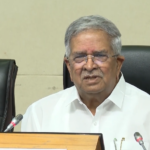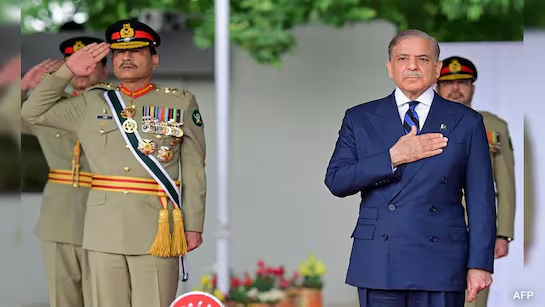
Pakistan’s Defence Minister Khawaja Asif has publicly reaffirmed that the country is governed by its elected civilian leadership and not by the military establishment. Speaking during his visit to Germany, he addressed persistent national and international speculation about whether Pakistan’s armed forces continue to exercise direct political control.
While attending the Munich Security Conference, Asif was asked whether the Pakistan Army chief effectively runs the country. In response, he categorically stated that Field Marshal Asim Munir is not his superior and that his constitutional authority flows from Prime Minister Shehbaz Sharif. He emphasized that Pakistan operates under a defined constitutional system in which executive power rests with the elected leadership.
His remarks come against the backdrop of Pakistan’s complex political history, which includes several periods of direct military rule. For decades, civil-military relations have shaped the country’s governance model, often blurring the lines between institutional influence and constitutional authority. Asif acknowledged that such phases existed but stressed that the current situation reflects civilian supremacy.
Civilian Authority and the Evolving Civil-Military Balance
Khawaja Asif admitted that Pakistan’s past includes moments when the army assumed control of governance. However, he insisted that the present constitutional structure is fundamentally different. According to him, the armed forces now operate within a clearly defined institutional framework and do not interfere in day-to-day governmental functions.
He explained that collaboration between the civilian government and the military should not automatically be interpreted as dominance by the armed forces. Pakistan, he said, faces a range of national challenges — from economic instability to cross-border security threats — and these require institutional coordination. Such cooperation, in his view, strengthens governance rather than undermines it.
The discussion surrounding military influence intensified after Asim Munir was appointed as Pakistan’s first Chief of Defence Forces while continuing as Chief of Army Staff. The dual role consolidated operational oversight under one military leader, making him one of the most powerful figures in the country’s institutional hierarchy. Earlier, Pakistan’s Parliament passed the 27th Constitutional Amendment, which expanded certain defence-related authorities and formalised structural adjustments within the security apparatus.
Munir’s promotion to the rank of Field Marshal further reinforced perceptions of his prominence. Prime Minister Shehbaz Sharif recommended his elevation, underscoring a coordinated approach between civilian and military leadership. Observers have noted that such structural changes naturally fuel debate about the balance of power.
Despite these developments, Asif firmly reiterated that his “boss” is the Prime Minister. He stressed that constitutional legitimacy remains rooted in electoral mandate, and that Pakistan’s governance system is functioning under democratic norms. His clarification appears intended to reassure both domestic audiences and international stakeholders who closely monitor Pakistan’s civil-military equation.
The defence minister’s latest remarks contrast with his earlier description of Pakistan’s governance as a “hybrid model,” where civilian and military institutions jointly managed state affairs. At the time, he had defended that arrangement as pragmatic and necessary. Now, however, he has chosen to emphasize constitutional clarity and civilian authority.
India, Afghanistan and Expanding Security Pressures
During the same interaction, Khawaja Asif accused India and Afghanistan’s Taliban-led administration of engaging in what he described as a coordinated proxy conflict against Pakistan. He alleged that both New Delhi and Kabul share similar perspectives regarding militant activities targeting Pakistani soil.
He stated that Pakistan reserves the right to take action if it does not receive credible assurances from Afghanistan regarding cross-border security. According to him, if militant groups continue to operate with impunity, Islamabad may consider further measures to protect national interests. His remarks reflect ongoing tensions along Pakistan’s western frontier.
Asif also said that the possibility of escalation with India has not completely disappeared. Relations between the two nuclear-armed neighbours remain sensitive, shaped by historical disputes and periodic security incidents. While he did not indicate any immediate confrontation, his statement suggested that underlying tensions persist.
Referring to a recent suicide bombing at a Shia mosque in Islamabad, Asif highlighted the broader challenge of extremism. The attack, which occurred during Friday prayers, resulted in significant casualties and injuries. The Islamic State group claimed responsibility for the bombing, underscoring the continued presence of transnational militant networks.
The defence minister blamed the Kabul administration for failing to curb terrorist elements operating near the border. He suggested that the issue extends beyond simple negligence and may indicate deeper structural problems in regional counterterrorism coordination. His comments add strain to Pakistan-Afghanistan relations at a time when both countries face internal security pressures.
On foreign policy matters, Asif ruled out normalising relations with Israel unless Palestinian rights are fully recognised. He reaffirmed that Pakistan’s position remains anchored in its longstanding support for Palestinian self-determination. According to him, any shift in policy would depend on meaningful progress toward justice for Palestinians.
When asked about the possibility of participating in an international peacekeeping mission in Gaza, he responded that Pakistan would evaluate the mandate and operational framework before making a decision. He noted that the country has extensive experience in United Nations peacekeeping operations across multiple regions. If conditions align with Pakistan’s principles and security interests, involvement could be considered.
Asif’s statements reflect a broader attempt to project constitutional stability while acknowledging complex regional realities. By emphasizing civilian supremacy and clarifying institutional roles, he has sought to address recurring questions about Pakistan’s governance model. At the same time, his strong language on India, Afghanistan and regional security signals that Islamabad remains firmly focused on what it perceives as strategic threats.