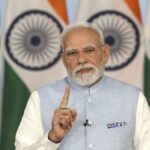
India has rolled out its biggest tax reform since the introduction of the Goods and Services Tax (GST) in 2017, ushering in a new two-slab structure from September 22. The latest revision, announced as a “savings festival” by Prime Minister Narendra Modi, is expected to bring relief worth nearly ₹2.5 lakh crore to citizens through reduced prices on a wide range of products and services. From household appliances, baby products, and packaged foods to life-saving medicines, automobiles, insurance premiums, and even hotel stays, the new GST rates are designed to ease the financial burden of families and boost spending across the economy. Modi underlined that these reforms complement earlier income tax cuts, ensuring benefits reach not only the middle class but also the poor, the youth, farmers, women, and entrepreneurs.
Relief for Households and Healthcare Through Affordable Essentials
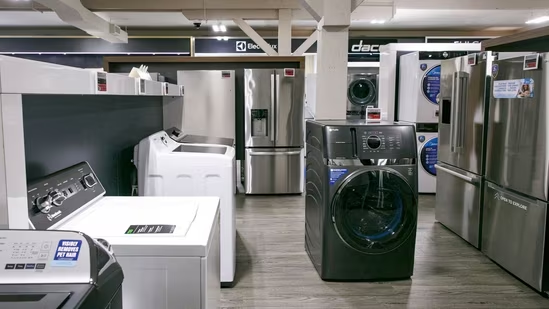
The GST rate cut has been structured to directly affect daily household consumption and healthcare expenses, areas that significantly impact the budgets of ordinary families. Home appliances such as air conditioners, dishwashers, and large-screen televisions have witnessed dramatic reductions in price, making them more affordable to middle-income households. A split air conditioner is now cheaper by almost ₹2,800 to ₹5,900, while large television models above 32 inches have seen cuts ranging from ₹2,500 to nearly ₹85,000 depending on the size and model. Dishwashers, once seen as niche products, have become more accessible with prices slashed by up to ₹8,000.
The relief is not confined to luxury goods; the biggest impact is visible in daily essentials. Items such as soaps, shampoos, hair oil, toothbrushes, and toothpaste have been shifted into the 5 percent GST bracket, reducing the costs of maintaining basic hygiene. Grooming products including talcum powder, shaving cream, aftershave, and face powders are also now taxed at only 5 percent instead of the earlier 18 percent. Baby products such as diapers and feeding essentials have been included in this restructuring, providing a measure of comfort to young families who often struggle with recurring childcare expenses.
Equally significant are the reductions in food and kitchen staples. Ghee has seen price cuts ranging between ₹40 and ₹70 per litre, butter has dropped by ₹4 per 100 grams, and paneer is now ₹4 cheaper per 200 grams pack. Packaged snacks such as namkeen, bhujia, and instant noodles are now more affordable, as are chocolates, jams, ketchup, and sauces which have moved into the lower GST category. Premium chocolates have seen reductions of ₹50 while luxury boxes of sweets and spreads are now cheaper by as much as ₹100. Beverages such as fruit juices and coffee blends are also part of this relief measure, with fruit juices now between ₹5 and ₹10 cheaper and coffee dropping by ₹30 to ₹95 per pack. Packaged drinking water has been reduced by ₹2, though aerated drinks remain in the higher bracket. Ultra-high temperature milk, packaged paneer, and Indian breads such as chapati, roti, and parantha have been completely exempted from GST, ensuring that several basic dietary items become tax-free.
Perhaps the most critical relief comes in the healthcare sector. Thirty-three lifesaving medicines have been made completely tax-free, while several high-cost drugs used in cancer treatment and rare diseases have also shed their tax burden. Other medicines have moved from the 12 percent slab down to 5 percent, lowering the costs of routine treatments. Medical devices such as glucometers, diagnostic kits, surgical equipment, and other healthcare tools have also become more affordable, directly benefiting patients and healthcare providers. Moreover, wellness services including gym memberships, yoga classes, barber services, salon visits, and spa treatments have shifted from 18 percent to 5 percent GST, making personal care and preventive health more accessible to a wider segment of society.
Automobiles, Agriculture, and Services See Major Reductions
The automobile sector, one of the biggest drivers of the Indian economy, has emerged as one of the largest beneficiaries of the revised GST regime. Small vehicles, including two-wheelers and motorcycles with engines up to 350cc, now attract a reduced GST rate of 18 percent compared to the earlier 28 percent. This change covers nearly 98 percent of India’s two-wheeler market, bringing immediate relief to everyday commuters. Scooters have become cheaper by as much as ₹7,000 to ₹8,200, while performance motorcycles have seen cuts ranging from ₹13,000 to ₹18,800.
Entry-level cars, particularly hatchbacks and sedans, have seen reductions between ₹40,000 and ₹98,000, while compact SUVs have dropped by ₹68,000 to ₹85,000. The mid-range family cars and mainstream SUVs have recorded even larger savings, with SUVs dropping between ₹1.01 lakh and ₹1.56 lakh and popular sedans falling by ₹60,000 to ₹98,000. Crossover vehicles have also seen a decline between ₹72,000 and ₹1.23 lakh. The premium category, often dominated by luxury SUVs, has witnessed reductions ranging between ₹1.8 lakh and ₹4.48 lakh, while ultra-premium luxury models are now cheaper by more than ₹30 lakh in some cases. Commercial vehicles such as buses, trucks, and ambulances have also benefited, which could translate into reduced logistics and transportation costs across the economy. Additionally, all automobile components are now taxed uniformly at 18 percent, simplifying supply chains and resolving classification disputes.
The construction and agriculture sectors too stand to gain from the new tax structure. Cement prices have come down as GST has been cut from 28 percent to 18 percent, a move expected to ease the cost burden on infrastructure projects and home construction. Agricultural equipment such as tractors, harvesters, and soil preparation machinery has become more affordable, providing relief to farmers. Fertiliser components have also witnessed reductions, potentially lowering farming input costs and improving productivity.
The hospitality industry is another beneficiary, with hotel rooms priced at ₹7,500 or below per night now taxed at just 5 percent instead of 12 percent. This could boost domestic tourism and encourage middle-class families to travel more frequently. For students, a significant reform has been the complete exemption of exercise books, erasers, pencils, crayons, and sharpeners from GST. Geometry boxes, cartons, and trays have also seen their rates fall from 12 percent to 5 percent, making educational materials more affordable for parents.
In addition, the insurance sector has received a major relief package. All life insurance policies, including term plans, ULIPs, and endowment policies, as well as health insurance schemes covering family floaters and senior citizens, have been made entirely exempt from GST. This is expected to deliver substantial savings for policyholders, while also encouraging wider adoption of insurance coverage across income groups.
Through this sweeping set of measures, the GST overhaul has touched nearly every sector of the economy. From healthcare and household expenses to mobility, agriculture, construction, and hospitality, the reform promises not only direct savings for families but also indirect benefits through reduced input costs and enhanced consumption. Prime Minister Modi’s framing of the reforms as a “Bachat Utsav” or festival of savings underscores the political and economic significance of this move as India approaches the festive season, where increased consumer spending is crucial to sustaining growth momentum.