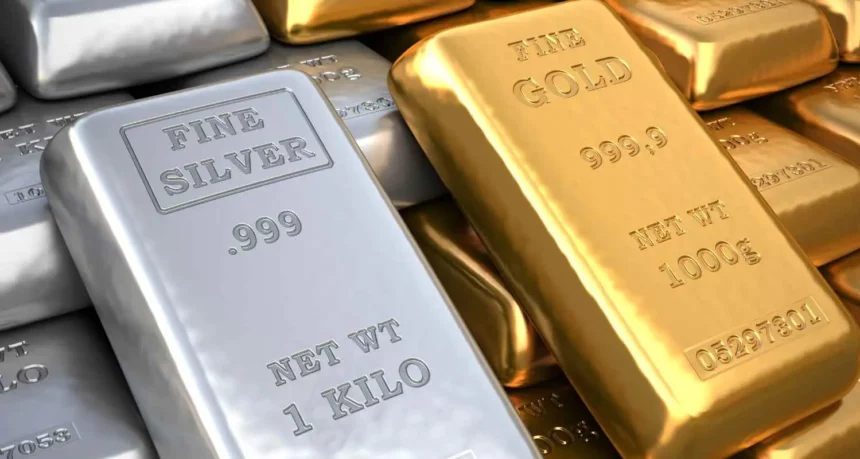
Gold and silver prices in India registered a notable decline on April 23, signalling a sharp correction in the bullion market after a prolonged rally earlier in the year. According to data released by the India Bullion and Jewellers Association, the price of 24-carat gold fell by ₹927 to ₹1.51 lakh per 10 grams, compared to ₹1.52 lakh recorded on April 22. Silver, on the other hand, experienced a steeper drop of ₹4,700 per kilogram, bringing its price down to ₹2.43 lakh from ₹2.48 lakh.
The sudden fall has drawn attention from investors, traders, and consumers alike, as precious metals are traditionally seen as stable assets. However, the current trend highlights the inherent volatility of the bullion market, especially in a global environment marked by economic uncertainty, fluctuating interest rates, and shifting investor sentiment.
A Sudden Correction After a Strong Rally
The decline in prices comes after a period of sustained upward movement in both gold and silver throughout 2026. Since the beginning of the year, gold has appreciated significantly, rising from ₹1.33 lakh per 10 grams on December 31, 2025, to current levels of ₹1.51 lakh. This represents an increase of approximately ₹18,000 despite the recent fall.
Silver has also recorded strong gains this year, climbing from ₹2.30 lakh per kilogram at the end of 2025 to ₹2.43 lakh. Even after the latest drop, silver remains about ₹13,000 higher than its starting price for the year.
These figures indicate that while the market has corrected in the short term, the broader trend remains positive. Analysts often describe such movements as healthy corrections, allowing prices to stabilise after rapid increases.
Distance From Peak Levels Highlights Volatility
Despite the year-to-date gains, both gold and silver are currently trading well below their peak levels reached earlier in 2026. Gold had touched an all-time high of ₹1.76 lakh per 10 grams on January 29. From that level, it has declined by nearly ₹25,000.
Silver witnessed an even more dramatic surge earlier in the year, reaching a peak of ₹3.86 lakh per kilogram. Compared to that high, current prices are lower by approximately ₹1.42 lakh.
The sharp difference between peak and present prices underscores the volatility that characterises precious metal markets. While gold is generally considered a stable investment, silver tends to be more volatile due to its dual role as both an investment asset and an industrial metal.
Understanding the Drivers Behind the Decline
Several factors have contributed to the recent fall in gold and silver prices. These include global economic trends, changes in monetary policy, currency movements, and investor behaviour.
One of the key drivers is the global interest rate environment. When interest rates rise, investors often shift their funds from non-yielding assets like gold to interest-bearing instruments such as bonds and fixed deposits. This reduces demand for gold and can lead to price declines.
Similarly, the strength of the US dollar plays a significant role. A stronger dollar makes gold more expensive for investors holding other currencies, thereby reducing global demand.
Geopolitical developments also influence bullion prices. During times of uncertainty, investors typically flock to safe-haven assets like gold, driving prices up. Conversely, when tensions ease, demand may decline, leading to price corrections.
Profit-booking is another important factor. After a strong rally, many investors choose to sell their holdings to lock in gains. This increased supply in the market can push prices downward.
Domestic Factors Influencing Prices
In addition to global factors, several domestic elements affect gold and silver prices in India. These include import duties, currency exchange rates, and seasonal demand.
India is one of the largest consumers of gold in the world, and a significant portion of its demand comes from jewellery purchases during festivals and wedding seasons. Changes in demand patterns can therefore have a noticeable impact on prices.
The value of the Indian rupee against the US dollar also plays a crucial role. A weaker rupee increases the cost of importing gold, leading to higher domestic prices, while a stronger rupee can have the opposite effect.
Market Sentiment and Investor Behaviour
Investor sentiment has been mixed in recent weeks, contributing to price fluctuations. While some investors remain optimistic about the long-term prospects of gold and silver, others are cautious due to global economic uncertainties.
The recent decline may encourage new buyers to enter the market, particularly those who had been waiting for a price correction. At the same time, existing investors may reassess their strategies in light of changing market conditions.
Experts often advise investors to adopt a long-term perspective when dealing with precious metals. Short-term volatility is common, but the overall trend tends to reflect broader economic conditions.
What This Means for Consumers
For consumers, especially those planning to buy gold jewellery or invest in silver, the current dip presents an opportunity. Lower prices can make purchases more affordable, particularly for those preparing for weddings or festivals.
However, buyers are advised to remain cautious and ensure that they are purchasing genuine and certified products. Price fluctuations can sometimes lead to confusion, making it essential to verify rates from reliable sources.
Important Guidelines for Buying Gold
When purchasing gold, certain precautions can help ensure authenticity and value for money.
Buy Certified Gold
Always choose gold that carries the Bureau of Indian Standards (BIS) hallmark. This certification guarantees the purity of the metal and provides assurance to buyers.
Verify Prices
Check gold prices from multiple sources, including official industry bodies like IBJA, to ensure that you are paying the correct rate. Prices can vary based on purity levels such as 24-carat, 22-carat, and 18-carat gold.
How to Identify Genuine Silver
Silver buyers should also take steps to verify authenticity. Several simple tests can help distinguish real silver from counterfeit products.
Magnet Test
Pure silver is not magnetic. If it sticks to a magnet, it likely contains other metals.
Ice Test
Silver conducts heat efficiently. Ice placed on real silver melts faster than on other surfaces.
Smell Test
Authentic silver does not have a distinct smell. A metallic or copper-like odor may indicate impurities.
Cloth Test
Rubbing silver with a white cloth may leave a black mark due to oxidation, which is a sign of genuine silver.
Long-Term Outlook for Gold and Silver
Despite short-term fluctuations, the long-term outlook for gold and silver remains positive. Gold continues to be a preferred hedge against inflation and economic uncertainty, while silver benefits from both investment demand and industrial usage.
As global economies navigate challenges such as inflation, interest rate changes, and geopolitical tensions, demand for precious metals is likely to remain strong.
Analysts suggest that while prices may experience periodic corrections, the overall trajectory could remain upward over the long term. Investors are therefore encouraged to adopt a balanced approach, combining patience with informed decision-making.
Role of Gold in Investment Portfolios
Gold has long been considered a safe and reliable investment. It serves as a store of value and provides diversification in investment portfolios.
During periods of economic instability, gold often outperforms other asset classes, making it an attractive option for risk-averse investors. However, its performance can vary depending on market conditions, highlighting the importance of diversification.
Silver as an Emerging Investment Option
Silver is increasingly gaining attention as an investment asset. Its affordability compared to gold makes it accessible to a wider range of investors. Additionally, its industrial applications in sectors such as electronics and renewable energy contribute to its demand.
However, silver’s higher volatility means that investors should approach it with caution. Price swings can be more pronounced compared to gold, requiring careful monitoring.
The recent decline in gold and silver prices reflects the dynamic nature of the bullion market. While silver saw a sharp drop of ₹4,700 per kilogram and gold fell below ₹1.51 lakh per 10 grams, both metals continue to maintain strong gains for the year.
The correction highlights the influence of global economic factors, investor sentiment, and domestic conditions on precious metal prices. For consumers and investors, the current scenario presents both opportunities and challenges.
As the market continues to evolve, staying informed and adopting a strategic approach will be key to navigating the complexities of gold and silver investments.