Pakistan on Wednesday strongly rejected allegations linking it to the deadly Bondi Beach attack in Australia, accusing India and Israel of running a coordinated defamation campaign to malign its international image and spread misinformation in the aftermath of the incident.
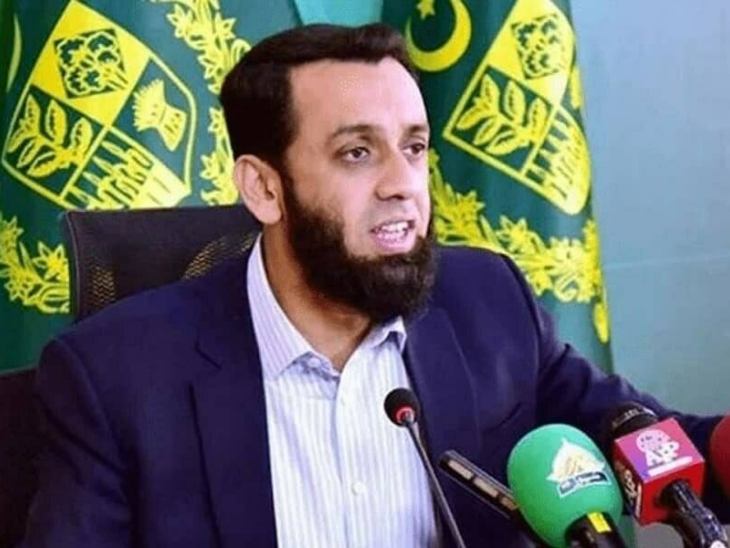
Addressing a press briefing in Islamabad, Pakistan’s Information Minister Attaullah Tarar said his country was being unfairly dragged into the narrative surrounding the terror attack at Bondi Beach, despite there being no evidence connecting Pakistan to the incident. He described the allegations as part of a deliberate conspiracy by hostile states aimed at damaging Pakistan’s global standing. According to Tarar, the accusations were not based on facts but were instead amplified through social and electronic media platforms, particularly in India and Israel, to create a misleading perception about Pakistan’s role.
The attack, which took place on December 14 during Hanukkah celebrations at Bondi Beach in Sydney, resulted in the deaths of at least 15 people and left more than 40 injured. The incident shocked Australia and drew international attention, especially due to its apparent targeting of Jewish individuals. In the immediate aftermath, speculation and unverified claims circulated widely online, prompting Pakistan to issue a formal response denying any involvement.
Tarar said Pakistan has always condemned terrorism in all its forms and would continue to do so without ambiguity. He stressed that linking Pakistan to the attack without proof was irresponsible and harmful, and questioned how the reputational and diplomatic damage caused by what he called “fake news” would be addressed. He also raised the issue of accountability, asking whether those who spread false narratives would issue apologies or face legal consequences.
Pakistan’s response and accusations of misinformation
During the press briefing, Attaullah Tarar asserted that Pakistan was named in connection with the Bondi Beach attack purely on the basis of conjecture. He said there was no investigative finding, intelligence input, or official statement from Australian authorities that implicated Pakistan in any way. Despite this, he claimed, Pakistan was swiftly blamed in certain media outlets and online spaces.
Tarar alleged that the false narrative gained traction primarily through Indian and Israeli social and electronic media, where speculative reports and commentary sought to associate Pakistan with the act of terrorism. According to him, this was not an isolated incident but part of a broader pattern in which Pakistan is routinely accused following international security incidents, regardless of facts.
He praised Australian law enforcement and investigative agencies for what he described as a professional and responsible approach. Tarar noted that Australian authorities refrained from blaming any country without concrete evidence and focused instead on identifying the individuals directly responsible for the attack. He contrasted this approach with what he called politically motivated attempts elsewhere to exploit the tragedy for propaganda purposes.
The information minister reiterated that Pakistan has consistently maintained a clear position against terrorism. He said Pakistan itself has suffered immense human and economic losses due to extremist violence over the years, and therefore understands the gravity of such attacks. For this reason, he argued, it was both illogical and unjust to accuse Pakistan of sponsoring or supporting acts of terror abroad without substantiation.
Tarar also questioned the long-term impact of misinformation on international relations. He asked how Pakistan’s losses resulting from false allegations would be compensated and whether those responsible for spreading unverified claims would be held accountable. His remarks reflected Islamabad’s frustration with what it perceives as a recurring effort to associate Pakistan with terrorism, even in cases where no factual links exist.
Details of the Bondi Beach attack and background of the accused
As investigations progressed, Australian authorities identified the main attacker as Sajid Akram, a 50-year-old man of Indian origin. Sajid Akram was born in Hyderabad, Telangana, and held an Indian passport. According to official information, he completed a Bachelor of Commerce degree in Hyderabad before moving to Australia in November 1998 on a student visa in search of employment opportunities.
After settling in Australia, Sajid married Venera Grosso, a woman of European origin, and continued to live there for several decades. Despite his long residence in Australia, he retained Indian citizenship and an Indian passport. Family members in India reportedly told media outlets that they had severed ties with him years ago following his marriage to a Christian woman. They claimed they had little to no contact with him for decades and were unaware of any extremist views or activities.
Sajid Akram had two children, including a son, Naveed Akram, who is an Australian citizen, and a daughter. During the attack, Naveed Akram was reportedly injured, while Sajid Akram was shot dead by Australian police at the scene. The Telangana Police later confirmed that Sajid had no criminal record in India and was not on the radar of Indian law enforcement agencies.
According to relatives, Sajid had minimal interaction with his family in India over the past 27 years. After migrating to Australia, he reportedly visited India six times, mainly in connection with property disputes and responsibilities toward his ageing parents. Media reports indicated that he last visited India in 2022 and did not return even after his father’s death. His family stated that they were unaware of any radicalisation or militant associations involving Sajid or his son.
Further reports indicated that Sajid and his son Naveed had travelled to the Philippines on November 1, weeks before the attack. Sajid reportedly travelled using his Indian passport, while Naveed carried an Australian passport. According to officials cited in international media, the pair may have been preparing for the attack for about a month. These details, however, did not point to any connection with Pakistan.
Eyewitness accounts and video footage from the incident showed the attackers opening fire from an elevated position near the beach during the Hanukkah festival, targeting members of the Jewish community. Australian police responded swiftly, neutralising the attackers. Sajid Akram was already injured when police shot him, and footage showed Naveed falling after being shot. The rapid police response prevented further casualties, though the attack had already resulted in significant loss of life and injuries.
In Pakistan’s view, the emergence of the attacker’s background further undermined attempts to link the country to the incident. Tarar said that despite these facts being available, certain actors continued to promote a misleading narrative implicating Pakistan. He argued that this selective focus ignored verified information and instead relied on prejudice and political hostility.
Tarar concluded his remarks by reiterating Pakistan’s commitment to international peace and security. He said Pakistan stands with the global community in condemning terrorism and supporting efforts to combat extremism. At the same time, he warned that the spread of false narratives and unsubstantiated accusations risks undermining trust between nations and distracts from the real task of addressing the root causes of violent extremism.
The Bondi Beach attack has thus not only triggered grief and outrage in Australia but has also exposed how quickly misinformation can cross borders and influence diplomatic discourse. Pakistan’s strong reaction reflects its sensitivity to being associated with acts of terrorism abroad and its insistence that accountability should be grounded in evidence rather than speculation.