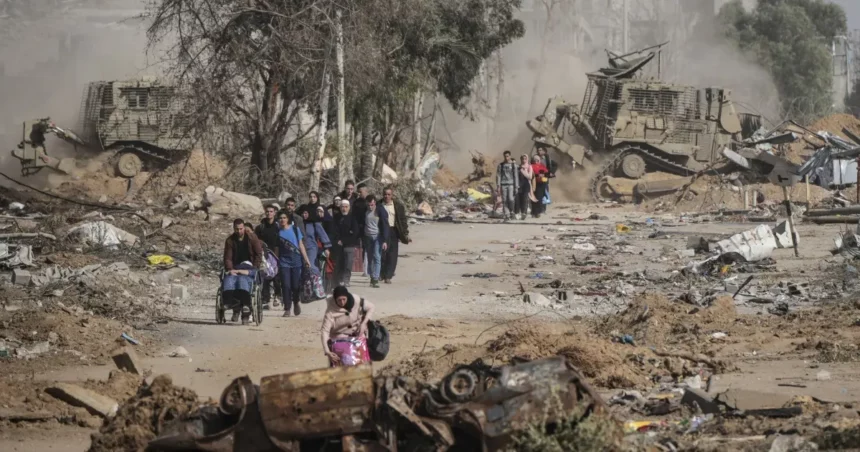
Efforts to reach a ceasefire in Gaza suffered a fresh setback as Israel and the United States withdrew their delegations from negotiations, citing concerns over Hamas’ lack of cooperation and good faith in the discussions. The stalled talks have added to the deepening humanitarian crisis in Gaza, with increasing deaths from hunger and continued hostilities, as families of Israeli hostages and Palestinians alike await progress in ending the prolonged conflict.
US envoy Steve Witkoff announced that despite the dedication of mediators, Hamas was not showing the necessary commitment, stating, “Hamas does not appear to be coordinated or acting in good faith.” Witkoff noted that alternative options would now be considered to secure the release of hostages and bring stability to Gaza. Hamas responded with surprise to Witkoff’s remarks, insisting that it remained committed to negotiations aimed at achieving a comprehensive ceasefire agreement.
Mounting Humanitarian Concerns in Gaza
As talks faltered, the humanitarian crisis in Gaza worsened, with dozens reportedly dying from hunger in recent weeks. Local health authorities confirmed two more deaths from malnutrition, adding to the rising toll as access to food remains severely restricted. British Prime Minister Keir Starmer described the suffering and starvation in Gaza as an “unspeakable and indefensible” catastrophe and urged Israel to expedite aid delivery. Starmer is set to hold discussions with French and German leaders to explore urgent measures to halt the violence and provide essential food aid to the people in Gaza.
Efforts to mediate had earlier shown slight promise, with a senior Hamas official expressing hope for a ceasefire within days, despite what was termed as Israeli stalling. However, differences remain over terms, including where the Israeli military would reposition during any truce, indicating that a rapid resolution is unlikely.
Challenges in Aid Distribution Amid Growing Hunger
Tensions also escalated over aid distribution in Gaza. Women collecting aid reported that US contractors initially called them to receive goods but then fired pepper spray and tear gas due to overcrowding. The Gaza Humanitarian Foundation (GHF), backed by the US and Israel, defended the limited use of pepper spray to prevent injuries, claiming that the women-only distribution had been largely successful. However, the UN criticised the GHF’s methods, calling them unsafe and a violation of humanitarian impartiality.
The UN rights office reported over 875 deaths near aid sites and food convoys within six weeks, many near GHF distribution points, attributing most fatalities to gunfire that locals blamed on Israeli forces. The Israeli military acknowledged civilian harm and stated that revised guidelines were issued based on lessons learned.
The blockade and restrictions on aid, reopened with limitations in May, have complicated the delivery of essential supplies. Israel claims it has facilitated sufficient food entry into Gaza and blamed the UN for slow distribution, while the UN argued it was working under challenging conditions created by Israel’s restrictions.
The ongoing war, which started with Hamas’ October 7 attacks on Israel that killed around 1,200 people and led to the taking of 251 hostages, has since seen Israel’s operations in Gaza resulting in the deaths of nearly 60,000 Palestinians, according to local health authorities. Both Israel and Hamas face increasing domestic and international pressure to reach a ceasefire, but with talks stalling and aid challenges worsening, hopes for a swift resolution remain uncertain for the millions affected by the conflict.