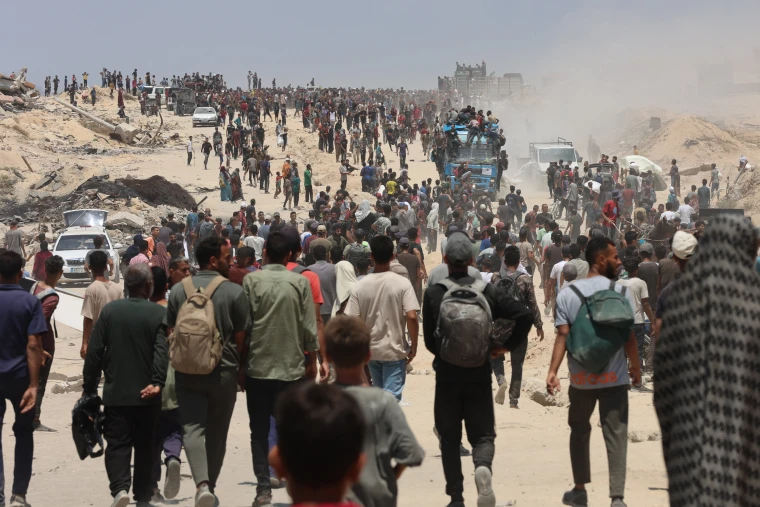
In the midst of an escalating humanitarian crisis in Gaza, vital aid shipments continue to languish on trucks and in warehouses near border crossings, unable to reach the population desperately in need of food, medicine, and medical equipment. Israel’s repeated rejections of these shipments have triggered mounting frustration among United Nations officials, humanitarian organizations, and drivers tasked with transporting essential goods into the enclave.
Boxes of supplies intended for Gaza were seen sitting on trucks and flatbed trailers just meters from the Egyptian border at Rafah, highlighting the complex web of bureaucratic delays, security scrutiny, and logistical challenges preventing relief from reaching the territory. Officials on the ground have described a series of hurdles, ranging from minor paperwork and packaging issues to stringent checks for possible dual-use military applications, in addition to restricted working hours at border crossings. The consequences of these delays are stark, with malnutrition and starvation already contributing to the deaths of hundreds of Gazans during the ongoing conflict.
Aid Blockages and Bureaucratic Obstacles Hampering Relief Efforts
Seven aid officials and three truck drivers interviewed by Reuters painted a picture of immense difficulties faced in attempting to deliver humanitarian supplies to Gaza. The trucks turned away on Sunday carried items clearly labeled with logos of the World Health Organization (WHO) and descriptions of their contents, such as topical medications and suction devices for wound care. According to a WHO employee stationed at the border, one shipment was blocked on the grounds that it contained “illegal medicines,” though Reuters could not independently verify the specifics behind the rejection.
The Israeli military authority responsible for coordinating aid, COGAT, did not respond to queries regarding why these trucks were not allowed to enter Gaza. The trip by Reuters to the Rafah border, organized by Elders—a group of former world leaders supporting a two-state solution to the Israeli-Palestinian conflict—revealed the scale of the delays firsthand. Members of Elders, including former Irish President Mary Robinson and former New Zealand Prime Minister Helen Clark, expressed shock at the stalled aid and the near silence at the crossing, which is typically a site of human interaction and transit. Clark described seeing trucks and trailers full of essential supplies idling at the border as “absolutely shocking,” emphasizing that the crossing should be a place where people and humanitarian aid move freely, particularly for the sick and vulnerable. According to the WHO employee, approvals and clearance processes for shipments through the Rafah crossing, which previously could be completed within days during earlier ceasefires, now take a minimum of a month.
This dramatic increase in processing time has effectively slowed the flow of humanitarian aid to Gaza, exacerbating the suffering of civilians who are already facing severe shortages of essential goods. The Hamas-run Gaza government reported that at least 1,334 trucks have entered Gaza through all land crossings since Israel announced measures to allow more aid on July 27, a figure vastly below the 9,000 trucks that would have been required to meet daily needs if 600 trucks had entered per day, the minimum number deemed necessary by the United States to feed Gaza’s population.
Despite claims from Israel that aid supplies are not being restricted, humanitarian organizations continue to report that only a fraction of the required relief has successfully reached the enclave. Aid shipments arriving from Egypt are subject to customs clearance at Israeli crossings, creating additional hurdles, delays, and costs. From July 27 to August 3, United Nations agencies were officially exempt from these customs procedures, though the exemption appeared to remain informally in place. Other international NGOs can only gain exemptions on a case-by-case basis, primarily for health-related items, further slowing the flow of critical supplies.
Humanitarian Crisis and Impact of Restricted Aid Flow
The consequences of these delays are severe. More than 200 Gazans have reportedly died from malnutrition or starvation during the conflict, adding to the over 61,000 killed due to military action. While Israel disputes these figures and asserts that a significant portion of the fatalities are militants, the humanitarian impact on civilians remains undeniable. Aid supplies that do reach Gaza often encounter further obstacles, such as additional inspections or restrictions once inside the territory.
Drivers transporting supplies from Egypt face a complex routing process due to the closure of the Rafah crossing by Hamas authorities. Goods must instead be routed through the Israeli-controlled Kerem Shalom crossing, located approximately three kilometers south, where shipments are subjected to extensive checks. Egyptian truck driver Kamel Atteiya Mohamed described the challenges faced, noting that of the 200 to 300 trucks attempting the route daily, only 30 to 50 successfully pass. Minor issues, such as missing stickers, tilted pallets, or improperly sealed cargo, are frequently cited as reasons for turning shipments back, even though such issues often do not affect the safety or efficacy of the goods. Operational hours at Kerem Shalom further exacerbate the delays, with drivers sometimes arriving to find the crossing closed, as it generally does not operate beyond standard weekday business hours. According to COGAT, hundreds of truckloads of aid still await collection by the UN and other international organizations on the Palestinian side of the border crossings.
A logistics site run by the Egyptian Red Crescent near El Arish, approximately 40 kilometers from the border, features a tarp tent warehouse where returned goods are stored. Items such as white oxygen tanks, wheelchairs, car tires, generators, and first-aid kits from countries including Luxembourg and Kuwait were observed by Reuters personnel, highlighting the scale and variety of essential supplies blocked from entering Gaza. The World Food Programme reported that only 73 of 400 trucks sent since July 27 had successfully entered Gaza, reflecting significant inefficiencies in the delivery process. Meanwhile, UNRWA has not been permitted to send aid into Gaza since March, and shelter materials have been unavailable since March 2, according to the UN Office for the Coordination of Humanitarian Affairs (OCHA). The limited availability of goods on local markets has further driven prices up, making basic necessities prohibitively expensive for residents.
A WHO employee noted that the trucks seen by Reuters on Sunday were among three turned back that day, carrying items critical for healthcare including urine drainage bags, iodine, plasters, and sutures. These routine rejections, combined with bureaucratic delays, mean that even essential medical supplies cannot reliably reach the population in need. The Israeli military agency COGAT asserts that Israel allows and facilitates the provision of humanitarian assistance without quantitative limits, claiming that approximately 300 trucks carrying food and other supplies are transferred daily through all land crossings. Nevertheless, the discrepancy between the required number of trucks and the actual deliveries illustrates the challenges facing humanitarian actors on the ground. While Israel emphasizes its efforts, aid agencies argue that bureaucratic hurdles, restricted working hours, and extensive inspections create significant delays that jeopardize the well-being of civilians.
The cumulative impact of these restrictions, delays, and rejections is a worsening humanitarian crisis in Gaza. Civilians continue to face shortages of food, medical supplies, and essential goods, while bureaucratic obstacles prevent timely delivery of international aid. The situation underscores the importance of coordinated international efforts and urgent attention to ensure that humanitarian assistance reaches those who need it most. The current stalemate also highlights tensions between the need for security and the imperative of humanitarian access. While Israel cites security concerns and potential dual-use risks as justification for the strict controls, the resulting delays and denials of aid are having life-threatening consequences for Gaza’s civilian population. International human rights organizations, UN officials, and advocacy groups continue to call for urgent measures to remove obstacles, streamline approvals, and expedite the delivery of food, medicine, and medical equipment to prevent further loss of life.
With continued scrutiny from international observers, including the Elders and humanitarian organizations, the global spotlight remains on the flow of aid into Gaza. Yet despite announcements and assurances, the majority of the population continues to face dire conditions as shipments remain stuck at borders, delayed by paperwork, inspections, and operational inefficiencies. The need for rapid, unhindered humanitarian relief remains urgent as Gaza confronts one of the most severe crises in recent memory.