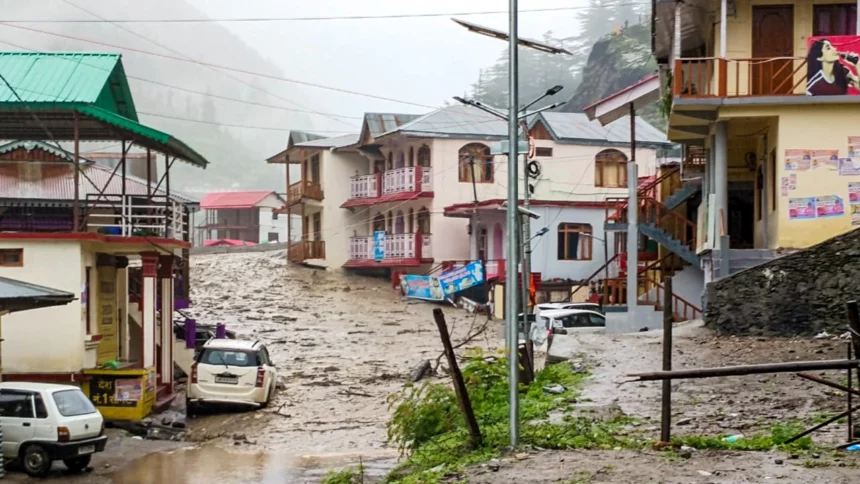
A festive day in the Uttarkashi district of Uttarakhand turned into a nightmare as a sudden flash flood swept through the serene villages of Dharali and Mukhba. In just moments, celebration gave way to chaos, fear, and heartbreak as water came crashing down from the mountains, destroying everything in its path. Locals and visitors who had gathered for a religious festival were caught completely off guard. With over 60 feared missing and at least two confirmed dead, survivors are now grappling with shock and uncertainty, wondering how the vibrant celebration turned into one of the most traumatic days of their lives.
At around 1:30 PM on Tuesday, life was unfolding as usual in Dharali and Mukhba. Rajnish Panwar, a 31-year-old homestay owner, was offering flowers at a temple, thinking about the rest of his day. Dr. Suman Mallik, a researcher from the Wildlife Institute of India, was in Mukhba with two colleagues to attend the same festival. Local priest Ashok Semwal had just left his home to perform a puja. Nearby, Jagvinder Kumar, a shopkeeper, had just finished lunch and was preparing to visit the temple. None of them had any inkling that disaster was just moments away.
A Sudden Roar and a Wall of Water
The first sign came like an explosion. A loud, thunderous noise disrupted the sound of drums and chants echoing from the temple. What followed was a terrifying sight: a mountain of water mixed with mud, rocks, and debris, hurtling down toward the villages. Panwar, along with many others, scrambled to higher ground. He was fortunate—his house stood on a safer elevation—but his cousin Akash, who was by the riverbank, wasn’t so lucky. Akash’s hotel was swept away, and his body was the first to be recovered from the wreckage.
The flash flood struck precisely when residents from eight nearby villages had come together to celebrate a religious festival for the local deity. Visitors had flocked to the area to partake in the festivities, turning the quiet villages into vibrant hubs of joy and devotion. That joy was obliterated within minutes as torrents of water surged through the streets, flattening more than 30 hotels and shops in the market area of Dharali—a popular stopover for pilgrims heading to Gangotri.
Dr. Mallik and his colleagues were speaking to a group of young attendees when the flood hit. The noise of the river and the festival drums drowned out any warning calls. He remembers seeing people run for their lives, only to be engulfed by the water moments later. One man leapt from a building into rising muck and was miraculously pulled to safety by others. Others weren’t as fortunate. Some opened their doors only to find walls of debris waiting outside.
Lifelines Lost, Communities Cut Off
The destruction went beyond buildings and lives. The villages were completely cut off from the rest of the world. Phone lines went down, electricity failed, and clean water was no longer available. Rescue teams, including the National Disaster Response Force (NDRF), reached the scene within days. Their presence brought relief, but also revealed the scale of the tragedy.
Villagers shared whatever food they had left with rescue personnel. In return, the NDRF provided their satellite phones so people could inform their families that they were alive. Mallik described how emotional that brief connection was, especially for people whose loved ones had seen terrifying videos circulating on social media.
For Kumar, who owns a puja shop that Prime Minister Narendra Modi had visited earlier this year to promote winter tourism, the experience has left lasting trauma. He now stays with his brother in Uttarkashi town and has no plans to return until basic services are restored in Mukhba. “What if it rains again? What if it’s our village next?” he asks, still haunted by the sights of people sinking in muck, desperately trying to escape.
Priest Ashok Semwal echoed the same fear. He was walking toward the temple when the deluge hit. He describes the chaos—the deafening roar, the screams, and the sheer helplessness as people were swept away. Dharali, he says, was not just a village; it was the economic engine for nearby communities. Its destruction has left families without income, homes, or a sense of safety.
The tragedy underscores how vulnerable the region is to climate-induced disasters. Though it had rained throughout the day, no one had anticipated anything of this scale. Locals are now demanding better warning systems and infrastructure to protect communities during extreme weather.
As authorities continue their search for the missing and try to assess the full scale of the damage, one thing is clear: the memory of this flood will not fade soon. The beauty of the Himalayan region has often attracted tourists, pilgrims, and nature lovers. But this beauty hides a volatile, unpredictable force that, when unleashed, spares nothing.
From joy to devastation, the story of Dharali and Mukhba is a chilling reminder of nature’s power and the human stories forever changed in its wake.