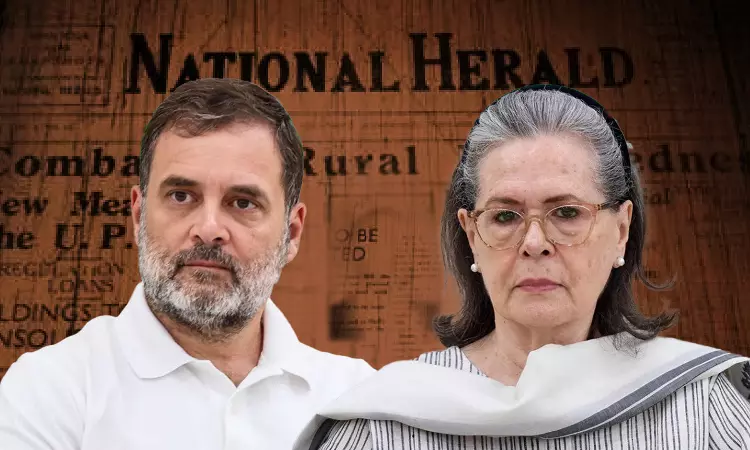
The Enforcement Directorate (ED) is considering extending the scope of its probe by naming the Congress party itself as an accused in the ongoing money laundering case linked to the National Herald controversy. This development comes as the ED presented its opening arguments before a special court, highlighting alleged financial irregularities involving key Congress leaders and shareholders. The case, which has been under investigation since 2021, has already named Sonia Gandhi, Rahul Gandhi, and others, with the agency now aiming to bring the political party into the legal proceedings.
Allegations and Court Proceedings
During the hearing at the Rouse Avenue Court, the ED argued that a prima facie case of money laundering was established against the Gandhis and others involved in the National Herald case. The agency submitted that while several shareholders suffered financial losses, senior Congress leaders benefited substantially from the transactions. This claim underscores the ED’s position that the money laundering probe is not limited to individuals but also implicates the party’s role in the alleged irregularities.
The hearing, which concluded on the day, is scheduled to continue on a daily basis from July 2 to July 8, signaling the court’s intent to expedite the case. The ED’s decision to potentially name the Congress party as an accused marks a significant expansion of the legal battle, which started with a private complaint filed by Swamy in 2014 and gained momentum after a magistrate court took cognizance in 2021.
Political Reactions
The developments have drawn sharp political responses. BJP spokesperson Pradeep Bhandari welcomed the ED’s progress, stating that the law is now catching up with the alleged corruption involving the Gandhi-Vadra family. The National Herald case has long been a point of contention between the BJP and Congress, with this fresh phase of hearings likely to fuel further political debate and public scrutiny.
As the case proceeds with day-to-day hearings, all eyes remain on the court’s decisions and the ED’s next steps, which may further shape the narrative around the financial dealings and legal responsibilities of the Congress party and its leaders in the National Herald controversy.