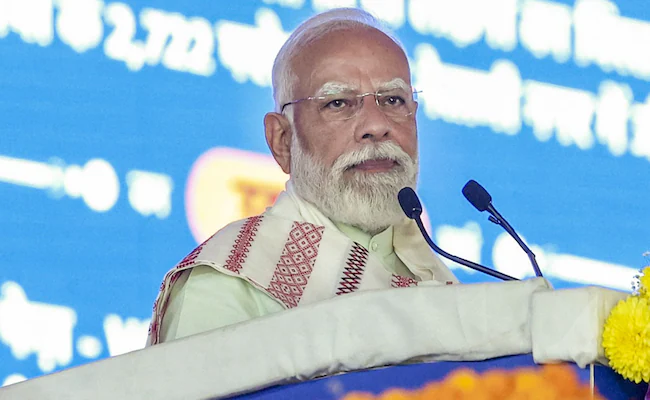
Prime Minister Narendra Modi is scheduled to address a post-budget webinar on March 9 that will focus on key themes such as education, skill development, and the concept of university townships. The webinar is part of the government’s ongoing effort to discuss and implement major announcements made in the Union Budget related to the education and skills sector. These post-budget webinars have become an important platform for policymakers, experts, industry representatives, and educational institutions to deliberate on policy initiatives and explore ways to implement them effectively.
The government has been organizing a series of such webinars following the presentation of the Union Budget, aiming to translate policy announcements into actionable strategies. The webinar focusing on education and skills is expected to bring together stakeholders from across the country, including representatives from universities, research institutions, training organizations, and the private sector. The discussions will revolve around improving the quality of education, expanding skill development opportunities, and strengthening India’s knowledge economy.
Prime Minister Narendra Modi’s address is expected to highlight the government’s broader vision for transforming India’s education ecosystem. Over the past few years, the government has emphasized reforms aimed at making education more accessible, innovative, and aligned with the needs of the evolving global economy. Initiatives related to digital education, research collaboration, and skill development have been key components of this strategy.
The concept of university townships is expected to be one of the major themes discussed during the webinar. University townships refer to integrated educational ecosystems where universities, research centers, innovation hubs, and residential facilities coexist in a well-planned environment. Such townships aim to create vibrant academic communities that foster innovation, research, and entrepreneurship.
Supporters of the university township model believe that these integrated environments can enhance collaboration between academia, industry, and research institutions. By bringing together students, researchers, entrepreneurs, and companies within the same ecosystem, university townships can serve as hubs for technological advancement and knowledge exchange. The model is also expected to help attract global talent and promote international academic partnerships.
Skill development is another central topic of the webinar. India’s rapidly growing economy requires a skilled workforce capable of meeting the demands of emerging industries. The government has been focusing on expanding vocational training, digital skills programs, and industry-aligned education initiatives. The webinar will provide an opportunity for policymakers and industry leaders to discuss ways to strengthen the skill development ecosystem.
Participants are expected to discuss strategies for bridging the gap between education and employment by aligning academic curricula with industry needs. This includes promoting hands-on learning, encouraging internships and apprenticeships, and strengthening partnerships between educational institutions and industry organizations.
The role of technology in education is also likely to feature prominently in the discussions. Digital platforms, online learning tools, and artificial intelligence are increasingly being integrated into educational systems worldwide. India has also been investing in digital infrastructure to support remote learning and expand access to quality education.
As part of the webinar, the Ministry of Information and Broadcasting will host a breakout session focused on “AVGC content creator labs in schools and colleges.” The AVGC sector, which stands for animation, visual effects, gaming, and comics, has been identified as a rapidly growing creative industry with significant economic potential. By introducing AVGC content creator labs in educational institutions, the government aims to encourage creativity and technical skills among students.
These labs are expected to provide students with access to modern tools and training related to animation, gaming design, visual effects production, and digital storytelling. The initiative seeks to prepare students for careers in the creative and digital media industries, which have seen significant growth in recent years.
Industry experts believe that strengthening the AVGC ecosystem could position India as a global hub for digital content creation. The country already has a large pool of young talent and a rapidly expanding technology sector, making it well-suited to develop expertise in animation, gaming, and related creative fields.
The breakout session will likely bring together professionals from the media and entertainment industry, educators, and policymakers to discuss how educational institutions can effectively integrate AVGC training into their curricula. Discussions may also explore partnerships between industry players and academic institutions to ensure that training programs remain aligned with evolving industry standards.
The post-budget webinar format provides an interactive platform where participants can exchange ideas, share experiences, and identify practical solutions for implementing policy initiatives. Through such dialogues, the government hopes to accelerate the implementation of budget proposals and encourage collaboration across sectors.
Prime Minister Narendra Modi’s address is expected to set the tone for the discussions by outlining the government’s priorities for the education and skills sector. His remarks may highlight the importance of innovation, research, and entrepreneurship in shaping India’s future economic growth.
The webinar is also likely to emphasize the importance of creating a robust education ecosystem that supports both academic excellence and practical skill development. By fostering collaboration between universities, industry, and policymakers, the government aims to create opportunities for students and professionals alike.
As India continues to expand its knowledge economy, initiatives related to education reform, skill development, and creative industries are expected to play a crucial role in shaping the country’s future workforce and technological capabilities.