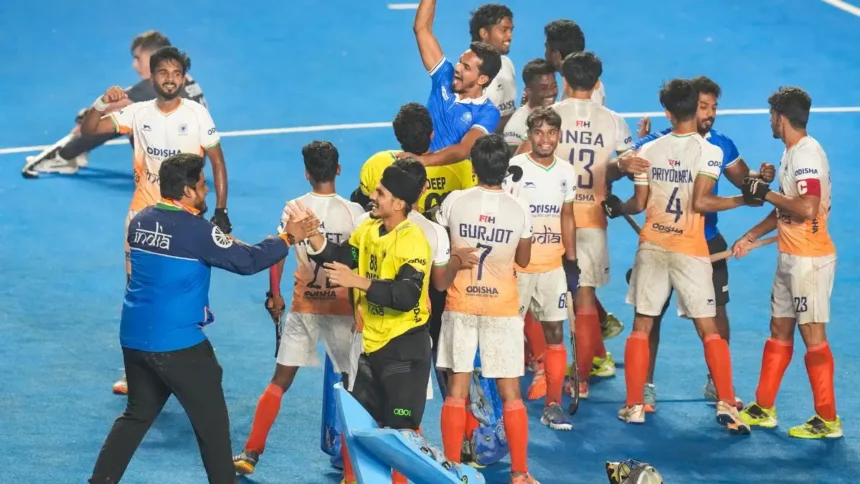
India produced an inspiring and resilient performance to clinch the bronze medal in the FIH Men’s Junior Hockey World Cup, overcoming a challenging two-goal deficit to defeat Argentina 4-2 in a thrilling contest on Wednesday. The victory marks a significant achievement for the Indian side, which had previously won the tournament in 2016 in Lucknow but failed to secure a podium finish in the last two editions, finishing fourth in both 2021 in Bhubaneswar and 2023 in Kuala Lumpur. The match unfolded as a gripping tale of determination, skill, and tactical acumen, as India, after a hesitant start and initial setbacks, displayed remarkable composure and fighting spirit to overturn the deficit, making a powerful statement about the growing prowess and competitive edge of the nation’s junior hockey program. The Indian squad’s ability to remain patient, capitalize on penalty corner opportunities, and seize momentum in the final quarter highlighted both their technical capabilities and mental resilience, earning them well-deserved recognition on the global stage.
India’s Early Struggles and Argentine Dominance in the Opening Quarters
The contest began with Argentina asserting their dominance, particularly in the first two quarters, demonstrating superior possession, swift passing, and clinical finishing. The visitors from South America quickly capitalized on India’s early lapses, with Nicolas Rodriguez converting a penalty stroke in the third minute following a foul by India’s Anmol Ekka, giving Argentina an immediate lead. India, struggling to establish rhythm in the opening phase, often surrendered possession too easily, allowing the Argentine side to dictate the pace of play. The first 15 minutes saw India attempting to find structure in their gameplay, but the Argentines’ organized defense and sharp attacking transitions repeatedly tested the hosts, keeping India on the back foot. The Indian forwards struggled to penetrate Argentina’s disciplined defensive lines, and goalkeeper Joaquin Ruiz’s composure added to India’s early frustrations. Despite these challenges, India had moments of promise, with Dilraj Singh’s attempt from the top of the circle in the 20th minute narrowly saved by the Argentine goalkeeper, offering a glimmer of hope.
The Argentine team continued to maintain their pressure, creating several penalty corner opportunities between the 37th and 41st minutes. Yet, Indian goalkeeper Princedeep Singh showcased exceptional reflexes and composure, producing critical saves, including a remarkable double save, keeping India within striking distance. These crucial interventions prevented Argentina from extending their lead further and allowed the Indian side to maintain belief and gradually build momentum. The first half concluded with Argentina leading 2-0, thanks to Santiago Fernandez’s goal in the 44th minute, highlighting India’s urgent need to recalibrate strategy, sharpen execution, and leverage set-piece opportunities in the remaining quarters.
India’s Resilient Comeback and Tactical Brilliance in the Final Quarters
After the break, India emerged with renewed determination and tactical clarity, initiating a spirited comeback that would define the match. The Indian side focused on structured build-ups, maintaining high intensity, and maximizing penalty corner opportunities, which had proved decisive in earlier matches. In the 49th minute, Ankit Pal converted a deflection from Anmol Ekka’s expertly executed flick during India’s fifth penalty corner, reducing the deficit and injecting belief into the team and fans alike. Momentum began to shift as India continued to apply pressure, and four minutes later, Manmeet Singh scored from another Ekka flick, leveling the score at 2-2 and illustrating the seamless coordination and strategic precision of India’s penalty corner routines.
With the scores tied and morale soaring, India pressed relentlessly, exploiting Argentine defensive vulnerabilities and creating scoring chances through incisive attacking moves. In the 57th minute, Sharda Nand Tiwari found the net from a penalty stroke, putting India ahead for the first time and intensifying the momentum in their favor. The final goal, scored by Anmol Ekka a minute later from a flawlessly executed penalty corner, sealed a memorable 4-2 victory for India, completing one of the most remarkable comebacks in recent junior hockey history. The match exemplified India’s resilience, tactical adaptability, and the players’ mental toughness under pressure, emphasizing their ability to respond decisively in high-stakes situations.
India’s triumph in securing the bronze medal not only restored the nation’s presence on the Junior World Cup podium but also highlighted the depth of talent, strategic planning, and execution skills embedded within the current junior hockey program. The collective effort, from the goalkeeper’s heroics to the forwards’ precise penalty corner conversions, demonstrated a harmonious blend of individual brilliance and team cohesion, underscoring the importance of preparation, coordination, and mental fortitude in international competitions.
Throughout the match, the Indian team’s response to adversity reflected a strong mindset cultivated through rigorous training, exposure to high-pressure games, and the guidance of coaching staff focused on fostering resilience and strategic intelligence. The performance showcased not just skill, but also the players’ ability to adapt tactically, maintain composure under pressure, and seize critical moments to reverse the game’s trajectory. This win also reaffirmed India’s commitment to nurturing talent at the junior level, ensuring a robust pipeline of players capable of competing at the highest levels of international hockey.
The match against Argentina offered several learning points for India, including the significance of maintaining focus in the opening stages, optimizing set-piece execution, and managing transitions between defensive and offensive phases effectively. The team’s ability to overcome early setbacks and convert opportunities under pressure serves as a model for other emerging teams in international hockey. The performance also reinforced the importance of psychological preparation, as players demonstrated remarkable calmness and confidence during critical moments, ultimately translating composure into tangible results on the scoreboard.
India’s junior hockey squad has demonstrated remarkable growth over the years, and the bronze medal victory serves as a milestone that reflects both progress and potential. The strategic adjustments made during the match, particularly in leveraging penalty corner routines and exploiting defensive gaps, showcased the team’s tactical maturity. The players’ dedication, persistence, and focus underlined the significance of disciplined training programs, mentorship, and the cultivation of team chemistry essential for success in international tournaments.
India’s performance in the bronze medal match against Argentina illustrated a compelling narrative of determination, teamwork, and strategic execution, highlighting the resilience and skill that underpin the nation’s junior hockey program. The triumph marks a moment of pride, inspiration, and motivation for the next generation of Indian hockey players, reinforcing the importance of perseverance, preparation, and belief in achieving success on the global stage. This victory also signals the continued rise of India as a formidable contender in international junior hockey, capable of producing memorable performances and competing against top-tier teams with confidence and tactical acumen.
India’s path to the bronze medal is a testament to the blend of talent, dedication, and strategic insight driving the country’s junior hockey program, setting a benchmark for future competitions and exemplifying the rewards of persistence, teamwork, and excellence in the sport.