in a region gripped by escalating tensions. U.S. President Donald Trump announced that Washington would likely engage in nuclear talks with Iran next week, following recent U.S. airstrikes that he claimed severely damaged Iran’s nuclear program.
Donald Trump claims success of U.S. strikes
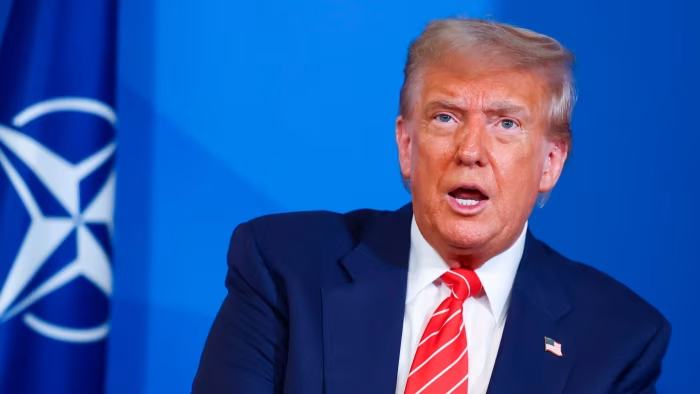
Speaking at a NATO summit in The Hague, Donald Trump said the massive bunker-busting bombs dropped by the U.S. in Sunday’s attack had delivered a devastating blow to Iran’s nuclear ambitions. “It was obliteration,” Donald Trump said, brushing aside a U.S. Defense Intelligence Agency estimate that Iran’s nuclear program might only be set back by months. Donald Trump called the outcome “a victory for everybody,” and added that Tehran was unlikely to resume its nuclear activities anytime soon, stating, “They want to recover.”
The airstrikes reportedly destroyed several major nuclear facilities in Iran, and according to CIA Director John Ratcliffe, rebuilding them could take years. Israel’s nuclear agency supported this view, assessing that Iran’s ability to develop nuclear weapons has been delayed by “many years.” However, Rafael Grossi, head of the UN’s nuclear watchdog, warned against short-term evaluations, noting that technological knowledge and industrial capacity in Iran remain intact. He emphasized the urgent need to allow international inspectors access to nuclear sites.
Potential talks amid ongoing political uncertainty
Donald Trump expressed optimism about a diplomatic solution, hinting that a possible agreement could be signed with Iran, although he downplayed the necessity. “We may sign an agreement. I don’t know. To me, I don’t think it’s that necessary,” he said. Donald Trump gave no details on the venue or participants of the upcoming discussions but reiterated that military force would be used again if Iran tried to rebuild its nuclear arsenal.
The broader context surrounding the ceasefire includes the fallout of Israel’s aggressive bombing campaign launched on June 13, which reportedly killed several top Iranian military leaders and nuclear scientists. Iran retaliated with a barrage of missiles that, for the first time, breached Israel’s defenses. Iranian authorities claimed 627 people were killed and nearly 5,000 injured in the attacks, although independent verification remains impossible due to media restrictions.
In Israel, 28 people were killed. Both sides have claimed victory: Israel asserting it destroyed Iran’s nuclear infrastructure, and Iran highlighting its successful retaliation that forced a ceasefire.
Domestic fallout and hints of reform in Iran
The conflict has triggered internal debate within Iran. President Masoud Pezeshkian, a moderate elected last year, hinted that the national crisis could pave the way for domestic reforms. “This war and the empathy it fostered is an opportunity to change the outlook of management and behaviour of officials,” he said.
However, Iran’s leadership also acted swiftly to reassert control. The judiciary announced the execution of three individuals convicted of working with Israel’s Mossad. Around 700 others were reportedly detained during the conflict over alleged ties with Israeli intelligence.
Though Donald Trump had previously suggested regime change in Iran, he backed away from such rhetoric following the ceasefire, saying he didn’t want to see chaos in the region.
Mixed emotions among civilians
On the ground, people in both countries expressed cautious relief. In Tehran, residents began returning to their homes after days in hiding. “People are relieved that the war has stopped, but there’s a lot of uncertainty about what comes next,” said a 67-year-old resident.
In Tel Aviv, the mood was similar. “Those past two weeks were catastrophic in Israel,” said Rony Hoter-Ishay Meyer, a 38-year-old mother. “We are very much exhausted and we need to get back to our normal energy.”