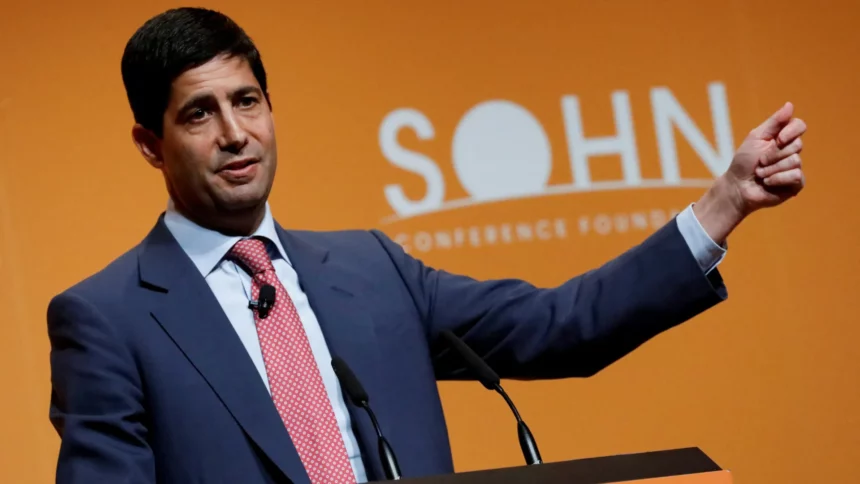
US President Donald Trump has nominated Kevin Warsh, a former Federal Reserve governor and outspoken critic of the central bank, to lead the US Federal Reserve when current Chairman Jerome Powell’s four-year term concludes in May. Warsh, who has previously been considered for the role during Donald Trump’s first term, is known for his hawkish views during his tenure on the Fed but has recently signaled support for lower interest rates in the near term. The nomination comes amid growing concerns over the independence of the central bank, following Donald Trump’s repeated public criticisms of Powell and recent legal investigations related to testimony about Federal Reserve building renovations. Economists, policymakers, and financial market participants are closely observing these developments, as the US economy faces a delicate balance of stabilizing employment, persistent inflation, and ongoing uncertainty about monetary policy. The nomination of Warsh highlights the intersection of politics, economic strategy, and financial oversight at one of the most pivotal institutions in the United States.
Kevin Warsh’s Background and Economic Philosophy
Kevin Warsh, aged 55, is an economist with extensive experience in both the public and private sectors, including serving as a Federal Reserve governor from 2006 to 2011. During his tenure, he was recognized for his relatively hawkish stance, prioritizing concerns over inflation and advocating for higher interest rates to maintain economic stability. Over the years, Warsh has emerged as a critic of the Federal Reserve’s operational methods, questioning its reliance on data-driven decision-making and the management of assets on its balance sheet. In recent weeks, as speculation intensified about who would succeed Powell, Warsh re-emerged as a leading contender, signaling that he could balance his earlier hawkish tendencies with a pragmatic approach favoring near-term interest rate cuts, contingent on economic conditions.
Warsh’s academic and professional credentials are significant. He is a fellow at the Hoover Institution, a conservative think tank, and serves on the board of UPS, demonstrating his connection to both economic research and practical business experience. He has been vocal about the need for policy adjustments at the Fed, including potentially shrinking the balance sheet to influence short-term interest rates. Analysts note that this approach, while unorthodox in some respects, reflects a broader trend of modernizing monetary policy in response to contemporary economic pressures. Warsh’s nomination brings a combination of historical Fed experience, policy critique, and a nuanced understanding of macroeconomic management, positioning him to navigate a challenging economic environment while addressing concerns over central bank autonomy.
The nomination announcement, made by Donald Trump on the social media platform Truth Social, praised Warsh’s capabilities, stating that he “will go down as one of the great Fed chairmen, maybe the best.” While the nomination still requires Senate approval—a process that could introduce delays—Donald Trump’s public support signals strong political backing, at least from the executive branch. The nomination also comes at a time when financial markets and economists are closely monitoring the independence of the Fed. Powell’s resistance to quick interest rate cuts, combined with investigations into his testimony to the Senate, has fueled concerns about the potential politicization of monetary policy. In this context, Warsh’s appointment will be scrutinized not only for his economic policies but also for his ability to maintain the credibility and independence of the institution.
Political Context and Market Reactions
Warsh’s nomination arrives amid a politically charged backdrop. Donald Trump has repeatedly criticized Powell for not reducing interest rates aggressively, and the Department of Justice has initiated an investigation into Powell’s testimony about renovations to Fed buildings, further intensifying scrutiny of the central bank. This combination of political pressure and legal inquiry has raised concerns among economists and market observers about whether the Fed can operate independently of political influence, particularly as the US economy faces persistent inflation above the 2 percent target and a labor market showing signs of stabilization but with sluggish job creation.
Financial markets have already reacted to the news of Warsh’s nomination. The US dollar strengthened slightly following the announcement, while gold prices fell by approximately six percent. Analysts suggest that Warsh’s nomination may provide reassurance to investors who feared further political encroachment on the Fed, given his long-standing expertise and credibility in monetary policy matters. Stephen Brown, deputy chief North America economist at Capital Economics, remarked that Warsh “seems like a relatively safe choice,” emphasizing that his prior experience and policy knowledge could mitigate concerns about excessive political influence. Other market commentators highlighted that Warsh’s authority, developed during his previous consideration for the Fed chair in 2017, grants him a level of respect and credibility among policymakers, economists, and financial professionals.
Warsh’s personal and family connections have also attracted attention in political circles. He is married to Jane Lauder, an heir to the Estee Lauder cosmetics empire, and his father-in-law, Ronald Lauder, is a known Donald Trump ally and donor. While these associations do not directly impact his qualifications, they add another dimension to the political narrative surrounding his nomination. Some Republican senators, including Thom Tillis, have indicated opposition to Donald Trump’s nominees until investigations involving Powell are resolved, introducing potential obstacles to a smooth confirmation process. Additionally, Donald Trump has targeted other Fed officials, such as Governor Lisa Cook, whom he has accused of mortgage fraud—charges she denies—with ongoing Supreme Court scrutiny of the case. This environment underscores the challenges Warsh may face in establishing his independence and credibility as Fed chair while navigating political pressures.
The nomination also situates Warsh among a competitive pool of candidates, including White House economic adviser Kevin Hassett, Fed governor Christopher Waller, and bond strategist Rick Rieder. While Warsh’s prior tenure and familiarity with Fed operations position him advantageously, the confirmation process will test his ability to communicate policy priorities and assert independence. Economists have noted that Warsh will need to convince his colleagues that interest rate reductions are appropriate in the near term, a task contingent upon observable softening in the labor market or substantial easing in inflationary pressures. The broader challenge lies in balancing expectations from both the White House and financial markets while preserving the operational credibility of the central bank.
Warsh’s economic philosophy, particularly regarding interest rates and balance sheet management, is likely to shape the Fed’s policy trajectory in the near term. He has advocated for recalibrating the balance sheet to facilitate lower short-term interest rates, a strategy aimed at stimulating economic growth without undermining long-term stability. This approach reflects a nuanced understanding of contemporary macroeconomic dynamics, wherein conventional policy tools such as interest rates must be complemented by strategic asset management to achieve desired outcomes. Analysts argue that if Warsh can successfully integrate these approaches, the Fed may navigate current challenges while maintaining confidence among investors, businesses, and international observers.
Moreover, Warsh’s nomination arrives at a time when the US economy demonstrates mixed signals. Employment figures show modest improvement, but job creation remains sluggish, while inflation persists above the target threshold. Policymakers must weigh these factors in determining the appropriate trajectory for interest rates, a task complicated by political pressures and ongoing legal scrutiny. Warsh’s combination of hawkish experience and willingness to entertain targeted interest rate reductions positions him to approach this delicate balancing act with pragmatism and strategic foresight.
The nomination also carries implications for global financial markets. As the Fed chair plays a critical role in shaping interest rates, currency valuations, and investor sentiment, Warsh’s policies and communications will be closely monitored internationally. His decisions may influence capital flows, bond yields, and equity markets, emphasizing the interconnected nature of monetary policy in an era of globalized finance. The announcement has already prompted analysts to re-evaluate assumptions about future rate trajectories, with some predicting a potential easing bias under Warsh, contingent upon economic conditions and inflation trends.
Warsh’s prior experience as a Fed governor provides him with unique insight into the internal workings of the Federal Reserve. He understands the dynamics of policy committees, interbank communication, and market expectations, all of which are critical for maintaining stability and credibility. Additionally, his role on corporate boards and think tanks allows him to integrate perspectives from private-sector operations and research-driven policy analysis, offering a comprehensive approach to central bank leadership. This multifaceted background strengthens his ability to navigate complex economic landscapes while addressing both domestic and international policy challenges.
Donald Trump’s public statements regarding Warsh highlight the political dimension of the nomination. By framing Warsh as one of the “great Fed chairmen,” Donald Trump seeks to reassure supporters and investors alike of a continuation of pragmatic, market-oriented policies. At the same time, analysts caution that Warsh will be scrutinized not only for his policy positions but also for how he manages expectations from the White House, Congress, and the broader public. Maintaining the Fed’s independence while delivering policy decisions aligned with economic realities will be among Warsh’s primary challenges.
In addition to domestic considerations, Warsh’s nomination signals potential implications for the Fed’s communication strategy. Clear and credible communication about interest rate policy, balance sheet adjustments, and economic forecasts is vital for managing market expectations. Warsh’s prior experience suggests he understands the importance of transparency and disciplined messaging, both of which will be essential as financial markets navigate periods of uncertainty. The ability to convey policy rationale effectively will influence market stability, investor confidence, and overall economic performance.
Finally, Warsh’s appointment comes at a moment of heightened public and political attention on the Federal Reserve. With legal inquiries, political criticism, and market volatility converging, the Fed faces scrutiny on multiple fronts. Warsh’s leadership will be judged on his ability to uphold the independence of the institution, respond to macroeconomic challenges, and maintain credibility with international financial communities. Economists, investors, and policymakers are likely to closely evaluate every decision, reflecting the central role of the Fed in shaping economic stability, confidence, and growth.
By combining historical experience, policy insight, and strategic foresight, Kevin Warsh is positioned to assume leadership of the Federal Reserve amid a complex and evolving economic and political landscape. His tenure will likely define the trajectory of US monetary policy, the stability of financial markets, and the credibility of the central bank in the eyes of domestic and international stakeholders.