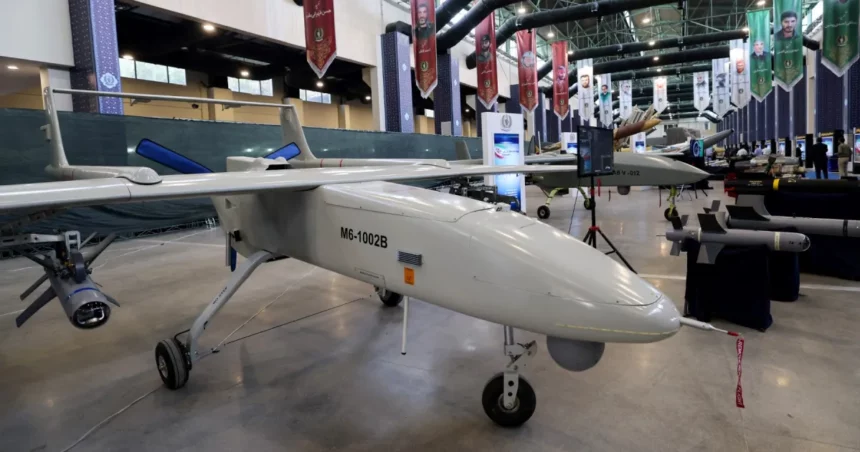
Tensions between Iran and the United States have escalated sharply, with both nations exchanging warnings and military posturing that signal a potential escalation in the volatile Middle East region. Iranian officials have declared that the country has prepared a fleet of 1000 drones capable of striking targets from both land and sea, accompanied by an extensive arsenal of ballistic missiles. These statements come after recent warnings from US President Donald Trump, who urged Iran to reach a nuclear agreement and threatened severe consequences if Tehran failed to comply. The confrontation reflects deepening geopolitical friction, with both nations signaling readiness for potential military action, while analysts and international observers closely monitor the unfolding scenario to gauge the risk of direct conflict.
Iran’s Expanded Drone Network and Military Strategy
Iranian Army Chief Major General Amir Hatami has emphasized that the nation’s military strategy has undergone significant changes following the 12-day confrontation with the United States and Israel in June 2025. The previous conflict, which involved targeted strikes and heightened military tensions, prompted Iranian military planners to overhaul their operational approach, with a particular focus on unmanned aerial capabilities. According to Hatami, Iran now maintains a robust fleet of 1000 drones, designed to operate effectively from both land bases and naval platforms. These drones are intended to provide a versatile offensive capability, capable of precise strikes on enemy positions, logistical centers, and strategic installations.
The Iranian leadership asserts that this drone network is complemented by a wide range of ballistic missiles, enhancing the nation’s deterrent posture. The combination of drones and missile systems allows Iran to project power across the region, with the capability to target military bases in the Gulf, including US installations in Qatar, as well as strategic sites in Israel. Iranian military planners have reportedly conducted extensive exercises to integrate these drone and missile systems, ensuring coordination, rapid deployment, and high operational readiness.
Hatami highlighted that the drones are equipped for both reconnaissance and offensive missions, with some models capable of precision strikes over long distances. The strategy emphasizes flexibility, allowing Iran to respond swiftly to any potential threat from US forces or allied partners. Additionally, the deployment of the drone carrier ship Shahid Bagheri into international waters underscores Tehran’s intent to maintain maritime operational capacity, demonstrating the ability to strike from the sea in a coordinated manner alongside land-based systems.
US Responses and Regional Implications
In response to Iran’s declarations, US President Donald Trump reiterated demands for Tehran to engage in negotiations over its nuclear program. He warned that failure to comply would result in an attack far more severe than previous confrontations, underscoring the high-stakes nature of current tensions. Trump’s administration has mobilized naval assets in the Gulf region, signaling readiness to respond to any Iranian provocation. US Defense Secretary Pete Hegseth confirmed that the military remains fully prepared to execute orders from the President, emphasizing the commitment of US forces to protecting national and allied interests in the region.
The unfolding standoff has broader implications for regional security, as Gulf nations, Israel, and other stakeholders monitor the situation closely. Iran’s ability to threaten US and allied positions with a combined arsenal of drones and missiles increases the strategic complexity of any potential conflict. Analysts suggest that the use of unmanned systems could allow Iran to engage in asymmetric warfare, targeting sensitive military infrastructure while minimizing direct exposure of personnel. Such capabilities may serve as both a deterrent and a strategic lever in ongoing negotiations and geopolitical maneuvering.
The presence of US warships in the Gulf, combined with Iran’s recent military deployments, reflects a precarious balance between preparation and restraint. Both sides have invested in demonstrating capabilities intended to dissuade the other from initiating aggressive action, but the heightened rhetoric and rapid military mobilization increase the risk of miscalculation. Observers note that the integration of drone warfare into Iran’s military doctrine represents a significant shift in regional defense strategies, allowing Tehran to challenge conventional forces and extend its reach across multiple theaters of operation.
Iranian military officials assert that their strategy is defensive as well as retaliatory, ensuring that the country can protect its sovereignty while responding proportionally to any attacks. The operational readiness of drones and missiles, combined with ongoing drills and simulated strike exercises, reflects a comprehensive approach to deterrence, emphasizing speed, precision, and coordination across air, land, and maritime domains. Tehran’s messaging also emphasizes its commitment to regional influence, projecting strength in a manner that reinforces national pride and strategic credibility.
Analysts warn that the current situation requires careful diplomatic engagement to prevent escalation. While military capabilities are on display, the potential for negotiation and conflict resolution remains critical. Iran’s warnings, coupled with US mobilization, highlight the delicate balance of power and the potential consequences of missteps in decision-making. The international community continues to watch developments closely, as any confrontation could have far-reaching implications for global energy markets, regional security, and geopolitical alliances.
The evolution of Iran’s military strategy, particularly its investment in drones and missile systems, demonstrates a recognition of modern warfare dynamics and the importance of technological parity with potential adversaries. Tehran’s ability to operate a large-scale drone fleet from both land and sea, combined with ballistic missile support, enhances the nation’s ability to project force, deter aggression, and shape the strategic environment in its favor. These developments are indicative of a broader trend in which unmanned systems play a central role in contemporary military doctrine, particularly for nations seeking to offset conventional military disparities.
Meanwhile, US military planners are reportedly assessing multiple scenarios, including drone countermeasures, missile defense readiness, and joint coordination with regional allies to mitigate potential Iranian threats. The presence of high-value targets such as military bases, naval assets, and strategic infrastructure in the Gulf region necessitates comprehensive planning and constant situational awareness. The complexity of modern engagements, involving rapid strikes, electronic warfare, and unmanned systems, underscores the evolving nature of conflict in high-stakes environments.
As the situation develops, both Iran and the United States face pressure from domestic and international constituencies. For Iran, demonstrating military preparedness and sovereignty is essential to maintaining regional credibility and domestic political legitimacy. For the US, ensuring the security of personnel and allied territories while avoiding unintended escalation is a critical priority. The interplay of rhetoric, military capability, and strategic signaling continues to define the current phase of tensions, highlighting the importance of careful analysis, contingency planning, and diplomatic engagement.
The Iranian drone program, combined with a missile arsenal capable of striking regional targets, represents a significant advancement in Tehran’s defensive and offensive capabilities. By integrating modern technology into its military doctrine, Iran has positioned itself to challenge adversaries while projecting strategic deterrence. The ongoing exchange of warnings, military posturing, and diplomatic statements underscores the complexity of the US-Iran relationship and the broader implications for Middle Eastern stability.
Iran’s deployment of the Shahid Bagheri drone carrier, in particular, demonstrates a clear intent to operate beyond national territory, projecting power across maritime domains and signaling readiness to conduct operations that integrate naval, aerial, and missile-based assets. Such developments illustrate the strategic depth of Iran’s military planning and its ability to adapt lessons learned from previous conflicts into actionable capabilities.
The dialogue between Tehran and Washington, while tense, also presents opportunities for negotiation and restraint. The presence of sophisticated drone and missile systems increases the potential costs of miscalculation, reinforcing the importance of careful engagement, credible deterrence, and strategic communication. Both nations continue to signal readiness, but the ultimate outcome will depend on the interplay of military preparedness, diplomatic maneuvering, and regional alliances.
Iran’s warnings regarding drone strikes and missile attacks are emblematic of a broader strategic posture that emphasizes sovereignty, deterrence, and the capacity to respond decisively to perceived threats. The rapid deployment of forces, preparation of unmanned systems, and integration of long-range missile capabilities demonstrate Tehran’s commitment to defending national interests and asserting influence within the region.
The current scenario in the Gulf region illustrates the evolving nature of modern conflict, where unmanned aerial vehicles, missile systems, and rapid-response strategies form the core of military doctrine. Both Iran and the United States are navigating a delicate balance between deterrence and provocation, with each side seeking to influence the strategic calculus of the other while minimizing the risk of direct confrontation.
As the situation continues to unfold, military experts, diplomats, and regional analysts will monitor developments closely, assessing the implications for security, energy stability, and geopolitical alignment. The interplay between Iranian capabilities and US responses highlights the complexity of modern military engagement and the critical importance of strategic foresight, communication, and technological readiness.
Ultimately, Iran’s announcement of 1000 drones ready for deployment from land and sea, combined with missile capabilities, marks a significant moment in the ongoing tensions with the United States. The region watches anxiously as both sides maintain heightened readiness, emphasizing deterrence, power projection, and the delicate management of potential conflict. The coming weeks will likely shape the strategic landscape in the Middle East, with implications for military planning, diplomatic negotiations, and regional stability.