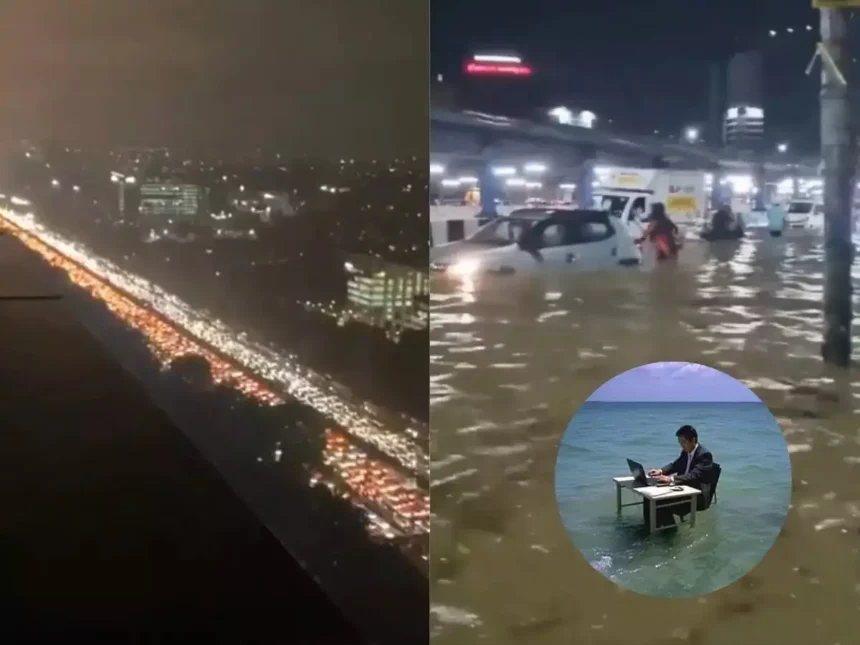
Gurugram, widely known as the Millennium City, experienced unprecedented flooding on Monday evening as heavy monsoon rains inundated major roads, residential sectors, and commercial areas across the city and parts of Delhi-NCR. Streets turned into waterways, forcing residents to wade through knee-deep water with their belongings, while vehicles struggled through submerged routes. The torrential downpour caused massive disruption to daily life, with waterlogging reported across several sectors, and infrastructure such as the Signature Tower Chowk underpass showing visible signs of leakage. The District Disaster Management Authority (DDMA) swiftly issued advisories urging citizens to work from home and instructing schools to conduct online classes as authorities scrambled to manage the flood crisis.
The severity of the situation has exposed the vulnerability of urban planning in Gurugram and highlighted the urgent need for better drainage systems, proactive disaster management strategies, and coordinated municipal efforts. Images and videos circulating on social media captured the full extent of the waterlogging, with Sector 10 being particularly affected. Residents were seen navigating the floodwaters carrying essentials, while some areas saw vehicles stalling mid-route due to the accumulation of rainwater. Social media reactions quickly drew attention to the failure of local infrastructure to handle extreme weather, prompting criticism from political leaders and concerned citizens alike.
Waterlogging Hits Key Infrastructure and Transportation Networks
Several reports confirmed that the Signature Tower Chowk underpass, a critical part of Gurugram’s road network, experienced ceiling leaks, adding to the growing list of infrastructure challenges caused by the heavy rains. Flooded streets created gridlocks across major routes, including NH-48 and Sohna Road, forcing local authorities to dispatch teams for on-the-spot inspections and emergency response measures. Gurugram Police Commissioner Vikas Arora, accompanied by Deputy Commissioner Ajay Kumar, conducted late-night inspections to assess the extent of waterlogging and evaluate traffic conditions in real-time.
The NDMA advisory and subsequent district instructions aimed to minimize disruption and ensure public safety. Residents were advised to work remotely wherever possible, while schools were instructed to move classes online. This proactive measure came as part of a broader attempt to prevent accidents and maintain continuity in education despite the adverse weather conditions. Many corporate offices, private institutions, and commercial establishments quickly shifted operations to remote work, while parents coordinated online learning for children. The district administration emphasized the importance of adhering strictly to advisories and avoiding unnecessary travel, especially in areas with severe water accumulation.
Local political leaders also reacted to the unfolding situation. Shiv Sena (UBT) Rajya Sabha MP Priyanka Chaturvedi publicly criticized the Haryana government over its handling of urban flooding. Sharing video footage on social media that showed bumper-to-bumper traffic along NH-48, she highlighted the apparent administrative failures in mitigating the impact of monsoon rains. Her remarks underscored the growing public frustration with civic authorities’ inability to manage urban waterlogging, reflecting broader concerns about Gurugram’s preparedness for extreme weather events.
Transportation disruptions extended beyond road networks. IndiGo Airlines issued advisories for travelers, warning of potential delays due to slow-moving traffic across key access points to the Delhi airport. Passengers were urged to check flight statuses, allow extra travel time, and consider alternate routes. The airline confirmed that its teams were actively monitoring the situation to provide support and ensure timely airport access for affected travelers. These advisories highlighted the far-reaching consequences of urban flooding, not only affecting residents and local businesses but also impacting national and international travel logistics.
Government Response and Administrative Measures Amid Heavy Rainfall
In response to the flooding, Haryana Chief Minister Nayab Singh Saini convened a video conference with district deputy commissioners to review the situation and issue immediate directives to local administrations. The Chief Minister stressed that districts where schools were ordered to close must ensure that all institutions remain completely shut, emphasizing the safety of students and school staff as a top priority. Additionally, he directed that residents arriving from flood-affected regions of Punjab should receive immediate shelter, food, and essential supplies to mitigate the humanitarian impact of the rains.
The Chief Minister also highlighted the importance of ensuring adequate storage of food grains and timely availability of meals in affected districts. Proper arrangements for animal fodder were also mandated, recognizing that prolonged waterlogging could disrupt essential services for livestock-dependent communities. By focusing on both human and animal welfare, the administration sought to address the multifaceted challenges posed by urban flooding. Authorities were instructed to coordinate with municipal bodies, traffic management teams, and disaster response units to clear blocked drains, deploy emergency water pumps, and restore road accessibility as quickly as possible.
The monsoon rains exposed not only vulnerabilities in Gurugram’s drainage systems but also systemic challenges in urban planning and infrastructure resilience. Rapid urbanization, increasing population density, and inadequate stormwater management systems have repeatedly contributed to flooding in recent years. Experts have pointed out that while the city boasts modern residential complexes and commercial hubs, the underlying infrastructure often fails to cope with extreme weather events. This recurring vulnerability has prompted calls for long-term investments in flood mitigation, including enhanced drainage networks, rainwater harvesting systems, and real-time monitoring of waterlogging hotspots.
While immediate relief efforts focused on ensuring public safety and maintaining essential services, the broader implications of the floods are likely to spark renewed discussions about urban resilience planning in Gurugram and surrounding NCR regions. Residents navigating knee-deep water with their belongings and witnessing property damage underscore the human and economic costs of inadequate infrastructure preparedness. Authorities, meanwhile, face increasing pressure to implement both immediate and long-term solutions to prevent similar disruptions during future monsoon seasons.
The current rainfall event also drew attention to the interlinkage between climate variability and urban planning. With the intensity and frequency of monsoon rains increasing in the region, cities like Gurugram must prioritize adaptive strategies to manage stormwater, prevent waterlogging, and safeguard residents. The administration’s emergency measures, including advisories to work from home and shift schools to online learning, reflect a reactive approach, highlighting the need for more proactive urban resilience planning.
Additionally, political discourse surrounding the flood situation has amplified public scrutiny of administrative efficiency. Leaders like Priyanka Chaturvedi have leveraged social media to hold the government accountable, emphasizing that urban flooding is not merely a natural occurrence but a consequence of planning and governance gaps. Citizens increasingly demand transparent reporting of infrastructure maintenance, timely drainage clearance, and real-time updates during emergencies. In this context, coordination between municipal corporations, district disaster authorities, and community stakeholders is critical to minimizing the social and economic impact of extreme weather events.
The Gurugram floods also have implications for commerce and industry in the region. The Millennium City is home to numerous corporate offices, industrial hubs, and IT parks. Disruptions caused by waterlogging can significantly impact business continuity, productivity, and logistics. Remote work directives were thus essential to maintaining operational flow while ensuring the safety of employees. Businesses and corporate establishments are expected to assess infrastructure resilience, adopt emergency protocols, and invest in flood management measures to mitigate future risks.
In terms of public communication, authorities have relied on multiple channels to disseminate real-time updates. Social media, emergency hotlines, and local news outlets have been used to inform citizens about waterlogged areas, road closures, and recommended alternate routes. This coordinated approach aims to reduce panic, prevent accidents, and ensure that residents have access to timely information during periods of heavy rainfall.
Furthermore, lessons from this event may inform future urban planning and disaster management policies across the Delhi-NCR region. With climate change driving more intense and unpredictable monsoon patterns, city planners must integrate resilient drainage infrastructure, emergency response systems, and community preparedness into both short-term and long-term urban development strategies. Investments in smart city technologies, including sensors to monitor water levels and predictive modeling for flood-prone areas, could significantly enhance preparedness and response capabilities.