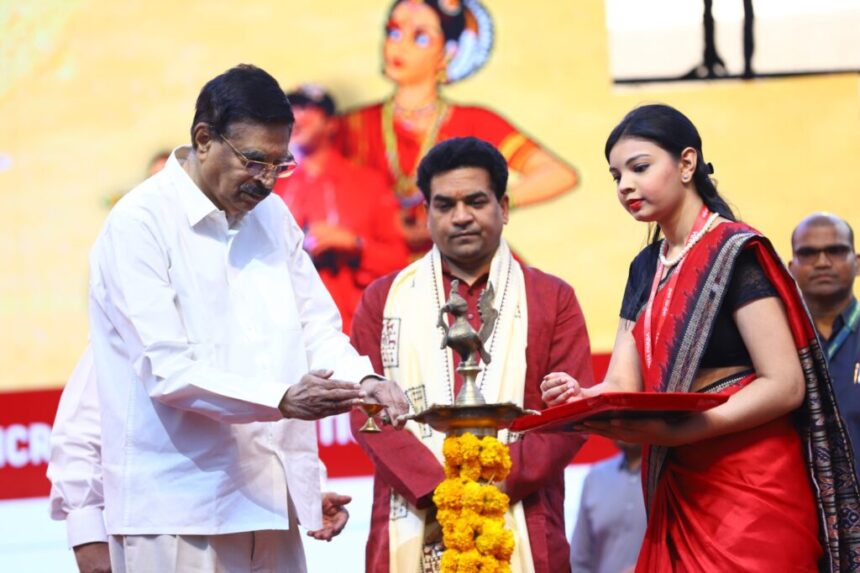
New Delhi, April 01, 2026: A vibrant cultural programme was organised at the Delhi Secretariat to mark Odisha Day, bringing together art, tradition and cultural unity under one platform. The event reflected the spirit of India’s diversity and showcased the rich heritage of Odisha through a series of captivating performances and cultural presentations. Minister for Art, Culture & Languages Shri Kapil Mishra extended his greetings on behalf of the Delhi Government and emphasized the importance of such events in strengthening national integration.
The celebration witnessed performances of Odisha’s renowned Sambalpuri dance, Rangabati and the traditional Ras Jamudali dance, which enthralled the audience with their energy and cultural depth. These dance forms, deeply rooted in the cultural fabric of Odisha, beautifully depict themes of rural life, devotion and folklore, especially stories inspired by Radha-Krishna traditions. The inclusion of tribal dance performances further added to the diversity and richness of the programme, offering a glimpse into the indigenous traditions of the state.
Focus on Cultural Unity and National Integration
Addressing the gathering, Shri Kapil Mishra highlighted that such cultural events play a significant role in promoting unity and harmony among different states and communities. He stated that the celebration aligns with the vision of “Ek Bharat Shreshtha Bharat,” an initiative aimed at fostering stronger bonds between states and promoting mutual understanding of cultural traditions. According to him, these programmes serve as a platform to celebrate India’s cultural diversity while reinforcing a sense of shared identity among citizens.
He further mentioned that under the leadership of Chief Minister Smt. Rekha Gupta, the Delhi Government has been actively organising state foundation day celebrations to give recognition to the cultural heritage of different regions. This initiative aims to ensure that people residing in Delhi from various parts of the country feel connected to their roots while also contributing to the capital’s multicultural identity.
Odisha’s Contribution to Culture and Development
Shri Kapil Mishra also spoke about Odisha’s historical and cultural significance, stating that the state is globally recognised for its ancient civilisation, temple architecture, handicrafts, classical dance forms and vibrant folk traditions. He noted that Odisha has played a crucial role in shaping India’s cultural and economic landscape through its contributions in art, literature, spirituality and maritime trade. The state’s cultural expressions continue to influence various aspects of Indian heritage and traditions.
He also acknowledged the contribution of people from Odisha in the development of Delhi, stating that they have been an integral part of the city’s growth across different sectors. Their participation in economic activities, cultural exchange and social development has enriched Delhi’s identity as a diverse and inclusive metropolitan city.
Cultural Performances Captivate Audience
The event featured performances by around 15 artists who presented a series of traditional dance forms, leaving the audience mesmerised. The lively presentation of Rangabati and Ras Jamudali stood out as highlights of the programme, reflecting the vibrancy of Sambalpuri culture. The tribal dance performances added a dynamic element, showcasing the traditional lifestyle and artistic expression of Odisha’s indigenous communities.
The programme was organised by Sahitya Kala Parishad under the Department of Art, Culture & Languages. A large number of attendees, including officials, cultural enthusiasts and members of the public, were present at the event, making it a successful and memorable celebration.
The Odisha Day celebration at the Delhi Secretariat not only honoured the cultural heritage of Odisha but also reinforced the idea of unity in diversity. By bringing together people from different backgrounds, the event highlighted the importance of preserving cultural traditions while promoting national integration. Such initiatives continue to strengthen the cultural fabric of the nation and encourage greater appreciation of India’s rich and diverse heritage.