New Delhi, 24 December 2025: In a landmark move to bring transparency, accountability, and timeliness to the process of private school fee fixation, the Delhi Government has implemented the Delhi School Education (Transparency in Fixation and Regulation of Fees) Act, 2025, effective from the academic session 2025–26. Education Minister Ashish Sood announced that the law will be operationalized through the formation of two key committees—the School Level Fee Regulation Committee (SLFRC) and the District Level Fee Appellate Committee (DLFRC).
Addressing a press conference at the Delhi Secretariat, Sood stated that the law has been framed as a supplementary measure to the Delhi School Education Act, 1973, aiming to ensure transparency in the fee fixation process of private schools while safeguarding the interests of parents. He clarified that the legislation was implemented after extensive consultations during the government’s short tenure, under the education vision of Prime Minister Narendra Modi and the leadership of Chief Minister Rekha Gupta.
Mandatory School and District Committees
The Education Minister outlined that every private school must constitute an SLFRC by 10 January 2026. The committee will include the school management as Chairperson, the Principal, three teachers, five parents, and one representative from the Directorate of Education. Members will be selected through a lottery system, and independent observers will be appointed to ensure complete transparency.
The primary function of the SLFRC will be to review the school’s proposed fee structure and take a decision within 30 days. While earlier schools were required to submit fee proposals by 1 April, under the new law, submissions must be placed before the SLFRC by 25 January 2026. If the committee does not reach a decision within the stipulated period, the matter will automatically be referred to the DLFRC.
The DLFRC will serve as an appellate authority to adjudicate disputes related to school fees, providing parents with an institutional, impartial, and rule-based forum. Sood emphasized that the mechanism is designed to eliminate arbitrariness and ensure all decisions are strictly within the legal framework.
Balanced Approach for Schools and Parents
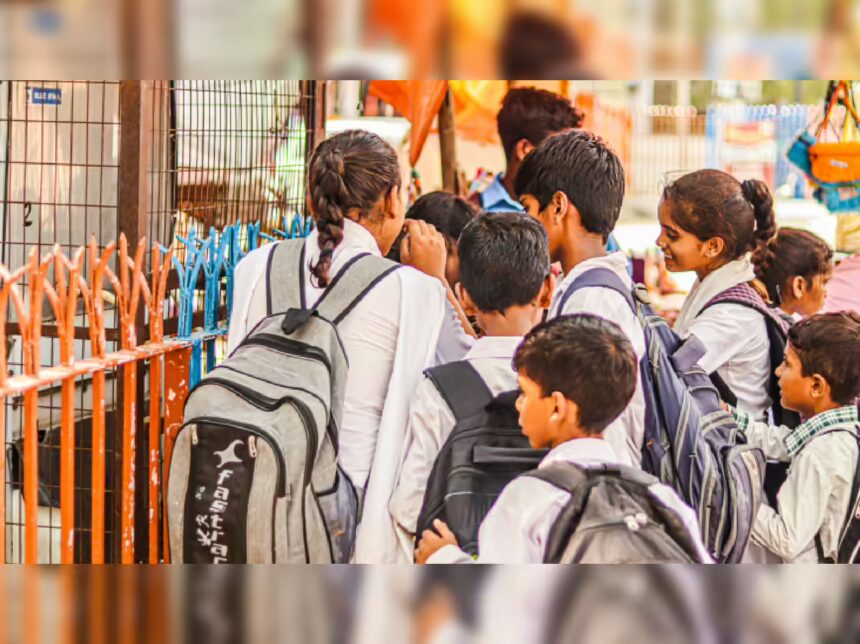
Sood underlined that the Delhi Government does not believe in confrontational politics between private and government schools but follows a solution-oriented approach. Highlighting that approximately 37–38 lakh children are enrolled in Delhi schools, he stressed that every child is equally important to the government. The law is neither against schools nor teachers; rather, it aims to establish a balanced, transparent, and reliable system.
With the implementation of this law and the establishment of SLFRC and DLFRC, long-standing questions regarding school fee determination will now have a permanent solution. The government remains committed to protecting parents from exploitation while providing schools with a clear, rule-based framework for smooth operations.
A New Era in Fee Regulation
Education Minister Sood asserted that Delhi’s school fee regulation system is entering a new era where transparency, participation, and time-bound decision-making will be the highest priorities. The move is expected to strengthen trust between schools and parents and streamline fee management across the national capital.
Through these measures, Delhi sets a benchmark for accountable governance in school education, ensuring that fee determination is conducted fairly, efficiently, and in the best interest of every child.