New Delhi, January 15, 2026
Acting on the directions of Chief Minister Rekha Gupta, the Delhi government has intensified its winter relief operations to protect homeless people from the severe cold sweeping the national capital. As part of this effort, the number of night shelters across the city has been increased, with special focus on areas surrounding major hospitals such as AIIMS, Safdarjung Hospital, and G.B. Pant Hospital.
According to the Chief Minister’s Office, teams from the Delhi Urban Shelter Improvement Board (DUSIB) and shelter management agencies are conducting late-night rescue operations to identify homeless individuals sleeping in the open and shift them to safe shelters. These rescue drives are being carried out even after midnight to ensure that no vulnerable person is left exposed to the harsh winter conditions.
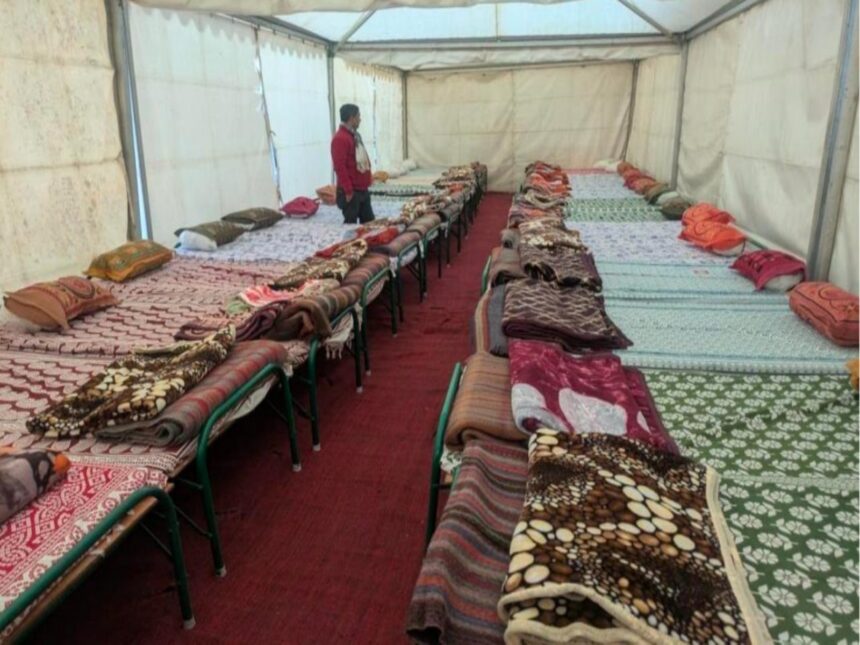
The Chief Minister stated that under the Winter Action Plan 2025–26, the government has set up around 250 temporary ‘pagoda’ night shelters in sensitive and high-footfall areas of the city. In addition, 197 permanent night shelters are currently operational across Delhi, functioning round-the-clock and equipped with basic amenities.
Special arrangements have been made around major hospitals, where a large number of homeless people are often found. In the AIIMS–Safdarjung area, apart from the existing 32 pagoda night shelters with a capacity of 320 beds, three additional pagoda shelters have been established. This has increased the total shelter capacity in the area to 350 beds. Considering the high concentration of homeless individuals near these hospitals, temporary shelters have also been arranged in nearby subway areas. Blankets and bedding are being provided immediately to protect people from the cold.
As part of a focused rescue operation, around 75 homeless individuals were rescued from the AIIMS–Safdarjung area and shifted to safe shelters. Following this drive, the area was cleared of people sleeping in the open, ensuring safer conditions during the peak winter period.
Similar measures have been taken near G.B. Pant Hospital, where eight temporary pagoda night shelters have been set up with accommodation for around 80 people. The agencies managing these shelters are carrying out regular inspections every night between 10 pm and 4 am to identify homeless individuals in unsafe locations and guide them to nearby shelters. A central control room is also functioning round-the-clock to monitor operations and coordinate rescue efforts.
The Chief Minister emphasized that night shelters are being provided with essential facilities free of cost, including beds, three meals a day, drinking water, and proper sanitation. She said the government’s approach goes beyond merely offering shelter and focuses on ensuring safety, dignity, and humane care for homeless citizens.
Rekha Gupta stated that the Delhi government has activated an alert and response system across the city to deal with extreme winter conditions. She reiterated that protecting the homeless remains a top priority and that the administration is committed to ensuring that no one in the capital is left helpless or unsafe during challenging weather conditions.
The expanded shelter facilities and continuous rescue operations reflect the government’s sustained efforts to safeguard vulnerable populations during winter and strengthen the city’s social safety net.