New Delhi, March 24, 2026
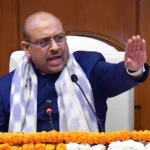
The Delhi Government’s Budget 2026–27 has been described as a major step toward infrastructure expansion, environmental sustainability, and women’s empowerment, with Cabinet Minister Manjinder Singh Sirsa stating that the financial plan reflects a forward-looking and balanced development strategy for the national capital.
The minister said the budget, presented in the Delhi Legislative Assembly, outlines a comprehensive approach aimed at strengthening economic growth while addressing environmental and social priorities.
Budget Size and Economic Direction
Manjinder Singh Sirsa stated that the budget, with an outlay of approximately ₹1,03,700 crore, marks a continuation of the government’s expansionary fiscal approach. He noted that the previous budget of ₹1 lakh crore had been successfully implemented, demonstrating the government’s financial management capability.
According to him, the increased allocation will accelerate development and strengthen infrastructure across the city. The budget aims to enhance public services, improve urban facilities, and support long-term economic growth.
He also highlighted that a significant portion of the government’s financial requirements—around 75 percent—is met through its own revenue sources, indicating a strong fiscal base.
Focus on Green Development and Environmental Sustainability
A key feature of the budget is its emphasis on environmental sustainability. Sirsa described it as a “green budget,” noting that approximately 21 percent of the total allocation has been earmarked for environment-related initiatives.
The government plans to integrate environmental considerations into all major projects, including infrastructure, transport, and waste management. Initiatives such as plantation-linked project development, pollution control mechanisms, and adoption of eco-friendly technologies form a central part of this strategy.
Specific provisions include ₹300 crore for pollution control and emergency measures such as mechanized cleaning, anti-smog guns, and water sprinkling. Additionally, ₹204 crore has been allocated to municipal bodies for pollution management, while ₹2 crore has been set aside for advanced monitoring systems including real-time tracking and mobile-based platforms.
The government is also working on expanding waste processing capacity from 7,000 metric tonnes to 15,000 metric tonnes per day through waste-to-energy projects in Narela, Okhla, Ghazipur, and Tehkhand. Plans are also underway to process organic waste into energy, supporting the development of a circular economy model.
Women Empowerment Initiatives
The budget includes several measures aimed at strengthening women’s economic participation and social security. Sirsa announced that 1,000 new e-auto licenses will be allocated to women to support their financial independence and provide safe livelihood opportunities.
He also highlighted the initiative to distribute approximately 2.5 crore sanitary pads through vending machines in schools and colleges, describing it as a step toward improving health, dignity, and safety for women and girls.
These initiatives are expected to increase women’s participation in the workforce and public life while addressing key issues related to health and accessibility.
Education and Health Sector Initiatives
Sirsa emphasized that the government continues to prioritize education and healthcare. Key measures include distribution of bicycles to girl students, provision of laptops to meritorious students, and strengthening of healthcare infrastructure.
The introduction of real-time monitoring of ICU beds in hospitals has also been proposed, aimed at improving transparency and efficiency in service delivery.
These initiatives are designed to improve accessibility, enhance service quality, and ensure better outcomes in both sectors.
Support for Employment and Gig Economy
The budget also addresses employment generation and the welfare of gig workers. The government plans to improve working conditions for gig workers through facilities such as rest areas, food, and charging stations under the Atal Canteen initiative.
Additionally, a dedicated board is proposed for auto and taxi drivers as well as gig workers, aimed at addressing their concerns and ensuring effective implementation of welfare schemes.
Industry and Startup Development
To boost industrial growth and entrepreneurship, the budget includes several provisions for micro, small, and medium enterprises (MSMEs) and startups. A provision of ₹48 crore has been proposed for establishing common facility centres to enhance productivity and competitiveness.
The government is also planning a new warehousing policy with an allocation of ₹10 crore, aimed at developing Delhi into a modern logistics hub.
Under the RAMP scheme, 32,000 MSMEs will be trained, and 15,000 businesses will be connected to digital platforms such as GeM and ONDC. Additionally, new policies related to semiconductor manufacturing and drone technology are proposed to position Delhi as a hub for advanced technology and innovation.