New Delhi, January 21, 2026
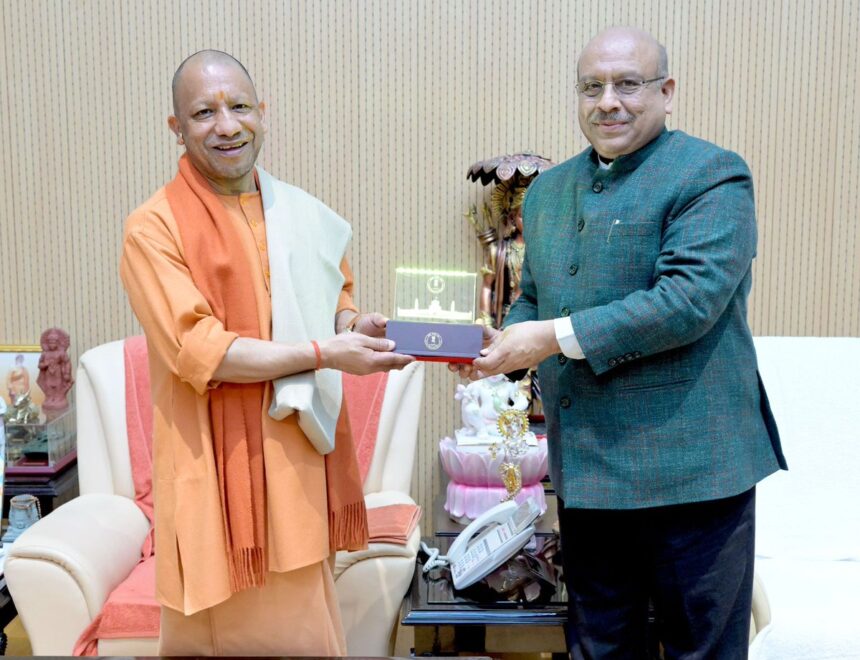
Speaker of the Delhi Legislative Assembly Vijender Gupta on Tuesday called on Anandiben Patel, Governor of Uttar Pradesh, and Yogi Adityanath, Chief Minister of Uttar Pradesh, in meetings that underscored inter-institutional cooperation, democratic values, and sustainable governance.
The meetings were held in a spirit of constitutional propriety and cooperative federalism, reflecting a shared commitment to strengthening democratic institutions, legislative practices, and coordination between states. During the interactions, the Speaker discussed a range of initiatives undertaken by the Delhi Legislative Assembly aimed at enhancing efficiency, transparency, sustainability, and public engagement.
Digital Transformation Through NeVA
During the discussions, Vijender Gupta apprised the Governor and the Chief Minister about the Delhi Legislative Assembly’s full integration with the National e-Vidhan Application (NeVA). He said the Assembly has completely transitioned to the digital legislative ecosystem, with the recently concluded winter session being the second session conducted after full NeVA integration.
The Speaker noted that this transition marks a significant milestone in the move toward paperless and technology-enabled legislative functioning. According to him, the adoption of NeVA has streamlined legislative processes, improved access to information, and enhanced transparency in the functioning of the Assembly.
First Fully Solar-Powered Legislative Assembly
Vijender Gupta also highlighted a major sustainability achievement, informing the dignitaries that the Delhi Legislative Assembly has become the first legislative assembly in the country to operate entirely on solar energy. He said this initiative has substantially reduced the Assembly’s carbon footprint and established a benchmark for environmentally responsible governance within constitutional institutions.
The Speaker emphasized that the move aligns with broader national goals of promoting renewable energy and sustainable development. He added that constitutional bodies must lead by example in adopting green practices and contributing to climate responsibility.
Showcasing Democratic and Parliamentary Legacy
During the meeting, Vijender Gupta also briefed the Governor and the Chief Minister about a commemorative coffee table book titled “Shatabdi Yatra – Veer Vithalbhai Patel.” The publication brings together rare archival photographs and historic documents that chronicle key milestones in the evolution of India’s parliamentary system.
The Speaker presented copies of the book to both dignitaries, describing it as an effort to preserve and showcase India’s rich democratic and parliamentary heritage. He said the publication highlights the contribution of Vithalbhai Patel and other leaders to the development of legislative institutions in the country.
Vision to Develop Delhi Assembly as a Heritage Site
In addition to current initiatives, Vijender Gupta shared a long-term vision of transforming the Delhi Legislative Assembly into a cultural and heritage site of national importance. He said the Assembly, given its historic role in India’s constitutional journey, deserves to be developed as a space that reflects both its legacy and its continued relevance as a living institution of representative democracy.
According to the Speaker, such an initiative would help citizens, especially the younger generation, better understand India’s democratic traditions and the functioning of legislative institutions.
Emphasis on Cooperative Federalism
The interactions highlighted the importance of dialogue and cooperation among constitutional authorities across states. Vijender Gupta said that sharing best practices between legislative and executive institutions strengthens governance and reinforces democratic norms.
Officials said the meetings reflected mutual respect and a shared vision for transparent, technology-driven, and sustainable governance. The Speaker reiterated that initiatives undertaken by the Delhi Legislative Assembly are guided by the principles of accountability, environmental responsibility, and public participation.
The meetings concluded on a positive note, with all sides acknowledging the importance of institutional collaboration and innovation in strengthening India’s democratic framework.