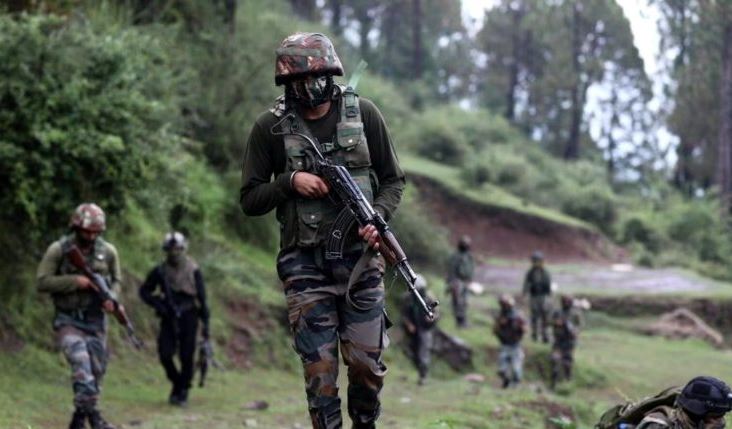
The Line of Control in Jammu and Kashmir witnessed fresh tensions as Pakistan Army troops violated the ceasefire overnight in the Keran sector of Kupwara district, prompting an immediate and measured response from Indian forces. The incident occurred during the night of Tuesday to Wednesday when soldiers of the 6 Rashtriya Rifles were engaged in a routine operation to install high-tech surveillance cameras along the LoC. The cameras, intended to strengthen border security and fill blind spots, became the target of Pakistan Army firing, which sought to disrupt the equipment’s installation and challenge Indian control over the strategically sensitive sector. While the exchange of fire was brief, Indian forces responded with a single calibrated shot, ensuring restraint while signaling readiness to defend territorial integrity. Officials emphasized that no casualties occurred on either side during the skirmish, highlighting the professionalism and discipline of the troops deployed in this high-alert border zone. The incident reflects the ongoing challenges faced by India along the 740-km-long Line of Control and the strategic imperatives of maintaining vigilance against attempts at infiltration, cross-border provocations, and disruption of border infrastructure.
Escalation at Keran Sector and Tactical Response by Indian Forces
According to military sources, the Pakistan Army’s action in the Keran Bala area was designed to interfere with the installation of advanced surveillance technology by the Indian Army. The soldiers of the 6 Rashtriya Rifles were in the process of deploying cameras that would monitor critical stretches of the LoC, a move aimed at eliminating blind spots and enhancing real-time intelligence on any suspicious cross-border movements. In response to the firing by Pakistani troops, Indian forces demonstrated tactical restraint, firing a single calibrated shot to assert control without escalating the situation unnecessarily. This measured response underscores the Indian Army’s dual approach of firmness and professionalism in addressing provocations along the Line of Control. Following the skirmish, a cordon and search operation was launched in the dense forested areas surrounding Keran, as Indian forces assessed the possibility that the firing could have been a diversionary tactic intended to cover an attempted infiltration. These operations, conducted in challenging terrain under low-visibility conditions, are crucial to safeguarding the region against potential incursions and ensuring that border security installations are operationally protected.
The broader context of this incident highlights the persistent pattern of ceasefire violations by the Pakistan Army and Pakistan Rangers along both the LoC and the international border in Jammu and Kashmir. Such actions are often intended to facilitate infiltration attempts by terrorists into Indian territory or to disrupt the operational readiness of Indian border surveillance systems. Over the years, these violations have necessitated constant vigilance and strategic deployment of forces to counter both direct provocations and covert operations. The Indian Army, in coordination with other security agencies, continues to maintain a strong deterrence posture, balancing the need for defensive readiness with adherence to international protocols and rules of engagement along the border.
Strategic Importance of LoC and International Border in Jammu and Kashmir
The Line of Control, spanning approximately 740 kilometers across Baramulla, Kupwara, and Bandipora in the Kashmir Valley, as well as in Poonch, Rajouri, and parts of Jammu district in the Jammu division, represents one of the most sensitive and militarily significant borders in India. The LoC has historically been a flashpoint for cross-border infiltration and skirmishes, requiring continuous surveillance, intelligence gathering, and proactive defense measures. Alongside the LoC, the international border, measuring around 240 kilometers through Samba, Kathua, and Jammu districts, is equally critical, as it serves as a conduit for both legitimate cross-border trade and potential smuggling or infiltration attempts. The responsibilities of the Indian Army along the LoC include not only defense against direct hostile action but also anti-infiltration operations, maintaining readiness to respond to skirmishes, and ensuring that critical surveillance infrastructure remains functional under challenging conditions. The Border Security Force, tasked with guarding the international border, undertakes similar duties, emphasizing vigilance against cross-border smuggling, drone surveillance from the Pakistani side, and the protection of key transit points along the frontier.
The integration of advanced surveillance technology has become a cornerstone of India’s border management strategy, providing real-time intelligence and enabling proactive deployment of troops to counter infiltration. The installation of high-tech cameras, sensors, and other monitoring systems is essential in a landscape characterized by rugged terrain, dense forests, and challenging weather conditions that can impede traditional patrolling. Operations like the one in Keran Bala not only ensure that surveillance gaps are addressed but also strengthen the Indian Army’s ability to anticipate and counter cross-border threats. Such deployments, however, also attract attempts at disruption from hostile forces, as seen in the recent ceasefire violation, highlighting the ongoing contest for strategic dominance along these critical sectors.
In addition to ground operations, coordination with intelligence agencies, the BSF, and local security forces plays a crucial role in preventing infiltration and maintaining law and order within the hinterland. Jammu and Kashmir Police, along with other specialized forces, focus on counter-terrorism operations targeting overground workers, sympathizers, and operatives associated with militant groups attempting to exploit vulnerabilities in border security. These operations are meticulously planned to complement the strategic objectives of the Army and BSF, ensuring that both immediate and long-term threats are effectively mitigated. By maintaining a layered security posture, Indian forces seek to prevent escalation while simultaneously safeguarding civilian populations and critical infrastructure in border-adjacent districts.
The Keran sector, in particular, has emerged as a zone of heightened strategic sensitivity due to its topography, proximity to key infiltration routes, and historical patterns of ceasefire violations. Dense forests, mountainous terrain, and challenging climatic conditions make patrolling and surveillance particularly demanding. In this context, every incident of firing, however brief, carries potential implications for operational planning, troop deployment, and regional stability. The recent ceasefire violation serves as a reminder of the persistent threat environment in which Indian forces operate, requiring constant readiness, adaptive tactics, and technological enhancements to counter evolving challenges posed by hostile elements across the border.
Indian forces have demonstrated consistent discipline in handling such provocations, emphasizing proportional responses while maintaining a posture that deters further escalation. The combination of defensive readiness, rapid operational response, and integration of surveillance capabilities underscores the Indian Army’s commitment to protecting territorial integrity while adhering to rules of engagement. The ability to conduct cordon-and-search operations in forested areas immediately following a skirmish exemplifies the agility and preparedness of troops operating in high-risk zones, reflecting both tactical expertise and strategic foresight.
While ceasefire violations are often localized, their cumulative impact on border security, operational planning, and troop morale can be significant. Therefore, Indian military strategy prioritizes continuous monitoring, intelligence sharing, and readiness to respond to multiple contingencies. Surveillance systems, such as those being installed in Keran, not only serve immediate operational purposes but also contribute to long-term strategic planning by mapping infiltration routes, identifying patterns of hostile activity, and providing actionable data for decision-making at both local and national levels.
The recent incident further underscores the importance of inter-agency cooperation between the Indian Army, BSF, police forces, and local administration in ensuring comprehensive border management. Coordination across multiple layers of security allows for swift mobilization of resources, real-time threat assessment, and execution of preventive measures that mitigate risks to both personnel and civilians. Additionally, engagement with local communities is critical in building awareness, gathering intelligence, and fostering resilience against attempts to exploit civilian areas for hostile purposes.
The geopolitical significance of Jammu and Kashmir adds another layer of complexity to managing border incidents. The region’s strategic location, combined with historical conflicts, necessitates constant vigilance and a multi-faceted security approach. Incidents such as the Keran sector firing serve as a reminder of the delicate balance required to maintain peace, uphold sovereignty, and respond decisively to provocations without triggering wider escalation. Indian forces continue to emphasize defensive strategies, technological integration, and disciplined operational conduct as key elements in sustaining security along both the LoC and the international border.
The continuous pattern of ceasefire violations by Pakistan reflects both tactical and strategic objectives aimed at testing India’s border management, challenging surveillance deployments, and potentially facilitating infiltration. India’s response, characterized by restraint, precision, and immediate follow-up operations, sends a clear message of deterrence while avoiding unnecessary escalation. The professional handling of such incidents, along with long-term measures like advanced surveillance and anti-infiltration strategies, underscores India’s commitment to protecting its territorial integrity and maintaining stability in a sensitive and contested border environment.
Through a combination of ground operations, intelligence coordination, and technological advancements, India seeks to maintain strategic superiority along the LoC and the international border. Troops deployed in high-risk sectors, such as Keran, continue to operate under challenging conditions, balancing operational readiness with preventive measures against infiltration, smuggling, and other hostile activities. The integration of modern surveillance infrastructure, coupled with disciplined and calibrated responses to provocations, reflects the Indian Army’s holistic approach to border security in Jammu and Kashmir.
The incident in the Keran sector is emblematic of the broader security dynamics in Jammu and Kashmir, where vigilance, preparedness, and technological enhancement converge to address persistent threats. As Indian forces continue to monitor, respond, and adapt to evolving challenges, the emphasis remains on maintaining operational superiority, deterring hostile actions, and ensuring that border infrastructure and civilian populations remain protected. The episode also highlights the resilience and professionalism of the armed forces in the face of provocations, demonstrating the ability to act decisively while maintaining international norms and protocols.
The firing incident in Keran underscores the ongoing complexity of border management in Jammu and Kashmir. The Indian Army’s swift and measured response, coupled with enhanced surveillance and proactive operations, represents a comprehensive strategy to mitigate threats, maintain territorial integrity, and safeguard security along both the LoC and international border. Such incidents reinforce the critical importance of operational readiness, inter-agency coordination, and the continuous modernization of surveillance infrastructure as essential components of India’s broader approach to border security in one of the country’s most sensitive regions.