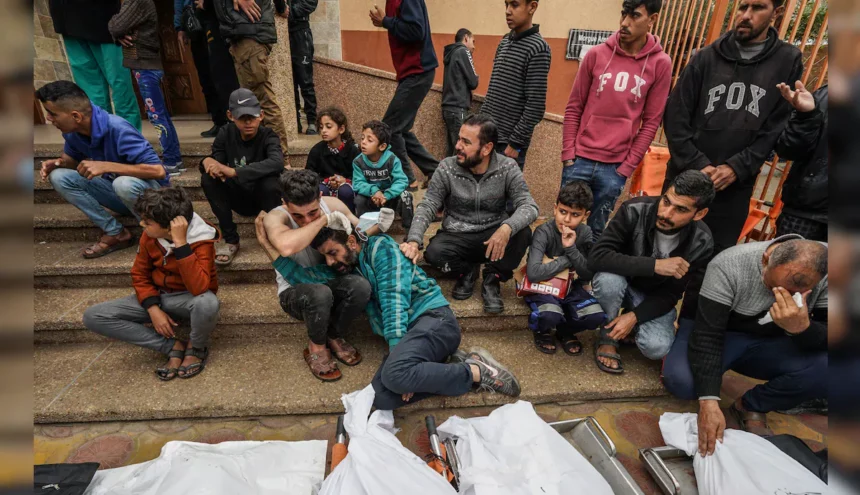
A recent study published in The Lancet medical journal has revealed that the death toll in Gaza during the first nine months of the Israel-Hamas war was approximately 40% higher than the figures reported by Gaza’s health ministry. The findings, based on a rigorous statistical analysis, estimate the death toll from traumatic injuries in the besieged region to be significantly undercounted, highlighting the devastating human cost of the prolonged conflict.
The Gaza health ministry had reported 37,877 deaths up to June 30, 2023. However, the new research estimates the actual number to be between 55,298 and 78,525, with a “best estimate” of 64,260 fatalities. This would imply that the health ministry under-reported deaths by approximately 41%. The study points out that this toll accounts for deaths caused by traumatic injuries alone, excluding fatalities from healthcare shortages, starvation, or the missing individuals believed to be buried under rubble.
The study’s findings suggest that 2.9% of Gaza’s pre-war population, or approximately one in every 35 inhabitants, had died due to the conflict by mid-2023. Women, children, and the elderly constituted 59% of these fatalities. The research utilized a method known as “capture-recapture,” which has been used in estimating death tolls in other global conflicts. This method relies on data from multiple sources, including lists provided by Gaza’s health ministry, an online survey where Palestinians reported deaths of relatives, and obituaries posted on social media platforms.
The study’s lead author, Zeina Jamaluddine, an epidemiologist at the London School of Hygiene and Tropical Medicine, emphasized the meticulous verification process behind the numbers. The researchers cross-referenced lists to eliminate duplicates and retained only those cases where deaths were confirmed by relatives or hospitals. Patrick Ball, a statistician from the Human Rights Data Analysis Group, commended the approach, describing it as a “well-tested technique” that provides a reliable estimate.
Despite its thorough methodology, the study acknowledged potential limitations. For instance, hospital records might not always specify causes of death, potentially leading to the inclusion of non-traumatic deaths such as those from heart attacks. On the other hand, the study does not account for the thousands of missing individuals or deaths caused indirectly by the war, such as those resulting from lack of access to healthcare, food, and sanitation.
The United Nations’ humanitarian agency OCHA has estimated that approximately 10,000 people in Gaza are missing and presumed to be buried under debris. Furthermore, indirect deaths caused by war-induced hardships, including malnutrition and disease outbreaks, remain unquantified in the study.
The research has sparked renewed debate over the accuracy of death toll figures in Gaza, which has been a contentious issue since the conflict began. Israel has frequently questioned the credibility of data from Gaza’s health ministry, though United Nations agencies have stated that the figures are generally reliable.
Criticism of the study is expected from both sides of the conflict. Jamaluddine expressed concern about the “obsession” with debating casualty numbers, emphasizing the undeniable reality of immense human suffering. The study also addressed a controversial projection published earlier, which estimated that 186,000 deaths could ultimately be attributed to the war when accounting for indirect fatalities. The Lancet study argued that such projections might not be applicable due to the differing pre-war health conditions in Gaza compared to other conflict zones like Burundi and East Timor.
The ongoing war has devastated Gaza, leaving its population grappling with dire living conditions. Since October 2023, the region has faced acute shortages of healthcare, food, clean water, and sanitation. The UN and international humanitarian organizations continue to call for urgent measures to address the humanitarian crisis and protect civilian lives.
Meanwhile, the impact of the war on Israel has also been significant. Hamas’ unprecedented attack in October 2023 resulted in the deaths of 1,208 people in Israel, according to official figures. The conflict has deepened divisions and fueled ongoing violence, leaving both sides with immense human and material losses.
The Lancet study underscores the catastrophic toll of the Israel-Hamas conflict, not only in terms of the sheer number of lives lost but also the broader implications for the region’s future. As the war continues to take its toll, calls for accountability, humanitarian intervention, and a resolution to the conflict grow louder.