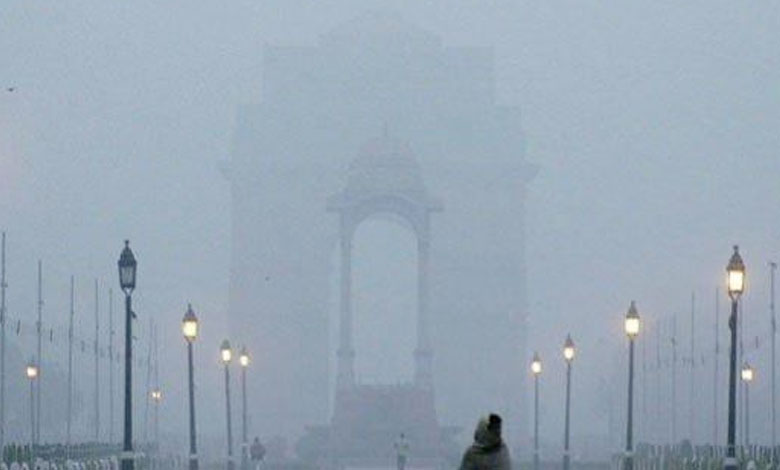
Dense fog enveloped parts of Delhi and the National Capital Region (NCR) this morning, causing severe disruptions to transportation and exacerbating the ongoing air quality crisis. The visibility dropped to nearly zero in several areas, delaying over 150 flights and around 26 trains, leaving travelers stranded and grappling with the impact of extreme weather conditions.
Flight delays averaged approximately 41 minutes, according to aviation monitoring website FlightRadar24. The Delhi International Airport Limited (DIAL) confirmed that departures were significantly “impacted” due to the dense fog, though it reassured passengers that CAT III-compliant flights could still land and take off. The adverse weather conditions have added to the woes of travelers, as hundreds of flights and trains have already been delayed or canceled in the past few weeks owing to similar foggy conditions in North India.
Adding to the region’s environmental challenges, Delhi’s air quality index (AQI) was recorded at 408 at 6 a.m., firmly placing it in the ‘severe’ category, according to data from the Central Pollution Control Board. An AQI above 400 is deemed hazardous and poses serious health risks to the population. Comparatively, the AQI had been in the ‘very poor’ category just days before, illustrating the rapid deterioration in air quality.
The India Meteorological Department (IMD) issued a warning of moderate to very dense fog across many parts of North India, including Punjab, Haryana, and Rajasthan, with Delhi’s minimum temperature recorded at 9.6 degrees Celsius. Forecasts indicate that temperatures in the capital are expected to range between 6 and 20 degrees Celsius throughout the day.
In response to the worsening air quality, the Commission for Air Quality Management reinstated Stage 3 restrictions under the Graded Response Action Plan (GRAP) on Thursday. These measures are designed to mitigate the effects of heightened pollution levels exacerbated by adverse meteorological conditions. GRAP Stage 3 restrictions include bans on non-essential construction and demolition activities, restrictions on BS-III petrol and BS-IV diesel vehicles, and limitations on non-essential diesel-operated medium goods vehicles with older standards. However, certain exemptions apply, such as vehicles for persons with disabilities.
Schools in Delhi-NCR have also been affected, with classes up to grade V transitioning to a hybrid mode, allowing parents and students to opt for online education wherever feasible. The authorities aim to curb pollution exposure, particularly for vulnerable groups like children.
The deteriorating air quality has been attributed to stagnant weather conditions that trap pollutants, contributing to the rising levels of particulate matter. On Thursday, Delhi’s 24-hour average AQI rose to 357, up from 297 on Wednesday, marking a steady upward trend in pollution levels. The return to Stage 3 curbs underscores the gravity of the situation and the urgent need for intervention to prevent further escalation.
Winter months in Delhi-NCR are notorious for a combination of low temperatures, fog, and severe air pollution. GRAP, an emergency response system, categorizes air quality into four stages: Stage I (Poor, AQI 201-300), Stage II (Very Poor, AQI 301-400), Stage III (Severe, AQI 401-450), and Stage IV (Severe Plus, AQI above 450). With the current AQI levels exceeding 400 in some areas, authorities are racing to implement measures to protect public health and reduce environmental damage.
Meanwhile, efforts to address the transportation disruptions continue, with authorities coordinating to manage the significant backlog of delayed flights and trains. The situation remains challenging for travelers, who are advised to check real-time updates and prepare for potential delays. As the fog persists and pollution levels rise, the Delhi-NCR region faces mounting challenges, highlighting the urgent need for long-term solutions to combat air pollution and mitigate the impacts of extreme weather.