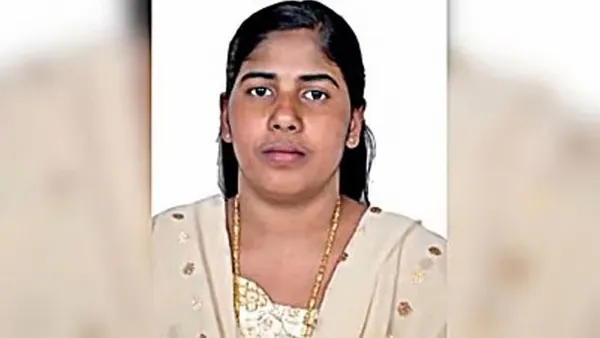
Uncertainty continues to cloud the fate of Indian nurse Nimisha Priya, who is on death row in Yemen, as conflicting reports emerge regarding a possible overturning of her death sentence. While some individuals and religious leaders have claimed that her execution has been halted or the sentence reversed, Indian officials have strongly refuted such assertions, stating that no official confirmation exists of any such development. The situation remains sensitive, with the life of a 38-year-old woman hanging in the balance as behind-the-scenes diplomatic and community-led efforts continue.
Recent statements from the office of Kanthapuram A.P. Aboobacker Musaliyar, the Grand Mufti of India, claimed that Priya’s death sentence had been overturned by Yemeni authorities. These reports were further amplified by Christian evangelist K.A. Paul, who is currently in Yemen and has joined efforts with Priya’s husband and daughter to prevent her execution. However, people closely involved with the case and familiar with the official handling have labeled these claims as “inaccurate,” urging caution and emphasizing that premature announcements could hinder ongoing efforts.
Diplomatic Silence and Official Efforts in Yemen
Indian officials involved in the case have not verified any reports about a reversal of the death penalty. Given that India does not have an embassy in Yemen, the matter is being handled by Indian diplomats based in Saudi Arabia. Yemen, particularly the capital Sanaa where Priya is being held, is under the control of Houthi rebels. This has further complicated direct engagement, as the Indian government lacks formal diplomatic ties with the Houthis.
The only mechanism currently available under Shariah law to save Nimisha Priya from execution is through the Islamic concept of “diyat” — or blood money — which allows the victim’s family to pardon a convicted person in exchange for financial compensation. Indian authorities and several non-resident Indians (NRIs) have been working discreetly to reach a settlement with the family of the deceased Yemeni man.
Priya’s execution, originally scheduled for July 16, was temporarily deferred, a reprieve attributed to these quiet interventions by Indian officials and Yemeni-based Indian expatriates. There is hope that ongoing negotiations may lead to a final agreement and her life may be spared. However, no such outcome has been confirmed, and sources caution against treating unofficial declarations as fact.
The Case and Its Complexities
Nimisha Priya’s case dates back to July 2017, when she was arrested for the murder of her Yemeni business partner, Talal Abdo Mahdi. The two had reportedly been embroiled in a bitter personal and financial dispute. According to the case details, Priya injected Mahdi with sedatives in an attempt to retrieve her passport, which he was allegedly withholding. The sedatives caused an overdose, leading to Mahdi’s death. Her actions, though said to be desperate, were deemed criminal by Yemeni courts.
In 2020, a Yemeni court sentenced her to death. The country’s Supreme Judicial Council dismissed her final appeal in November 2023, thereby upholding the original verdict. Since then, her family and several support groups have mounted efforts to save her life, including raising funds for the potential payment of blood money.
Her mother, Premakumari, had even traveled to Yemen last year to personally negotiate with the victim’s family. She has been joined by Indian expatriates in Yemen who are assisting in communication, translation, and fundraising.
However, these efforts have been fraught with difficulty, especially due to the lack of formal communication channels between the Indian government and the de facto authorities in Yemen. The political instability in the country, compounded by the ongoing civil war and humanitarian crisis, has only intensified the challenges.
Despite the enormity of the obstacles, those working on Priya’s behalf remain hopeful that her life can be spared. Yet, officials have repeatedly urged restraint when it comes to unverified public announcements, fearing they might derail the delicate negotiations underway. The case has also drawn attention to the broader issues faced by Indian workers abroad, particularly in conflict zones where diplomatic presence is minimal or nonexistent.
As of now, Priya remains incarcerated in a prison in Sanaa. Her family, legal advocates, and Indian diplomats continue their efforts behind closed doors, hoping to bring about a peaceful resolution that respects both Yemeni law and humanitarian principles. With her fate still uncertain, any premature statements about her release could jeopardize what little progress has been made through painstaking diplomatic and community-led efforts.