New Delhi, January 25, 2026
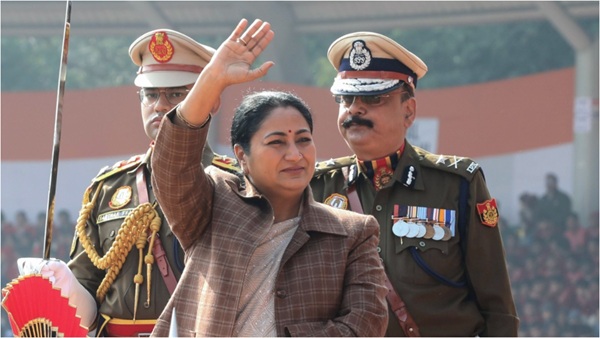
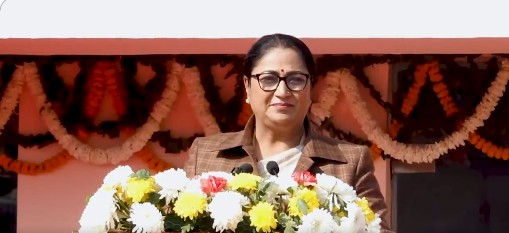
Addressing the people of Delhi from Chhatrasal Stadium on the occasion of the 77th Republic Day, Chief Minister Rekha Gupta presented a comprehensive report card of her government’s 11-month tenure and outlined a forward-looking roadmap for building a Viksit Delhi. Rooted in the national vision of Viksit Bharat 2047, the Chief Minister said her government has broken decades of administrative inertia and placed Delhi firmly on a path of modernisation, a strengthened public health system and economic empowerment.
After hoisting the Tricolour, the Chief Minister detailed major reforms and initiatives undertaken in education, health, infrastructure and governance, while also presenting the roadmap ahead for inclusive and sustainable development of the national capital.
Republic Day as a Symbol of India’s Democratic Spirit
Beginning her address with slogans of *Bharat Mata Ki Jai* and *Vande Mataram*, the Chief Minister said January 26 symbolises India’s self-respect, democratic consciousness and complete sovereignty. She recalled that while India attained Independence on August 15, 1947, it was on January 26, 1950 that the country adopted its Constitution, declaring itself a nation of the people, by the people and for the people.
Paying tribute to freedom fighters and martyrs, she said the Tricolour was earned through immense sacrifice. Referring to *Ae Mere Watan Ke Logon*, she paid homage to Bharat Ratna B R Ambedkar and the makers of the Constitution, describing it as a guiding light of justice, equality and dignity for the past 77 years. She described 2025–26 as a year of national remembrance and inspiration, marking several historic milestones including anniversaries of Sri Guru Tegh Bahadur, Pandit Madan Mohan Malaviya, Dr Syama Prasad Mookerjee, Atal Bihari Vajpayee, 150 years of *Vande Mataram* and the centenary year of the Rashtriya Swayamsevak Sangh.
Delhi’s Legacy and the Road to Viksit Delhi
Referring to Delhi’s rich history, the Chief Minister said the city has always risen stronger despite repeated destruction. She described Delhi not merely as a city of structures, but as a reflection of India’s soul. Aligned with Prime Minister Narendra Modi’s Vision 2047, she said Delhi is moving forward with renewed energy towards the goal of a Viksit Delhi as part of a Viksit Bharat.
She recalled that when her government assumed office nearly 11 months ago, administrative disorder and long-pending bottlenecks posed major challenges. Guided by constitutional values and the mantra of *Sabka Saath, Sabka Vikas*, the government has taken people-centric decisions that are now delivering visible results.
Welfare of the Poor and Strengthening Healthcare
Highlighting welfare measures, the Chief Minister said 50 Atal Canteens have been started across Delhi, providing nutritious meals at ₹5 and benefiting over 50,000 people daily, with a target to expand coverage to one lakh beneficiaries per day.
She said health remains a top priority, with modern IT systems introduced in government hospitals under Digital India, over one crore ABHA IDs created, and online OPD services launched. Under Ayushman Bharat and the Vay Vandana scheme, six lakh registrations have been completed and over 20,000 patients have already benefited. More than 300 Ayushman Arogya Mandirs are operational, while new hospital blocks, public health laboratories and critical care units are under development.
With the addition of ambulances, dialysis machines, doctors, nurses and paramedical staff, Delhi is steadily moving towards a ‘Triple-A’ health model—Advanced, Affordable and Accessible healthcare.
Education Reforms and Innovation Push
The Chief Minister said 21 per cent of the 2025–26 Budget has been allocated to education. The Delhi School Education Act, 2025 has been implemented to curb arbitrary fee hikes by private schools. Smart classrooms, digital libraries, computer and language laboratories and sports facilities are being developed in all government schools.
An ultra-modern education hub is being built in Narela at a cost of ₹1,300 crore. Scholarships are being provided to meritorious students, while 1,200 toppers of Classes 10 and 11 are receiving free laptops. She said Delhi is fast emerging not only as the national capital, but also as a capital of ideas and innovation.
Sports, Infrastructure and Green Mobility
Calling sports a key instrument of nation-building, the Chief Minister said Delhi offers the highest incentives for athletes in the country, with Olympic and Paralympic gold medallists receiving ₹7 crore, silver medallists ₹5 crore and bronze medallists ₹3 crore. Incentives for other national and international events have also been enhanced. Construction of the Delhi Sports University at Mundka has commenced.
On infrastructure, she said capital expenditure for 2025–26 has been doubled and an MoU signed with the RBI to strengthen financial management. The government aims to convert the entire public bus fleet to 100 per cent electric within three years by adding 11,000 electric buses. Expansion of charging infrastructure, new bus depots, redevelopment of ISBTs, Metro expansion to 500 km, increased Metro funding and last-mile green connectivity projects are progressing rapidly.
Safe City, Social Security and Economic Growth
The Chief Minister outlined measures to decongest the city, including new flyovers, underpasses and expressways, along with the Safe City Project that will add 10,000 CCTV cameras and one lakh smart LED streetlights. Judicial reforms include the establishment of 53 speed courts and hybrid courtrooms, while relocation of Tihar Jail is under consideration.
On social security, she highlighted welfare schemes for women, workers and vulnerable sections, including support for construction workers, gig workers, senior citizens, slum development, animal welfare initiatives and assistance for victims of the 1984 anti-Sikh riots and families affected during the COVID-19 pandemic.
Speaking on economic growth, environmental protection and Yamuna rejuvenation, the Chief Minister said Delhi’s Budget has been increased to ₹1 lakh crore. Ease of Doing Business reforms, MSME support, logistics policies, renewable energy expansion and pollution control measures remain top priorities.
Concluding her address, the Chief Minister appealed to citizens to actively participate in cleanliness, environmental protection and public transport usage, stating that with collective efforts, Delhi will soon emerge as a model capital defined by dignity, sustainability and equal opportunity.