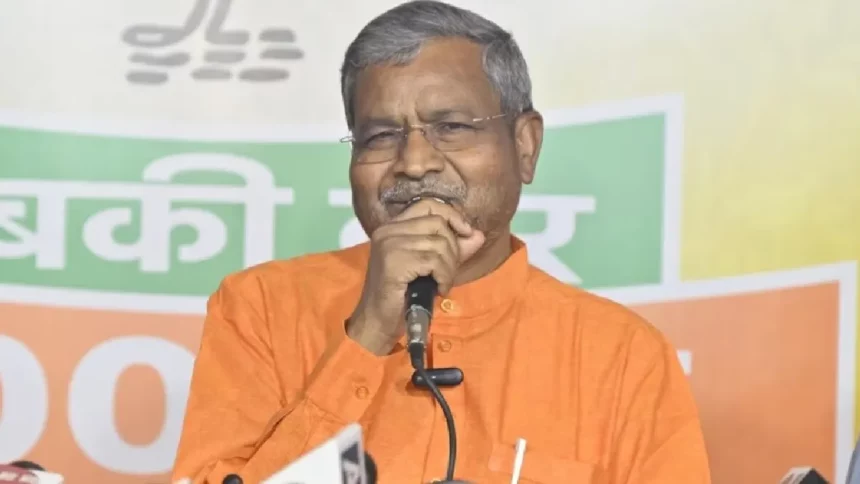
A heated debate has emerged in Jharkhand’s political landscape following the state Assembly’s passage of a resolution opposing the Special Intensive Revision (SIR) of electoral rolls. BJP leader and former Chief Minister Babulal Marandi sharply criticized the move, accusing the state government of facilitating the settlement of “infiltrators” and claiming that such actions are deliberately altering the state’s demographic composition. Marandi’s comments have sparked a strong counter-response from the ruling Jharkhand Mukti Morcha (JMM), highlighting deep divisions over migration, voter registration, and population trends in the state. At the heart of this controversy is a clash between narratives on electoral fairness, demographic change, and the protection of indigenous and minority rights, with both sides invoking historical population data, policy outcomes, and political strategy to support their positions.
Allegations of Demographic Manipulation and SIR Controversy
Babulal Marandi, addressing the media and political circles following the Assembly session, claimed that the proportion of “sanatanis” in Jharkhand, including Dalits and Adivasis, has steadily declined since India’s first census in 1951, while the Muslim population has grown. According to Marandi, the share of sanatanis fell from 87.79 percent in 1951 to approximately 81 percent by the 2011 census. Highlighting the decline in Adivasi representation from 35 percent to 26 percent and the simultaneous increase in the Muslim population from 8 percent to 14 percent, Marandi alleged that these shifts are the result of deliberate efforts by certain communities to exploit local women, acquire land, and consolidate political influence.
Marandi’s critique extended to the Jharkhand government, asserting that the ruling JMM and its allies are facilitating the settlement of Bangladeshi infiltrators and Rohingya Muslims by providing them with voter rights, land, ration cards, and other benefits. He described these moves as part of a calculated strategy to build a vote bank and claimed that infiltrators, if the trend continues, could eventually hold positions as Members of the Legislative Assembly (MLAs) and Members of Parliament (MPs). According to Marandi, the increase in registered voters in Jharkhand—16 percent between 2019 and 2024 compared to the national average of 10 percent—is concentrated in areas under JMM governance, raising suspicions about irregularities in voter registration. Marandi cited the example of Simdega district, where the number of Muslim voters reportedly rose from 9,308 in 2019 to 16,605 in 2024, claiming that similar patterns have been observed across multiple Assembly constituencies.
Supporting the continuation of the Special Intensive Revision process, Marandi emphasized that the SIR is a necessary step to verify the authenticity of voter registration, ensure fair representation, and prevent any manipulation of electoral rolls. He asserted that the revision would maintain the integrity of the democratic process while protecting the political rights of the indigenous and original residents of Jharkhand. By linking demographic trends to electoral strategy, Marandi framed the resolution against SIR as politically motivated, suggesting that the ruling coalition aims to benefit from artificially enhanced voter numbers and demographic changes.
JMM’s Counterclaims and Socioeconomic Context
The ruling Jharkhand Mukti Morcha (JMM) quickly responded to Marandi’s allegations, challenging the BJP leader’s claims regarding population changes and highlighting the socioeconomic factors that influence demographic trends. Tanuj Khatri, Central Committee Member of JMM, argued that the decline in Adivasi numbers is primarily driven by migration, unemployment, and displacement resulting from mining and industrial projects. He emphasized that these policy outcomes, which he attributes to BJP rule in previous tenures, have caused significant disruption to traditional communities and forced many Adivasis to relocate in search of employment and livelihood opportunities.
Khatri also criticized the BJP for attempting to politicize population statistics and promote communal narratives instead of addressing pressing issues such as unemployment, inflation, and agrarian distress. He accused the BJP of deliberately spreading misinformation and divisive propaganda to deflect attention from its governance failures, claiming that the party’s current focus on alleged demographic conspiracies is a political stunt designed to create communal tension. By highlighting historical policy decisions, including attempts to weaken the Chota Nagpur Tenancy Act and the Santhal Parganas Tenancy Act, Khatri framed the BJP’s rhetoric as inconsistent, noting that the party previously pursued measures that adversely affected Adivasi land rights while now claiming to protect indigenous populations.
The JMM’s rebuttal also underscored the importance of understanding demographic shifts in the context of migration patterns, industrialization, and urbanization, emphasizing that changes in population composition are often influenced by structural socioeconomic factors rather than deliberate conspiracies. Khatri contended that the focus on SIR and alleged infiltration distracts from real governance challenges and misrepresents the complexity of Jharkhand’s social and economic landscape. He further argued that citizens are primarily concerned with access to jobs, education, healthcare, and social development rather than political arguments centered on communal identity or voter registration processes.
The debate between Marandi and the JMM reflects broader tensions in Jharkhand politics, where questions of tribal rights, land ownership, migration, and religious demography intersect with electoral strategies and governance priorities. While Marandi frames the controversy as a threat to indigenous and sanatanic communities, the JMM presents it as an attempt by the BJP to exploit communal divisions for electoral gain. This clash highlights the delicate balance between maintaining electoral integrity, protecting marginalized communities, and addressing economic and social inequities in the state.
Political Implications and Strategic Positioning
The controversy over SIR and voter demographics in Jharkhand has far-reaching political implications, particularly as the state prepares for upcoming elections. Marandi’s accusations of demographic manipulation are part of a broader BJP strategy to position itself as the protector of indigenous populations and traditional communities while criticizing the ruling coalition’s governance record. By emphasizing the growth of Muslim voter populations and framing it as a politically engineered outcome, Marandi seeks to rally support among communities concerned about perceived threats to their political influence and cultural identity.
Conversely, the JMM’s response aims to reaffirm its commitment to inclusive governance, socioeconomic development, and equitable treatment of all communities. By framing demographic changes in the context of structural challenges such as migration, unemployment, and industrial displacement, the ruling party attempts to neutralize BJP’s claims and redirect the political discourse toward developmental issues. Khatri’s critique of BJP’s historical policies serves to highlight the party’s own accountability for systemic disruptions in Adivasi communities, suggesting that current controversies are an extension of earlier governance failures rather than evidence of deliberate conspiracies.
The debate also underscores the role of electoral mechanisms such as the Special Intensive Revision in maintaining the credibility and transparency of the democratic process. Marandi’s insistence on rigorous verification of voter rolls aligns with broader concerns about electoral fairness, while the JMM’s emphasis on contextual understanding reflects the challenges of implementing large-scale administrative reforms in a state with diverse populations and complex social dynamics. This tension between procedural integrity and socio-political context is likely to shape public perceptions, media narratives, and electoral strategies in the months leading up to elections.
Overall, the confrontation between BJP and JMM over demographic change, SIR, and voter registration illustrates the intersection of political strategy, governance, and social justice in Jharkhand. Both parties leverage historical data, current policies, and electoral trends to construct narratives that resonate with specific voter bases, while broader concerns such as employment, education, and equitable development remain central to the public discourse. As the debate continues, the state’s political landscape remains sharply divided, reflecting the enduring significance of demographic dynamics, electoral processes, and communal politics in shaping Jharkhand’s governance and electoral outcomes.