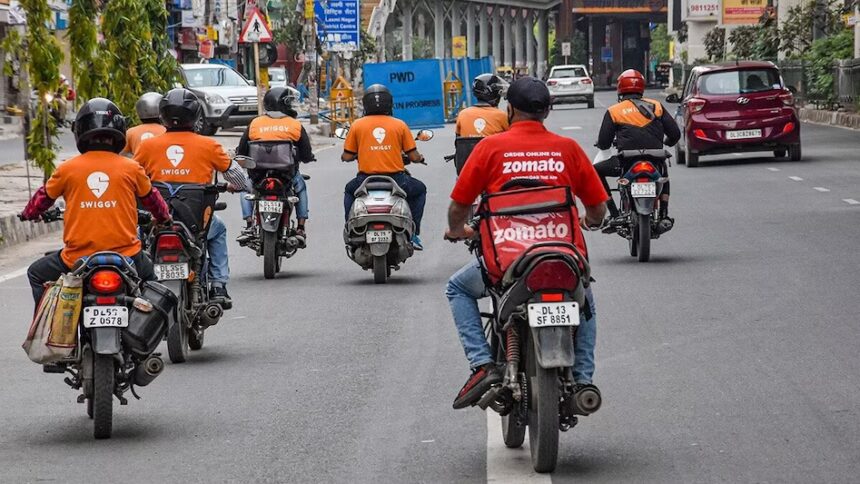
India is preparing to launch an ambitious new chapter in its labour welfare journey by extending health insurance and social security coverage to gig and platform workers. The move, announced as part of Union Budget 2025, aims to bring nearly 1 crore informal workers—like delivery agents, ride-hailing drivers, and freelance service providers—under the protection of the Pradhan Mantri Jan Arogya Yojana (PM-JAY). The plan could be a global model for inclusive digital-era labour welfare.
A Step Toward Formalising the Informal Sector
Launched in 2018, PM-JAY—also known as Ayushman Bharat—currently provides ₹5 lakh per year health insurance to over 50 crore Indians. With the gig economy now projected to reach 23.5 million workers by 2030, the government’s move signals a turning point for a sector that has grown rapidly but remained vulnerable and unprotected.
According to officials in the Ministry of Labour and Employment, over 20 lakh gig workers have already registered on the e-Shram portal. Each will be issued a unique ID to help link them to various welfare services. To further the initiative, labour departments, community centres, and EPF offices have been mobilised across states. A public awareness drive is also underway to reach gig workers, who are often scattered and operate outside traditional employer-employee frameworks.
In a key regulatory push, all platform companies—including food delivery services, ride-sharing apps, and digital aggregators—have been directed to register both themselves and their workers under the upcoming scheme. This marks a significant shift in placing formal accountability on private tech platforms that have long operated in regulatory grey zones.
Addressing Gaps in Worker Protection
The gig economy offers flexible employment, especially for urban youth and semi-skilled workers. However, many gig workers face low and unpredictable incomes, often without minimum wage guarantees, health insurance, or retirement benefits. The absence of job security, opaque algorithms, and lack of grievance redressal mechanisms have raised serious concerns, especially with rising dependence on gig labour for essential services.
Women gig workers are particularly vulnerable, especially in late-night delivery or remote task-based roles where safety is often compromised. Long hours, performance-linked earnings, and limited time off further worsen the quality of employment.
Senior officials involved in the rollout said that the final framework of the scheme is nearly complete. Discussions are also underway to include pension provisions, offering a more comprehensive social safety net for gig workers. Labour code amendments may be required to legally operationalise the scheme, and this is currently under policy review.
Consultations are ongoing with key stakeholders—policymakers, labour economists, platform companies, and gig worker unions—to finalise the blueprint. The scheme is expected to be launched by the end of 2025, once legislative and logistical approvals are in place.
By aiming to institutionalise protections for gig workers, the initiative aligns with the broader goal of the Modi government to deliver “economic dignity” to India’s informal workforce. As countries around the world grapple with regulating the gig economy, India’s swift and structured approach could establish a global benchmark in digital labour welfare.