The Indian political landscape has witnessed a fresh wave of controversy with the introduction of the Centre’s newly proposed ‘Criminal Neta Bill,’ officially part of a package of three legislative proposals introduced in Parliament earlier this week. The Aam Aadmi Party (AAP) and several opposition leaders have reacted strongly, condemning the bill as unconstitutional, politically motivated, and designed to weaken the federal structure of governance in India. According to opposition claims, the legislation is less about curbing corruption and more about targeting opposition leaders, destabilising non-BJP state governments, and centralising power in the hands of the Union government. The debate over these bills has intensified discussions on the role of the central government, the autonomy of state governments, and the fundamental principles of democracy, accountability, and political pluralism in India’s constitutional framework.
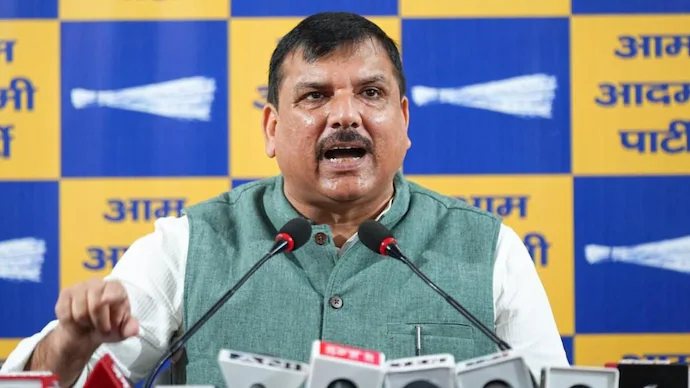
Sanjay Singh, AAP leader and Rajya Sabha MP, described the legislation as a direct attack on the opposition, arguing that it seeks to imprison political rivals and bring down governments not aligned with the ruling party. “The Modi government is bringing an unconstitutional bill. The purpose of this bill is to put opposition leaders in jail and topple opposition party governments. The aim is not to tackle corruption but to target political rivals, undermining the foundations of democracy in the country,” Singh stated. The party further argued that the bill would institutionalise discrimination against opposition leaders, creating a system where political power could be weaponised under the guise of legal authority. By linking custodial status or allegations with automatic removal from office, critics warn that the legislation bypasses due process and erodes the principle of presumption of innocence, which is central to any democratic justice system.
Union Home Minister Amit Shah, defending the bills, argued that they were part of the government’s broader anti-corruption agenda. In a pointed remark directed at AAP convener and former Delhi Chief Minister Arvind Kejriwal, Shah said, “Had he quit while he was in jail, there would have been no need to bring this law.” Kejriwal, who faced arrest in 2024 in connection with the alleged Delhi liquor scam, drew widespread criticism for refusing to resign, and the BJP has used the incident as a reference point for pushing legislative reforms that link judicial custody with removal from office. Shah highlighted the bills’ purported objective of ensuring that individuals facing serious criminal allegations do not continue to hold public office while under judicial scrutiny, framing the legislation as a safeguard for public accountability and governance integrity.
The introduction of the Criminal Neta Bill, part of a trio of legislative initiatives including the Constitution (130th Amendment) Bill, the Government of Union Territories (Amendment) Bill, and the Jammu and Kashmir Reorganisation (Amendment) Bill 2025, has sparked intense debate across party lines. While the government maintains that these bills will act as a deterrent against corruption and promote ethical political behaviour, opposition parties have argued that the real purpose is to concentrate power, bypass electoral legitimacy, and criminalise political competition. According to opposition narratives, such measures risk converting democratic institutions into tools for political surveillance and enforcement, undermining the pluralistic fabric of Indian democracy.
Political Opposition and Alleged Targeting of Non-BJP Governments
The Aam Aadmi Party has taken the lead in vocally opposing the legislation, framing it as an existential threat to opposition parties and their leadership. Sanjay Singh emphasised that the bill is being introduced at a time when non-BJP governments are in power across multiple states, suggesting that the legislation is targeted at destabilising those administrations. Similar concerns were echoed by other opposition leaders, including Tamil Nadu Deputy Chief Minister Udhayanidhi Stalin, who described the bills as a direct attack on democracy and the powers of state governments. Speaking at an event in Chennai, Stalin asserted that the BJP is attempting to centralise authority and diminish the role of state administrations in governance. “Tamil Nadu Chief Minister MK Stalin would never allow the bill to become a law,” he said, underlining the perceived threat to state autonomy.
Critics argue that the Criminal Neta Bill institutionalises political partisanship under the guise of anti-corruption, allowing the Union government to selectively apply provisions against political opponents while bypassing due process safeguards. The bill allows for the automatic removal of prime ministers, chief ministers, or ministers if they remain in judicial custody for thirty consecutive days for offences punishable with five years or more, regardless of whether a formal conviction has been secured. By treating elected leaders similarly to civil servants in this regard, opposition leaders warn that the legislation undermines the principles of electoral accountability and democratic representation, effectively penalising leaders before a court of law has reached a verdict.
The opposition also criticised the proposed Joint Parliamentary Committee (JPC), arguing that it will be dominated by government-aligned members and exclude parties like the AAP. According to AAP sources, the exclusion from the JPC undermines the credibility of legislative scrutiny and raises concerns about transparency, impartiality, and the role of Parliament in reviewing such significant constitutional and statutory changes. By bypassing broad-based parliamentary consultation, critics assert that the government is consolidating legislative authority to push through controversial reforms that could reshape the balance of power between the Centre and the states.
Constitutional Implications and Governance Concerns
Legal analysts and political observers have highlighted the far-reaching constitutional implications of the Criminal Neta Bill. By linking judicial custody to automatic removal from office, the legislation challenges foundational democratic principles, including presumption of innocence, separation of powers, and the autonomy of elected representatives. Opposition leaders argue that the bill could be used as a tool to settle political scores, intimidate dissenters, and weaken federal structures by creating conditions where state governments can be destabilised by central intervention. The debate has intensified broader concerns regarding the independence of the judiciary, the impartiality of law enforcement agencies, and the use of legislation as a mechanism for political control rather than governance reform.
The Constitution (130th Amendment) Bill, which forms a central part of this legislative package, stipulates that any elected official remaining in judicial custody for thirty consecutive days for offences punishable by five years or more is liable for automatic removal from their post. Opposition leaders argue that such provisions circumvent fundamental rights, allow for misuse against political opponents, and weaken the democratic contract between elected representatives and their constituents. By bypassing the process of judicial determination and allowing pre-emptive action, the legislation has raised questions about its compatibility with India’s constitutional ethos, particularly Article 21, which guarantees the right to life and personal liberty, and Article 368, which governs the amendment process for constitutional provisions.
Moreover, political analysts warn that the bills may create a chilling effect on political dissent and activism, particularly in states where opposition parties hold power. By linking criminal allegations to automatic suspension of office, elected officials may face undue pressure, self-censorship, or coercion, ultimately undermining the representative nature of democratic governance. Critics contend that such measures, if implemented, could weaken accountability, public debate, and institutional independence, making political survival contingent on compliance with central authority rather than responsiveness to voters.
Union Home Minister Amit Shah, however, has defended the bills as instruments of anti-corruption reform, highlighting the perceived necessity of preventing leaders involved in serious criminal conspiracies from continuing in public office. Shah emphasised that the legislation seeks to reinforce ethical conduct, enhance public trust in governance, and ensure that leaders accused of crimes are held accountable while legal processes are ongoing. Supporters of the bills argue that judicial custody as a trigger for suspension mirrors existing practices for civil servants and aims to standardise rules across public officeholders, promoting greater consistency and transparency in governance.
Despite these assurances, the broader political discourse has focused on the potential misuse of central agencies to frame opposition leaders and destabilise state governments. Critics argue that without strong procedural safeguards, independent oversight, and equitable parliamentary scrutiny, the legislation risks becoming a tool for political persecution rather than an instrument for anti-corruption or administrative efficiency. Opposition parties have vowed to challenge the bills through parliamentary debate, judicial review, and public advocacy, underscoring the polarising nature of the proposed reforms and their implications for India’s democratic framework.
The introduction of the Criminal Neta Bill and its companion legislation represents a critical flashpoint in contemporary Indian politics. It raises profound questions about constitutional governance, the balance of power between the Union and the states, and the interplay between legal processes and political accountability. While the government portrays these bills as necessary reforms to enhance ethical standards in public life, the opposition and several legal scholars warn that the measures could undermine democratic norms, weaken federal structures, and facilitate centralised political control over dissenting states and parties.
The ongoing debate reflects the tensions inherent in India’s evolving democracy, where questions of anti-corruption reform, governance accountability, and political power intersect with fundamental civil liberties, electoral representation, and constitutional safeguards. As the bills progress through Parliament and face scrutiny, the discourse is likely to shape the trajectory of political contestation, federal-state relations, and the interpretation of democratic principles in India for years to come.