New Delhi | February 14, 2026
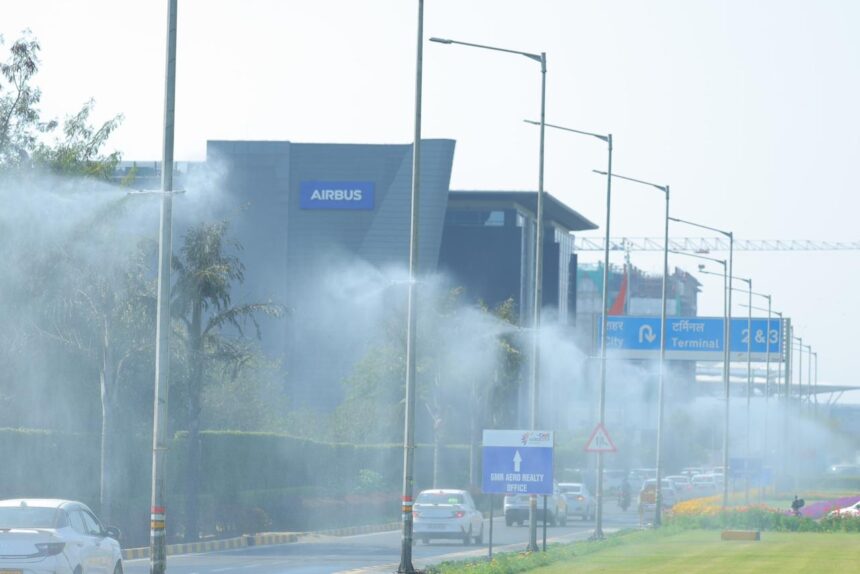
In a significant step towards improving air quality in the national capital, Chief Minister Rekha Gupta on Saturday inaugurated 120 mist spray systems at the Indira Gandhi International Airport. The systems have been installed across key outdoor and passenger movement zones to suppress dust particles and reduce air pollution. The Chief Minister said clean air is not only an environmental concern but a fundamental public health responsibility.
She emphasised that the Delhi government is addressing air pollution through a combination of short-, mid- and long-term strategies based on scientific assessment. While technological solutions such as mist spray systems provide immediate relief, long-term measures are being implemented across transport, construction and energy sectors to ensure sustainable improvement in air quality.
The event was attended by Members of Parliament, local legislators and senior officials from the GMR Group. The Chief Minister noted that mist spray systems have already been deployed on major city roads and at 143 elevated metro stations. Additionally, the real-time air quality monitoring network has been expanded to 46 metro stations, making it the largest such system in any Indian city. Enforcement under the ‘Vayu Rakshak’ initiative is ensuring strict adherence to pollution norms by industries and construction agencies.
Referring to Indira Gandhi International Airport as the busiest airport in the country, the Chief Minister said it serves as Delhi’s global gateway. With passenger traffic expected to cross 100 million in the coming years, maintaining high air quality standards at the airport is essential. The mist spray systems will not only improve air quality but also enhance thermal comfort for passengers and airport staff, especially in open and semi-open areas.
She commended the GMR Group for taking a proactive role in environmental responsibility, stating that meaningful progress is achieved when the government and private sector work with a shared vision. The next phase of the project will expand the mist spray network to 600 poles, significantly strengthening dust control in and around the airport premises.
Outlining the government’s broader clean air roadmap, the Chief Minister said Delhi aims to fully electrify its public bus fleet by 2029. Other initiatives include expansion of the metro network, development of a robust EV charging infrastructure, deployment of over 1,000 water sprinklers across the city, and introduction of AI-based dust monitoring at construction sites. These measures, she said, will not only reduce pollution but also promote innovation, employment and a better quality of urban life.
Concluding her address, the Chief Minister reiterated that ‘Clear Air, Clean Delhi’ is not a slogan but a guiding principle of governance. She called upon citizens, institutions and industries to actively participate in the clean air movement, asserting that collective action is key to transforming Delhi into a healthier, more liveable and environmentally resilient city.