Gautam Buddh Nagar, March 24, 2026
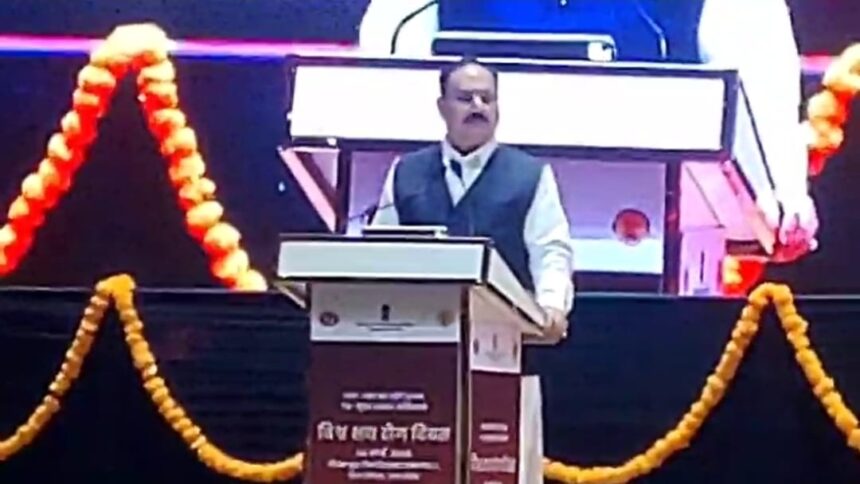
On the occasion of World Tuberculosis Day 2026, a major national campaign aimed at eliminating tuberculosis was launched at Gautam Buddha University, Greater Noida. Union Health Minister Jagat Prakash Nadda inaugurated the 100-day “TB-Free India Campaign,” along with several key initiatives including the TB-Free India App (Khushi – e-Nikshay Mitra), the TB-Free Urban Ward Initiative, and flagged off Nikshay vehicles to strengthen outreach services.

Major Push Toward TB Elimination
Addressing the gathering, Jagat Prakash Nadda reiterated the Government of India’s commitment to eliminating tuberculosis by 2026. He emphasized that the 100-day campaign will play a crucial role in accelerating efforts through public participation, technological innovation, and community collaboration.
He called upon citizens to actively participate in the campaign and help transform it into a nationwide movement by spreading awareness and supporting TB patients in their communities.
Technology-Driven Healthcare Initiatives
The Union Minister highlighted the introduction of advanced diagnostic tools and modern technologies that are making TB detection more accurate and effective. He also stressed the importance of nutrition support schemes aimed at improving the overall health and recovery of TB patients.
The launch of the TB-Free India App is expected to enhance coordination between healthcare providers, volunteers, and patients, while ensuring real-time monitoring and support.

Role of States and Collective Efforts
The Minister acknowledged the contributions of state governments, noting that their proactive efforts have significantly strengthened the TB elimination programme. He expressed confidence that continued cooperation between the central government, states, and citizens will help achieve the goal of a TB-free India.
Uttar Pradesh’s Progress in TB Control
Deputy Chief Minister of Uttar Pradesh Brajesh Pathak highlighted the state’s achievements in combating TB. He stated that more than 3.28 crore people have been screened between December 2024 and March 2026.
He also noted a major expansion in diagnostic infrastructure, with the number of NAT machines increasing from 141 to 1,004. Currently, around 64 percent of TB tests in the state are conducted using advanced NAT technology.
In addition, over 87 AI-based handheld chest X-ray machines are being used to provide diagnostic services in remote areas. The success rate of treatment for drug-sensitive TB has reached 92 percent, reflecting improved healthcare delivery.

Focus on Early Detection and Outreach
Union Minister of State for Health Anupriya Patel emphasized that the fight against TB is not limited to the health sector but requires a broader social and economic approach. She stated that the campaign will focus on large-scale screening drives, including door-to-door identification of potential patients.
Mobile health units and modern diagnostic tools will be used to detect TB at an early stage and ensure timely treatment. Special attention will be given to high-risk areas and vulnerable populations to ensure that no patient is left behind.
She also highlighted the importance of continuous monitoring and nutritional support during treatment to ensure faster recovery and better outcomes.
Community Participation and Awareness
The programme featured exhibitions and stalls related to TB elimination under Ayushman Arogya camps, which were visited by dignitaries. TB champions shared their experiences, highlighting their role in spreading awareness and supporting patients in their communities.
Participants also took a pledge to actively contribute to the goal of a TB-free India, reinforcing the campaign’s focus on public engagement and collective responsibility.
The launch of the 100-day TB-Free India Campaign marks a significant step toward achieving the national goal of eliminating tuberculosis. The initiative demonstrates that a combination of government efforts, technological advancements, and community participation is essential for tackling public health challenges.
With strong coordination between central and state governments and active involvement of citizens, the campaign is expected to accelerate progress toward a TB-free India.