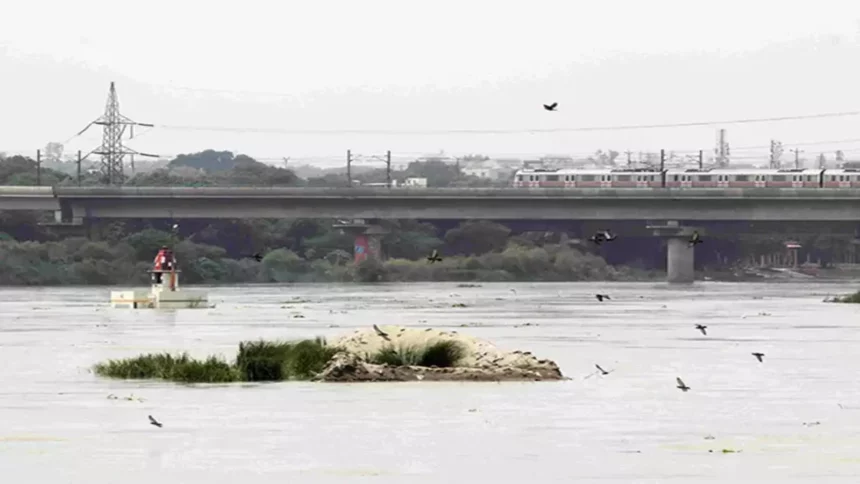
Anxiety deepens in parts of northern India as relentless monsoon rains have pushed major rivers, including the Yamuna and the Ganga, perilously close to or beyond warning levels. In Delhi, the Yamuna’s rising water level has triggered flood warnings, while cities in Uttar Pradesh and Uttarakhand are witnessing alarming signs of water overflow. As lives and livelihoods face disruption, officials have sounded alerts and begun taking preventive measures to curb the potential fallout.
The Yamuna river in Delhi breached the warning level on Thursday, reaching 204.88 metres at the Old Railway Bridge, a key observation point for tracking river levels in the capital. The warning level for Yamuna stands at 204.5 metres, while the danger mark is 205.3 metres. Evacuation measures begin once the water crosses 206 metres. Though the river has not yet reached the danger mark, the situation remains tense as rainfall continues in upstream regions.
Authorities in Delhi have issued alerts to all concerned departments, directing them to stay prepared for any emergency. With the city already dealing with sporadic waterlogging in low-lying areas, the rising river adds another layer of concern. Emergency response teams and disaster management units have been asked to remain on standby.
Flood-like scenes in Uttar Pradesh and Uttarakhand
Delhi is not alone in battling the consequences of the intense monsoon. In neighbouring Uttar Pradesh, cities like Prayagraj and Varanasi are reeling from the effects of heavy rainfall. The downpour has inundated several areas, causing waterlogging, overflowing drains, and impassable roads. In Varanasi, the swelling Ganga river has submerged multiple ghats, affecting local businesses, tourism, and daily commutes.
By Saturday, the Ganga in Varanasi approached the danger mark, reaching a water level of 69.98 metres, perilously close to the red-line level of 71.26 metres. The district administration responded by banning all boat operations on the river to prevent accidents. The situation was equally alarming in Prayagraj, where residents have reported disruption to essential services due to water entering homes and commercial areas.
Uttarakhand, a state known for its spiritual tourism and fragile ecosystem, is also bearing the brunt of unrelenting rain. In Rishikesh, heavy showers have caused the Ganga to swell, with water reaching the steps of the famed Parmarth Niketan Ashram. The river reportedly touched the idol of Lord Shiva at the Aarti Sthal, highlighting the gravity of the flood threat in the region.
Himachal Pradesh counts its monsoon losses
The extended spell of deadly monsoon has also taken a significant toll on Himachal Pradesh, which has been dealing with natural calamities since June. The state has reported at least 199 deaths and infrastructure damages amounting to over ₹1,900 crore. Landslides, collapsed roads, and flash floods have become common, prompting repeated warnings from state and national disaster management agencies.
With the mountains draining excess rainwater into the plains, rivers like the Yamuna and Ganga are being fed continuously, escalating the risk of downstream flooding. The central and state governments are closely monitoring the situation as rain forecasts show little signs of relief in the immediate future.
While local authorities continue to issue advisories and precautionary alerts, citizens in affected regions have been urged to avoid low-lying areas, stay updated through official bulletins, and cooperate with evacuation or relief operations if needed. As the monsoon progresses, the region’s resilience will be tested further by both nature’s fury and the preparedness of its systems.