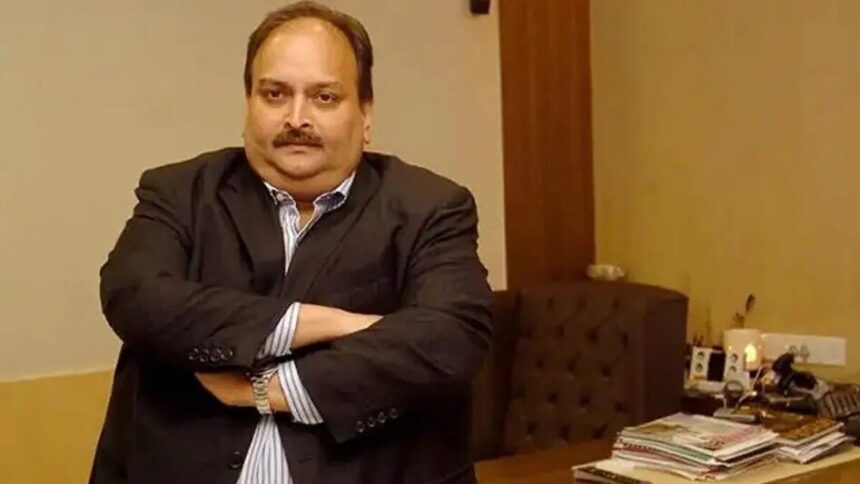
The recent arrest of fugitive businessman Mehul Choksi in Belgium has reignited hopes of finally bringing him back to India to face trial in one of the country’s biggest banking scams—the ₹13,850 crore Punjab National Bank (PNB) fraud. But will Belgium agree to extradite him? The extradition treaty signed between India and Belgium in 2020 is central to this question.
A long-standing fugitive
Mehul Choksi, 65, has been on the run since early 2018, after the massive PNB fraud was unearthed. Along with his nephew, Nirav Modi, Mehul Choksi is accused of masterminding the use of fraudulent Letters of Undertaking (LoUs) to secure overseas credit without proper guarantees. As Indian agencies intensified their pursuit, Mehul Choksi secured Antiguan citizenship and left India just days before the scam was made public.
Interpol had earlier issued a Red Notice against him, but this was revoked in 2023, weakening the legal framework to apprehend him internationally. Despite that, Indian authorities continued tracking him. This year, it was confirmed that Mehul Choksi and his wife had shifted to Belgium—where he was eventually arrested.
A modern extradition treaty
India and Belgium signed a bilateral extradition treaty in March 2020, replacing a colonial-era agreement dating back to 1901. The updated treaty provides a structured legal framework for extraditing individuals accused or convicted of serious crimes, including white-collar offences such as fraud and money laundering.
As per the agreement, both countries are obligated to extradite individuals found on their soil who are accused or convicted of offences punishable by at least one year of imprisonment under the laws of both countries. In Mehul Choksi’s case, the charges include criminal conspiracy, breach of trust, cheating, and money laundering—all of which easily meet the threshold.
Belgium’s discretionary power
While the treaty strengthens India’s position, it also gives Belgium some discretion. Although it allows for the extradition of non-nationals, Belgium is not obligated to do so. Mehul Choksi, having acquired Antiguan citizenship and now residing in Belgium, may argue that he is no longer an Indian citizen. This argument could form a key part of his legal defence to resist extradition.
Further complicating matters, extradition can be refused on certain grounds—such as if the alleged offence is political, military in nature, or perceived as discriminatory. The Belgian court could also reject the extradition if the charges are time-barred or if there’s a threat of capital punishment, unless India offers assurances that the death penalty will not be imposed. However, none of the charges against Mehul Choksi carry the death penalty.
The role of health and legal hurdles
Mehul Choksi’s legal team is expected to challenge the extradition, possibly citing his medical condition—he is reportedly undergoing treatment for blood cancer. Any such claim would require medical verification to determine if he is fit for travel. These legal and procedural steps may delay the process, even if the treaty favours India’s request.
Moreover, past attempts to extradite Mehul Choksi from countries like Dominica and Antigua were unsuccessful, largely due to legal loopholes and appeals. Though this time the treaty is more direct and current, legal opposition and procedural delays are still very much on the cards.
The backdrop: What was the PNB scam?
Between 2014 and 2017, Mehul Choksi and Nirav Modi, in alleged collusion with Punjab National Bank officials at the Brady House branch in Mumbai, secured unauthorized LoUs to raise credit from foreign banks. These LoUs bypassed core banking systems and proper oversight. The companies they floated—including Gitanjali Gems—used the funds to import jewellery and conduct high-value trade operations, many of which turned out to be shell transactions. When the scam came to light in early 2018, it shook India’s banking system and led to major investigations by the Enforcement Directorate (ED) and the Central Bureau of Investigation (CBI).
Since then, authorities have seized assets worth over ₹2,500 crore linked to Mehul Choksi and his firms, including jewellery, cars, properties, and overseas holdings. Despite the scale of the fraud, both Mehul Choksi and Modi managed to flee, exploiting international gaps in extradition and citizenship.
What lies ahead?
Mehul Choksi’s arrest in Belgium may finally mark a turning point. For the first time, India has a legal framework in place with the country where he is residing. The extradition treaty provides a clear path, and the charges meet the necessary legal standards. However, the process is expected to be slow and contested. Legal appeals, discretionary clauses, and health-based arguments are likely to be used to delay or derail the extradition.
Still, this is a major development. If India succeeds in bringing Mehul Choksi back, it could serve as a precedent for holding fugitives accountable and restoring confidence in the country’s ability to prosecute high-profile economic offenders.