Indian cricket offered a powerful statement of intent ahead of the T20 World Cup as India national cricket team defeated South Africa national cricket team by 30 runs in a high-octane warm-up match at Navi Mumbai, combining fearless batting with timely wickets to dominate a contest that produced over 450 runs in just 40 overs.
The warm-up encounter, played at the DY Patil Stadium, saw India post a daunting 240 for 6 after being put in to bat, before restricting South Africa to 210 for 7 despite a spirited chase. The match offered crucial insights into India’s batting firepower, bowling combinations and tactical flexibility just days before the global tournament begins.
Ishan Kishan and Tilak Varma headline India’s explosive batting display
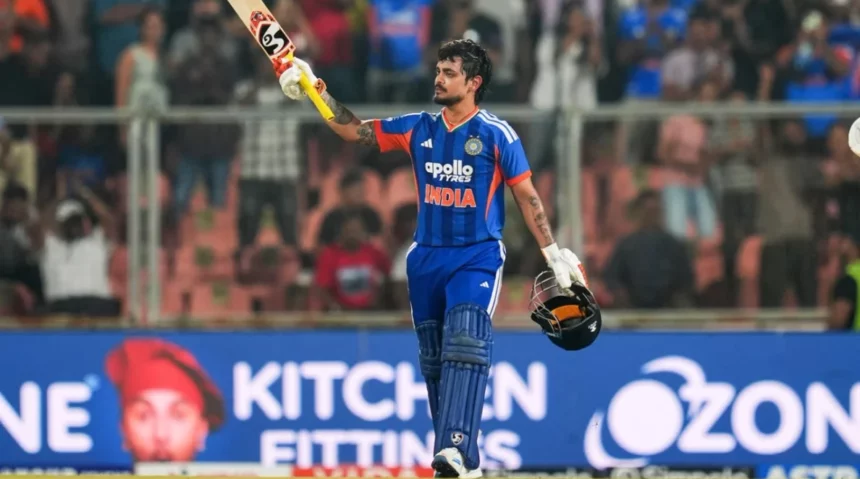
After winning the toss, India’s stand-in captain Suryakumar Yadav opted to bat first, signalling an intent to test the batting unit under match conditions. The decision paid immediate dividends as Ishan Kishan launched a blistering assault on the South African bowling attack from the outset. Showing sharp footwork, clean striking and fearless intent, Kishan raced to his half-century in just 20 balls, reaching the milestone with a towering six.
Kishan retired out on 53 not out, having set the tone for the innings and given India a flying start in the powerplay. His innings was marked by effortless boundary-hitting and precise shot selection, exploiting both pace and spin with equal ease. The early momentum ensured South Africa were immediately under pressure, forced into defensive field placements that opened up further scoring opportunities.
Following Kishan’s exit, Abhishek Sharma and Tilak Varma continued the aggressive approach. Abhishek contributed a brisk 24 off 18 balls before retiring out, allowing Tilak Varma extended time in the middle. Tilak capitalised brilliantly, scoring a fluent 45 off just 19 deliveries, narrowly missing out on a half-century after being bowled while attempting another big shot.
The middle overs saw no let-up as Suryakumar Yadav himself chipped in with a rapid 30 off 16 balls, underlining his importance as a high-impact batter in the middle order. Even as wickets fell at regular intervals, India’s scoring rate never dipped. Contributions from Rinku Singh and Hardik Pandya ensured a strong finish, with Pandya smashing 30 off just 10 balls to propel India past the 240-run mark.
The innings also reflected India’s flexible approach to batting positions. Sanju Samson, who has often opened in recent matches, batted lower down the order as the team experimented with combinations. At the toss, Suryakumar confirmed that Kishan and Abhishek would open, highlighting India’s willingness to adapt roles to maximise firepower and match readiness ahead of the World Cup.
By the end of 20 overs, India’s 240 for 6 stood as a formidable total, testing South Africa’s depth and discipline in a warm-up that felt closer to a full-fledged contest than a mere preparatory game.
Bowlers apply pressure as South Africa fall short despite strong resistance
Chasing a massive target of 241, South Africa needed an extraordinary start, but India’s bowlers struck early to tilt the balance. Arshdeep Singh set the tone by dismissing George Linde for a duck in the very first over, immediately denting the Proteas’ chase. Captain Aiden Markram later retired out as part of South Africa’s own experimentation, while wickets continued to fall at regular intervals.
Shivam Dube provided a key breakthrough by removing Dewald Brevis for just two runs, further tightening India’s grip on the match. Spin played a crucial role in the middle overs, with Varun Chakravarthy dismissing Ryan Rickelton, who had looked dangerous during his 44-run knock.
Despite the early setbacks, South Africa showed fighting spirit. Tristan Stubbs emerged as the standout performer for the Proteas, smashinSet featured imageg 45 runs off 21 balls to briefly revive hopes of an unlikely chase. Marco Jansen also chipped in with valuable runs, but the mounting required run rate and regular loss of wickets proved too much to overcome.
India’s bowling unit maintained control without panicking, mixing pace and spin effectively to deny South Africa sustained momentum. Abhishek Sharma made a notable impact with the ball as well, picking up two wickets and showcasing his value as an all-round option. The collective effort ensured that even on a batting-friendly surface, boundaries were not conceded too freely in the latter stages.
At the end of 20 overs, South Africa were restricted to 210 for 7, falling 30 runs short despite the flat pitch and short boundaries. The result underlined India’s depth across departments and their ability to manage high-pressure chases, even in warm-up conditions where experimentation often takes precedence over results.
The match served as a confidence booster for India ahead of the ICC Men’s T20 World Cup, offering clarity on combinations, form and tactical balance. For South Africa, the contest highlighted areas to address, particularly bowling discipline and death-over execution, as they prepare for the challenges ahead.