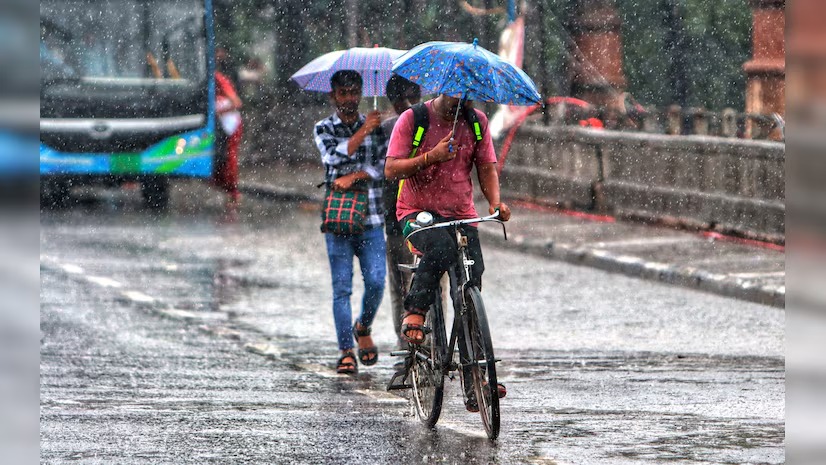
The India Meteorological Department (IMD) has issued alerts for heavy rainfall across 18 states, forecasting significant weather changes until March 15. The alerts, which cover regions from Jammu and Kashmir in the north to Tamil Nadu in the south, are attributed to two cyclonic circulations—one originating from Iraq and the other from Bangladesh. These weather systems are expected to bring rain, thunderstorms, and even snowfall to several parts of the country.
The first cyclone, which has its origins in Iraq, is gradually advancing towards northern India. As it moves closer, states such as Jammu and Kashmir, Himachal Pradesh, and Uttarakhand are likely to experience heavy rainfall and even snowfall between March 10 and 15. The system may also influence weather patterns in Punjab and Haryana, where rain accompanied by thunderstorms and lightning is expected on March 12 and 13. Rajasthan could see scattered showers between March 13 and 15.
The second cyclone, approaching from Bangladesh, is expected to affect eastern and northeastern states, bringing significant rainfall to Bihar and West Bengal. The IMD has issued warnings for heavy downpours in Arunachal Pradesh, Assam, Nagaland, Manipur, Mizoram, Meghalaya, and Tripura between March 11 and 15. Arunachal Pradesh, in particular, may witness snowfall during this period, adding to the region’s weather concerns.
The impact of these weather systems is not limited to northern and eastern India. Southern states, including Tamil Nadu, Kerala, and Mahe, are also on high alert. The Regional Meteorological Centre has warned of intense rainfall in four districts of Tamil Nadu, with the possibility of school and college closures if conditions deteriorate. Kerala and Mahe are expected to experience significant rainfall between March 11 and 13, prompting authorities to prepare for potential disruptions.
These cyclonic developments are bringing much-needed relief from rising temperatures in several regions, particularly in northern India. Cities like Delhi-NCR, which have been experiencing an early onset of summer, could see a temporary drop in temperatures due to intermittent showers.
As weather patterns shift, the IMD continues to monitor the situation closely, urging residents in affected areas to stay updated with official advisories. Authorities are advising caution, especially in regions prone to landslides, flooding, or snowfall. With both cyclonic systems actively influencing India’s weather, the coming days are expected to witness fluctuating conditions across multiple states.