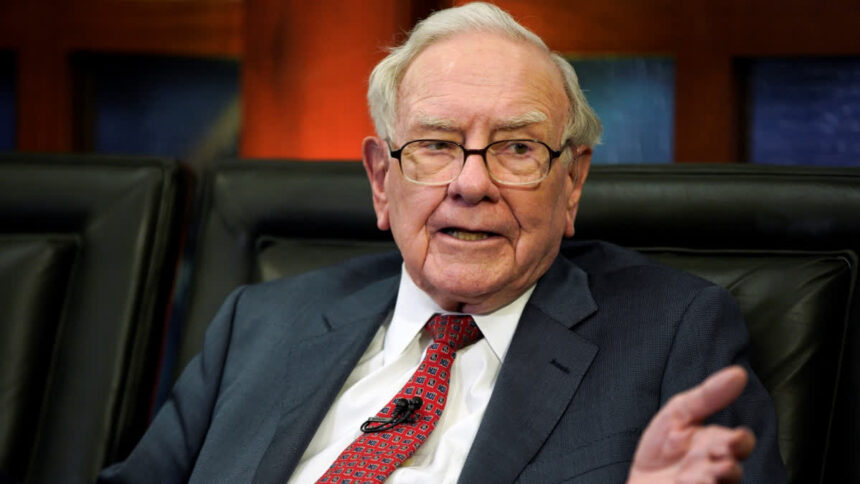
Warren Buffett, the 94-year-old chairman and CEO of Berkshire Hathaway, announced that he would step down as CEO by the end of 2025, signaling a major shift for the conglomerate he has led for nearly six decades. The man chosen to succeed him, Gregory E. Abel, has been Buffett’s long-designated heir and is set to take on the challenge of leading one of the most influential companies in corporate America.
Abel’s appointment marks the beginning of a new era for Berkshire Hathaway. His role is critical, as he will inherit not just a massive portfolio of nearly 190 companies, but also a legacy built on the unique culture Buffett has fostered over the decades. With an impressive track record and deep ties to Berkshire’s operational culture, Abel is widely regarded as the right man for the job.
Who is Greg Abel?
Greg Abel, 62, is a Canadian-born businessman who has built a distinguished career in the energy sector. He joined Berkshire Hathaway in 2000 when Buffett acquired MidAmerican Energy, where Abel had been serving as president. Over the years, Abel’s responsibilities expanded, and he became the CEO of Berkshire Hathaway Energy in 2008.
In 2018, Abel was appointed as the vice chairman of Berkshire Hathaway, overseeing the company’s non-insurance businesses, which range from energy and transportation to retail and consumer goods. His leadership has extended across various Berkshire entities, including BNSF Railway, See’s Candies, and Dairy Queen, giving him a broad understanding of the company’s operations.
Why Abel is the Right Choice
Abel’s selection as Buffett’s successor is based on several key factors, with his ability to manage capital efficiently and his operational discipline standing out. Under Abel’s leadership, Berkshire Hathaway Energy tripled its earnings, and he oversaw major acquisitions, such as NV Energy and Dominion Energy’s natural gas assets.
His divisions have consistently outperformed Berkshire’s other investment portfolios. Between 2010 and 2022, the sectors Abel managed generated \$53 billion in equity, and the earnings grew by \$7 billion. This reflects an impressive average return of 13%, which outpaced the S&P 500 and even Buffett’s own investment picks.
Buffett himself has been a staunch advocate for Abel’s capabilities. He has called Abel a “big improvement” over himself and lauded his strategic decision-making. Abel’s expertise is highly respected across the company, with many executives from Berkshire subsidiaries turning to him for advice on complex strategic issues.
Why Abel Was Chosen
Abel’s appointment has been a long time coming. Speculation about his future role as CEO began in 2011 when David Sokol, initially considered a top contender, resigned amid a scandal involving the Lubrizol acquisition. Since then, Abel quietly emerged as the executive most aligned with Buffett’s values of integrity, decentralization, and long-term vision.
Charlie Munger, Buffett’s long-time partner, played a crucial role in solidifying Abel’s position as the successor. Munger emphasized that Abel would maintain the company’s unique culture, which values decentralization and autonomy for subsidiary leaders.
Challenges Awaiting Abel
As Buffett steps down, Abel will face the daunting challenge of effectively managing Berkshire Hathaway’s vast resources. One of his biggest hurdles is deploying Berkshire’s massive cash holdings. The company currently has $347.7 billion in cash, a significant portion of its total assets. Buffett has been cautious about deploying this capital, but Abel will likely be under pressure to find attractive investment opportunities that align with the company’s growth strategy.
Berkshire Hathaway’s stock has outperformed the S&P 500 over the past two decades, largely due to increases in the company’s book value. Maintaining or improving this performance will require Abel to make strategic acquisitions and manage the company’s capital efficiently.
Abel’s Management Style
Abel’s leadership style mirrors Buffett’s approach, marked by extreme decentralization and minimal bureaucracy. Despite being the CEO, Abel is not expected to take over the management of Berkshire’s investment portfolio, which will continue to be overseen by Todd Combs and Ted Weschler.
Abel is known for his hands-off approach to management, allowing subsidiary leaders to operate with a high degree of autonomy. He also emphasizes the importance of hard work, discipline, and integrity — values that are in line with Berkshire’s culture.
Abel, who lives in Des Moines, Iowa, has always maintained strong ties to his local community and family. His personal background and values align closely with the ethos Buffett has promoted throughout his career.
The Road Ahead for Greg Abel
As Buffett prepares to exit, he leaves behind a company that has not only been highly successful but also stands as a symbol of long-term thinking and disciplined investing. Abel’s ability to carry that torch forward will be critical in maintaining Berkshire Hathaway’s legacy and success.
With Buffett’s endorsement and the trust of Berkshire’s leadership, Abel is well-positioned to navigate the challenges ahead. Whether he can maintain the company’s performance and manage its vast resources effectively will be a key question, but Buffett’s confidence in Abel suggests that the company is in good hands.
In a statement that reflects his faith in Abel, Buffett said, “I think the prospects of Berkshire will be better under Greg’s management than mine.” That is perhaps the highest endorsement one can receive from a leader who has shaped the landscape of corporate America for decades.