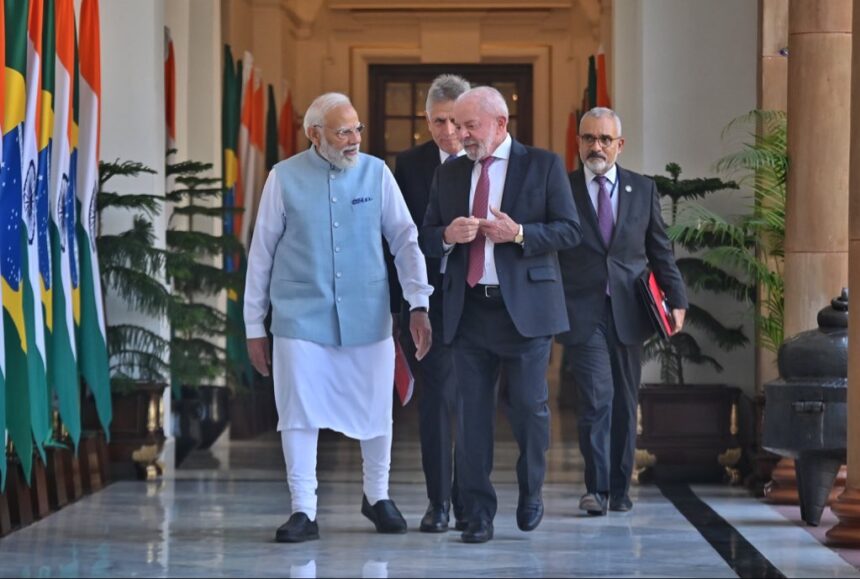
The State Visit of Brazilian President Luiz Inácio Lula da Silva to India has emerged as a significant diplomatic and strategic milestone, underscoring the evolving depth of the Brazil India strategic partnership. Conducted at the invitation of Prime Minister Narendra Modi, the visit symbolised not merely continuity in bilateral engagement but also an ambitious expansion of cooperation into areas that increasingly define global governance, economic resilience, and technological transformation. Against the backdrop of shifting geopolitical dynamics, the interactions between the two leaders reflected a shared emphasis on strengthening multilateralism, amplifying the voice of the Global South, and fostering a people-centric development agenda.
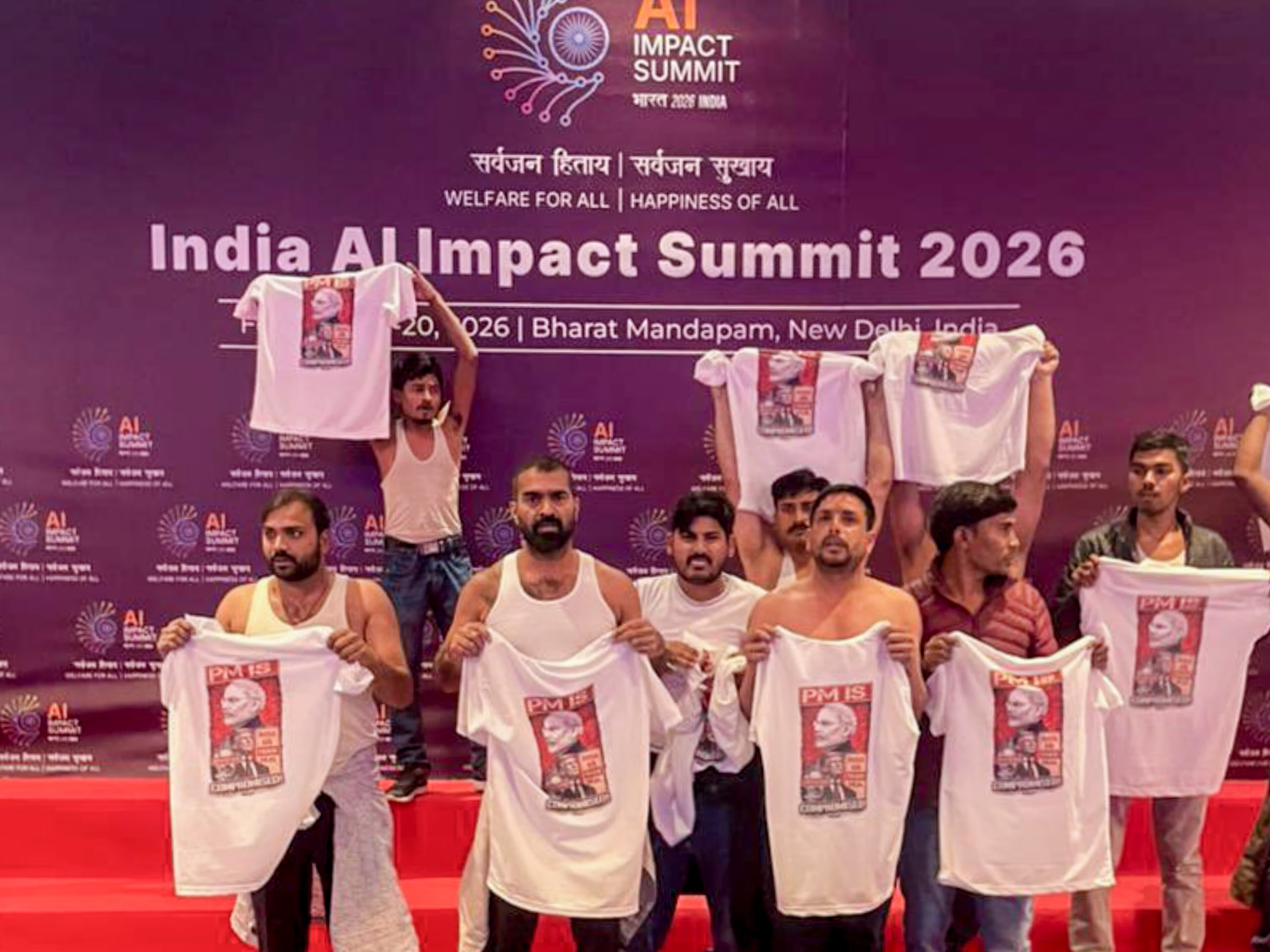
President Lula’s participation in the second AI Impact Summit added contemporary relevance to the visit, highlighting the convergence of technological diplomacy with traditional strategic cooperation. The Brazil India strategic partnership, originally formalised in 2006, has steadily evolved from a framework of political alignment into a multidimensional collaboration encompassing digital ecosystems, trade facilitation, climate policy, health partnerships, and defense engagement. This visit reinforced that trajectory, signalling how emerging economies are increasingly redefining bilateral relationships through innovation, sustainability, and institutional coordination.
The ceremonial aspects of the visit, including the guard of honour at Rashtrapati Bhawan and interactions with President Droupadi Murmu, reflected diplomatic tradition. Yet the substantive discussions held at Hyderabad House illustrated how modern state visits function as platforms for strategic recalibration. In an era where economic competitiveness, technological sovereignty, and environmental responsibility shape national priorities, the bilateral conversations underscored a shared commitment to aligning domestic growth agendas with global transformations.
Digital cooperation, innovation ecosystems, and the future-oriented agenda
One of the most defining outcomes of the visit was the renewed emphasis on digital cooperation. The signing of the Joint Declaration on Digital Partnership for the Future marked the formalisation of an area that increasingly serves as the backbone of modern governance and economic development. Both Brazil and India have cultivated reputations for building scalable digital public infrastructures, enabling inclusive service delivery and economic participation at population scale.
The leaders’ discussions highlighted the transformative potential of digital ecosystems, particularly in artificial intelligence, data governance, and innovation frameworks. By recognising multilateral initiatives such as UN resolutions, the Digital Global Compact, and UNESCO’s AI ethics recommendations, the engagement reflected a shared understanding that technological governance must balance innovation with equity and accountability. The emphasis on democratisation of AI innovation and equitable distribution of benefits underscores broader concerns within emerging economies regarding technological concentration and access disparities.
Collaboration in areas such as large language models, model training, and data protection frameworks signals the growing sophistication of bilateral digital engagement. Such cooperation reflects not only technological ambition but also strategic pragmatism. In an increasingly digitised global economy, partnerships that facilitate knowledge exchange, regulatory alignment, and innovation co-development can enhance competitiveness while mitigating risks associated with technological dependency.
The launch of initiatives such as the Open Planetary Intelligence Network illustrates how digital cooperation intersects with climate priorities. Integrating digital and environmental transformations into a unified agenda reflects evolving global policy thinking, where data-driven systems increasingly underpin sustainability efforts. This alignment resonates with broader international commitments under the Paris Agreement and the 2030 Agenda for Sustainable Development.
Youth engagement, innovation exchanges, and startup collaboration further highlight how digital partnerships increasingly extend beyond institutional cooperation into societal transformation. Encouraging hackathons, incubation platforms, and cross-border innovation networks signals recognition that technological progress depends on nurturing talent ecosystems and entrepreneurial dynamism.
The digital agenda also reinforces how bilateral relationships are adapting to contemporary governance realities. Traditional diplomatic pillars such as trade and defense now coexist with digital policy coordination, cybersecurity dialogue, and innovation diplomacy. This evolution reflects how technological capability has become central to national competitiveness and global influence.
Trade expansion, climate leadership, defense collaboration, and Global South alignment
Beyond digital cooperation, the Brazil India strategic partnership was further strengthened through economic, environmental, and security-focused engagements. The leaders’ acknowledgement of significant bilateral trade growth and the pursuit of ambitious targets reflects the centrality of economic collaboration. Eliminating non-tariff barriers, addressing trade remedies, and modernising trade facilitation mechanisms underscore efforts to enhance predictability and efficiency.
The emphasis on expanding the India–MERCOSUR preferential trade agreement reflects recognition of regional economic integration’s importance. As global trade patterns evolve amid supply chain reconfigurations and geopolitical shifts, deepening regional partnerships can enhance resilience and diversification. The signing of agreements related to electronic certificates of origin illustrates how administrative modernisation increasingly shapes trade efficiency.
Health cooperation emerged as another pivotal theme. Strengthening pharmaceutical partnerships, co-development initiatives, and regulatory coordination reflects shared priorities around equitable access to affordable medicines. Such collaboration resonates strongly within the Global South, where public health challenges often intersect with affordability constraints and supply limitations.
Climate leadership formed a prominent dimension of the visit. Recognition of Brazil’s role in hosting COP30 and advancing consensus reflects mutual appreciation of environmental diplomacy. Commitments to energy transition, sustainable fuels, and renewable cooperation underscore convergence in sustainability agendas. Collaboration in biofuels, hydrogen technologies, and emissions reduction highlights how environmental priorities increasingly align with industrial and technological policy.
Defense and security cooperation further illustrate the partnership’s strategic depth. Linking India’s Atmanirbhar Bharat initiative with Brazil’s defense industrial base signals interest in co-design and co-production frameworks. Maritime cooperation, outer space engagement, and cybersecurity dialogue reflect the expanding scope of bilateral security collaboration.
The leaders’ unequivocal condemnation of terrorism and emphasis on disrupting financing channels reflect shared security concerns. Environmental crimes, including wildlife trafficking and illegal mining, were also identified as areas requiring strengthened cooperation, underscoring how security agendas increasingly encompass ecological dimensions.
At the multilateral level, the partnership’s Global South alignment was evident. Calls for comprehensive UN reform, particularly Security Council expansion, reflect longstanding demands for more representative global governance structures. The emphasis on revitalised multilateralism, peaceful dispute resolution, and diplomacy-driven security frameworks highlights shared perspectives on international stability.
Cultural exchanges, visa facilitation, tourism cooperation, and educational partnerships reinforce the people-centric dimension of the relationship. Expanding cooperation in traditional medicine, academic exchange, cinema, and sports reflects recognition that strategic partnerships increasingly require societal connectivity alongside institutional collaboration.
The signing of multiple memorandums of understanding across digital governance, minerals cooperation, postal services, MSMEs, intellectual property, and pharmaceutical collaboration underscores the breadth of engagement. These instruments reflect how modern bilateral partnerships increasingly operate across interconnected domains of governance, economy, technology, and culture.