A brutal attack on a Hindu man underscores rising insecurity for minorities amid Bangladesh’s fragile political transition.
Bangladesh has once again been shaken by a disturbing incident of violence against a member of its Hindu minority, intensifying domestic and international concerns over the safety of vulnerable communities in the country. On December 31, Khokon Das, a 50-year-old Hindu man, was brutally attacked, stabbed, beaten, and set on fire by a violent group while returning home in the Shariatpur district. His survival, made possible only by a desperate leap into a nearby pond to extinguish the flames, has drawn attention to what many describe as a troubling pattern of escalating attacks on minorities. The incident comes amid a period of political uncertainty under the interim administration and has renewed scrutiny of Bangladesh’s ability to protect its religious minorities during a time of heightened social tension.
According to local accounts, Das was closing his small medical shop and heading home when the attack occurred. He was allegedly assaulted with sharp weapons, struck on the head, doused with petrol, and set ablaze in what appears to have been a targeted act of extreme violence. His wife, speaking to the media, described him as a simple, hardworking man with no known disputes, expressing anguish and demanding justice. Severely injured, Das was rushed to Dhaka Medical College Hospital, where he continues to receive treatment as doctors monitor his condition.
pattern of attacks on minorities and official responses
The assault on Khokon Das is not an isolated incident but part of a broader pattern that has emerged in recent weeks. It marks the fourth reported attack on a Hindu individual in Bangladesh within a span of two weeks, raising alarm among minority groups and human rights observers. On December 24, a 29-year-old Hindu youth, Amrit Mondal, was allegedly lynched by a mob in the Hossaindanga area of Kalimohar Union. Earlier, on December 18, another young Hindu man, Dipu Chandra Das, was brutally killed following false blasphemy accusations in a factory in Bhaluka Upazila of Mymensingh. In that incident, the mob reportedly killed him, hung his body from a tree, and set it on fire, a level of brutality that shocked many across the region.
The interim government led by Muhammad Yunus has condemned some of these incidents but has repeatedly denied that the violence has a communal dimension. Officials have argued that many such attacks stem from criminal activities, extortion, or personal disputes rather than religious hatred. However, critics argue that the repeated targeting of Hindu individuals, coupled with the nature of the violence, suggests deeper vulnerabilities faced by minorities that cannot be dismissed as coincidental or purely criminal.
Human rights organisations have expressed concern that a climate of impunity may be emboldening extremist elements. They point to delays in arrests, lack of transparent investigations, and inconsistent official messaging as factors that weaken public confidence. For minority communities, the perception that attacks are not being decisively addressed adds to fear and insecurity, particularly in rural and semi-urban areas where protection mechanisms are weaker.
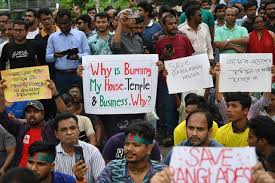
The Bangladesh government has maintained that it remains committed to protecting all citizens regardless of religion and has called for calm. Yet the persistence of violent incidents has made such assurances difficult to accept for many observers. The attacks have also sparked protests and condemnation from civil society groups, who argue that safeguarding minorities is not only a constitutional obligation but also essential for social stability.
regional reactions and diplomatic implications
The violence against minorities in Bangladesh has reverberated beyond its borders, particularly in India, which shares deep historical, cultural, and religious ties with its neighbour. New Delhi last week voiced grave concern over what it described as “unremitting hostility” toward minorities in Bangladesh, including Hindus, Christians, and Buddhists, stating that it is closely monitoring developments. Indian officials have emphasised that the protection of minorities is a matter of serious concern and an important aspect of bilateral relations.
Former Bangladeshi prime minister Sheikh Hasina, who was ousted earlier, has been sharply critical of the interim administration. In recent remarks, she accused the Yunus-led government of failing to protect religious minorities and allowing extremist forces to gain influence. She alleged that individuals responsible for attacks on minorities and other acts of violence have been emboldened and, in some cases, elevated to positions of power. Such statements have added a political dimension to the debate, deepening divisions within Bangladesh’s already polarised landscape.
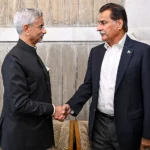
Diplomatic interactions between India and Bangladesh have taken place against this tense backdrop. On December 31, External Affairs Minister S Jaishankar visited Dhaka to attend the funeral of former prime minister Khaleda Zia. During the visit, Jaishankar met Khaleda Zia’s son and Bangladesh Nationalist Party leader Tarique Rahman, handing over a condolence letter from Prime Minister Narendra Modi. While the visit was officially described as ceremonial, it occurred amid frosty bilateral ties and ongoing concerns about minority safety, lending it added diplomatic significance.
Observers note that Bangladesh’s internal stability and its treatment of minorities have implications for regional security and cooperation. Episodes of communal violence risk undermining Bangladesh’s international image as a relatively moderate and pluralistic society. They also place strain on its relations with neighbours and partners who view minority protection as a key indicator of democratic health and rule of law.
For minority communities within Bangladesh, the attack on Khokon Das has become a symbol of fear and resilience at once. His survival has been described as miraculous, but it also highlights the desperation faced by victims who see escape as their only option. As investigations continue, questions remain about accountability, deterrence, and the broader social environment that allows such violence to recur.
The coming months are likely to be crucial in determining whether the interim government can restore confidence among minorities and the wider public. Effective prosecutions, clear acknowledgment of the problem, and sustained efforts to prevent further attacks will be closely watched, both domestically and internationally. Until then, incidents like the one in Shariatpur serve as stark reminders of the challenges facing Bangladesh during a delicate political transition.