Stricter bee efficiency norms and rising input costs are reshaping appliance pricing, impacting consumer choices in 2026.
As India steps into the new year, consumers planning to buy electronic appliances such as air conditioners and refrigerators are being greeted with the prospect of higher prices. From January 1, revised energy efficiency norms issued by the Bureau of Energy Efficiency have officially come into force, altering how appliances are rated and manufactured. Industry leaders say the changes, combined with rising global copper prices and a weakening rupee, are pushing up production costs and, in turn, retail prices. As a result, room air conditioners are expected to become up to 10 percent costlier, while refrigerators could see a price increase of up to 5 percent, reshaping the consumer durables market at the very start of 2026.
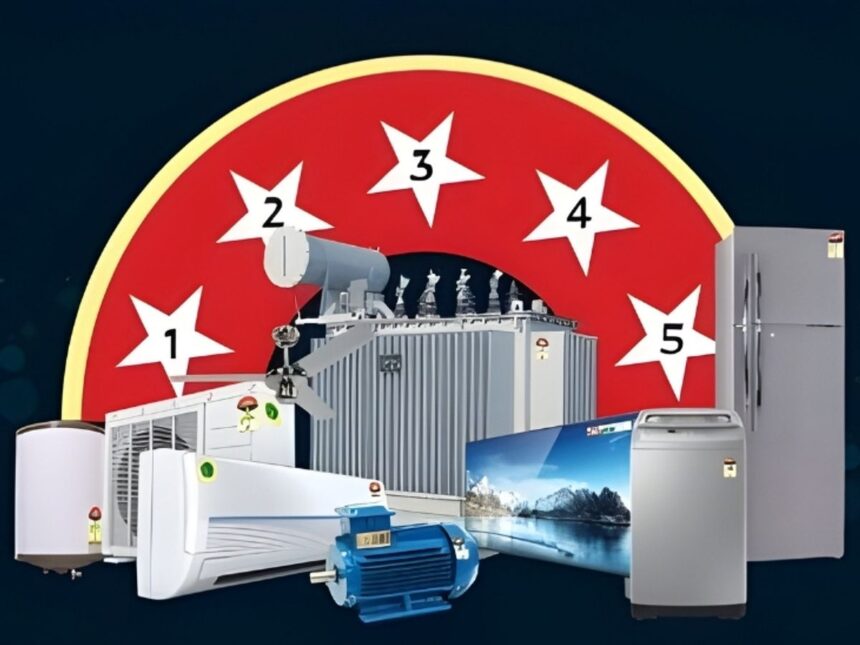
The new star rating framework represents a significant tightening of energy efficiency standards. Appliances that previously qualified for higher star ratings will now be downgraded unless they meet substantially stricter benchmarks. Manufacturers argue that complying with these norms requires redesigning products, upgrading components, and investing in new machinery, all of which add to costs. For consumers, this translates into a higher upfront price, even though the appliances promise better energy savings over their lifetime. The timing of the change has amplified its impact, as it coincides with elevated raw material prices and currency pressures, creating a perfect storm for price escalation.
stricter star ratings and their impact on appliance design and pricing
One of the most visible consequences of the revised BEE norms is the reclassification of existing products. According to industry executives, what was considered a five-star air conditioner under the earlier regime will now be rated as a four-star model. Similarly, existing four-star and three-star products will slide down the efficiency ladder. This recalibration is intended to push manufacturers toward producing genuinely more efficient appliances rather than relying on incremental improvements to maintain high ratings.
B. Thiagarajan, managing director of Blue Star, explained that under the new standards, a true five-star air conditioner will be significantly more efficient than today’s top-rated models. Such products are expected to deliver around 10 percent additional electricity savings compared to current five-star ACs. However, achieving this leap in efficiency involves the use of advanced compressors, improved heat exchangers, and more sophisticated control systems, all of which increase manufacturing costs. As a result, these new-generation five-star ACs are likely to be priced about 10 percent higher than existing models.
The revised norms also introduce mandatory QR codes on BEE star labels. These QR codes are designed to provide consumers with detailed product information, including energy consumption data and efficiency parameters, improving transparency at the point of sale. While this move is widely welcomed as a consumer-friendly step, manufacturers point out that implementing such traceability and compliance systems adds another layer of cost, particularly for smaller players.
The scope of mandatory star labeling has also been expanded. From January 1, star ratings are no longer limited to air conditioners and refrigerators. Televisions, LPG gas stoves, cooling towers, and chillers now fall under the mandatory labeling regime. The rationale, according to policymakers, is to empower consumers to make informed choices across a wider range of household appliances and to promote energy conservation at a national level. However, for manufacturers, this expansion means additional compliance requirements and testing costs, which are likely to be passed on to buyers over time.
The impact of these changes is particularly significant in the mass and mid-premium segments, where consumers are highly price-sensitive. While energy-efficient appliances offer lower running costs, many buyers still prioritise upfront affordability. Industry insiders note that the challenge will be to communicate the long-term savings effectively, especially in a market where purchasing decisions are often driven by immediate budget constraints.
rising input costs, gst dynamics, and shifting consumer behaviour
Beyond regulatory changes, broader economic factors are compounding the pressure on appliance prices. The global surge in copper prices has had a direct impact on the cost of manufacturing air conditioners and refrigerators, both of which rely heavily on copper for compressors, wiring, and heat exchangers. At the same time, the rupee’s depreciation against the dollar has increased the cost of imported components, further squeezing margins for manufacturers.
Kamal Nandi, business head of Godrej Appliances, described the situation as a double whammy for the consumer durables industry. On one hand, companies are grappling with higher commodity prices and currency volatility; on the other, they are investing heavily to meet stricter energy efficiency norms. According to Nandi, these combined pressures could lead to an immediate price increase of 5 to 7 percent in air conditioners and 3 to 5 percent in refrigerators, even before accounting for model-specific upgrades.
The recent reduction in goods and services tax on room air conditioners had offered some relief to consumers. In September, the government cut GST by 10 percent, lowering prices and stimulating demand ahead of the festive season. However, industry leaders now warn that the benefit of this tax cut is likely to be neutralised by the cumulative impact of higher input costs and regulatory changes. Kanwaljeet Jawa, chairman of Daikin Airconditioning India, noted that after the latest round of price adjustments, AC prices could return to levels seen before the GST reduction, effectively rolling back the earlier relief.
Despite these challenges, some manufacturers remain cautiously optimistic. Jayant Balan, a senior business leader at Voltas, observed that the announcement of price hikes has already begun to influence consumer behaviour. Many buyers are accelerating their purchase decisions to take advantage of current prices before the full impact of the new norms is reflected on showroom tags. This surge in short-term demand has provided temporary relief to companies, even as they brace for a more competitive and cost-intensive environment in the months ahead.
The shift in star ratings is also prompting consumers to reassess their priorities. Some buyers are opting for lower-rated models at present prices, while others are waiting for the new-generation appliances that promise higher efficiency and long-term savings. This divergence is creating a more segmented market, where value-conscious customers and energy-conscious customers follow different purchase paths.
For policymakers, the revised BEE norms are part of a broader strategy to reduce India’s energy consumption and carbon footprint. Appliances account for a significant share of household electricity use, and improving their efficiency is seen as a critical lever for sustainable growth. The challenge lies in balancing these long-term environmental goals with short-term affordability concerns, particularly for middle-class households.
As 2026 unfolds, the appliance market is expected to remain in flux. Manufacturers will continue to adjust pricing, roll out redesigned models, and fine-tune their messaging to highlight efficiency gains. Consumers, meanwhile, will need to navigate a more complex landscape, weighing higher upfront costs against potential savings on power bills. The new BEE star rating regime, combined with global economic pressures, has set the stage for a structural shift in how electronic appliances are priced, marketed, and purchased in India.