Despite frozen ties and recent hostilities, India and Pakistan continue critical confidence-building exchanges to prevent escalation and humanitarian lapses.
India and Pakistan began 2026 by adhering to a long-standing diplomatic and security protocol, exchanging lists of nuclear installations and facilities as well as details of civilian prisoners and fishermen held in each other’s custody. The exchange, conducted simultaneously through diplomatic channels in New Delhi and Islamabad, took place against the backdrop of deeply strained bilateral relations that have remained frozen since a brief but intense military confrontation in May last year. Even so, the continuation of this annual exercise underscored the resilience of institutional confidence-building mechanisms that have survived wars, terror attacks, and prolonged diplomatic breakdowns between the two nuclear-armed neighbours.
The Ministry of External Affairs described the exchange as part of established bilateral agreements that both sides have honoured for decades, regardless of the prevailing political climate. The sharing of nuclear no-attack lists, carried out every year on January 1, is aimed at preventing misunderstandings and reducing the risk of escalation during times of tension. The parallel exchange of prisoner lists, meanwhile, reflects an effort to address humanitarian concerns, particularly those involving fishermen and civilians who often become collateral victims of strained ties and unresolved disputes.
Nuclear no-attack agreement endures despite prolonged diplomatic freeze
The exchange of nuclear installation lists is mandated under the Agreement on the Prohibition of Attack against Nuclear Installations and Facilities, signed in December 1988 and operational since January 1991. Under this agreement, both countries commit not to target each other’s nuclear facilities and to share updated lists of such installations annually. The latest exchange marked the 35th consecutive year in which the protocol has been observed, highlighting its durability even during periods of extreme political hostility.
According to the Ministry of External Affairs, the lists were exchanged simultaneously through diplomatic channels in New Delhi and Islamabad, reaffirming a rare area of continuity in an otherwise fractured relationship. This year’s exchange assumes added significance because it comes after the four-day military hostilities in May, which pushed bilateral relations to one of their lowest points in decades. Although active fighting ended on May 10, political engagement has remained minimal, with no substantive dialogue between the two sides.
The nuclear no-attack agreement has long been regarded as one of the most important safeguards in South Asia’s fragile security architecture. By committing both sides to transparency regarding nuclear installations, the pact seeks to minimise the risk of miscalculation during crises. Analysts note that the uninterrupted observance of this agreement reflects a shared recognition in both capitals that certain red lines must not be crossed, regardless of political or military tensions.
This year’s exchange also came amid heightened regional sensitivity following India’s Operation Sindoor, carried out in response to the Pahalgam terror attack. The operation and the subsequent military confrontation further hardened positions on both sides, reinforcing the diplomatic freeze. Yet the continuation of the nuclear exchange suggests that even at moments of peak hostility, institutional mechanisms designed to prevent catastrophic escalation continue to function.
civilian prisoners, fishermen, and limited diplomatic signals
Alongside the nuclear exchange, India and Pakistan also shared lists of civilian prisoners and fishermen under the 2008 Agreement on Consular Access. India provided details of 391 civilian prisoners and 33 fishermen in its custody who are Pakistani or believed to be Pakistani. Pakistan, in turn, shared information about 58 civilian prisoners and 199 fishermen who are Indian or believed to be Indian. Such exchanges are intended to facilitate consular access, verify identities, and expedite repatriation processes where possible.
New Delhi reiterated its call for the early release and repatriation of all civilian prisoners and fishermen, along with their boats, emphasising the humanitarian nature of the issue. India also urged Pakistan to expedite the release of 167 Indian fishermen and civilian prisoners who have completed their sentences but remain in custody. The Ministry of External Affairs sought immediate consular access to 35 individuals believed to be Indian who have not yet been granted such access and called on Islamabad to ensure their safety and welfare.
The Indian government highlighted that sustained diplomatic efforts since 2014 have resulted in the repatriation of 2,661 fishermen and 71 civilian prisoners from Pakistan, including 500 fishermen and 13 civilian prisoners since 2023. These figures were cited as evidence that even limited engagement can yield tangible humanitarian outcomes, despite the absence of broader political dialogue.
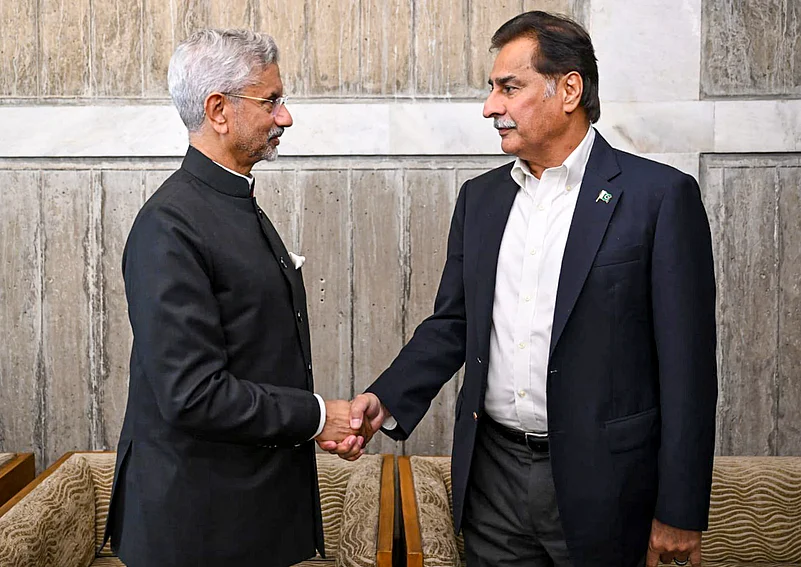
The exchange took place just a day after a brief and symbolic interaction between External Affairs Minister S Jaishankar and Pakistan’s National Assembly Speaker Ayaz Sadiq in Dhaka, during the funeral of former Bangladesh prime minister Khaleda Zia. Although limited to pleasantries, the interaction marked the first senior-level contact between the two sides since Operation Sindoor and was viewed by observers as a rare moment of diplomatic signalling amid otherwise frozen ties.
India and Pakistan have not held sustained bilateral talks since New Delhi suspended the composite dialogue following the 2008 Mumbai terror attacks. Subsequent attempts at limited engagement have frequently been derailed by terror incidents attributed to Pakistan-based groups, further entrenching mistrust. In this context, the continuation of technical and humanitarian exchanges assumes outsized importance, serving as one of the few remaining channels of structured interaction.
While the broader political relationship remains deeply strained, the latest exchanges demonstrate that both sides continue to recognise the value of maintaining select confidence-building measures. By adhering to agreements on nuclear safety and humanitarian issues, India and Pakistan signal an understanding that even adversarial relationships require guardrails to prevent unintended escalation and address human costs. The challenge ahead lies in whether these limited mechanisms can eventually pave the way for more substantive engagement or remain isolated islands of cooperation in an otherwise frozen relationship.