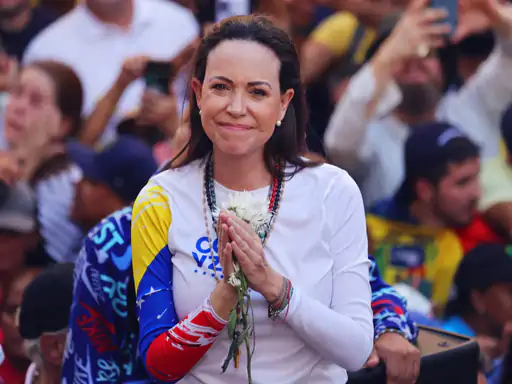
Venezuelan opposition leader Maria Corina Machado was unable to personally attend the Nobel Peace Prize ceremony in Oslo, Norway, due to an ongoing travel ban and the constant threat of arrest, reflecting the increasing political repression she has faced in her country. In her absence, her daughter Ana Corina Sosa accepted the prestigious award on her behalf, delivering Maria Corina Machado’s written speech that emphasized the importance of the struggle for democracy and freedom not only in Venezuela but across the globe. The Nobel Committee confirmed that Maria Corina Machado was en route to Oslo and might arrive later in the evening, highlighting the extraordinary circumstances surrounding her recognition. Maria Corina Machado, who has been living in hiding since 2024, was awarded the Nobel Peace Prize on October 10, 2025, for her relentless efforts to restore democracy and defend human rights in Venezuela, despite facing relentless persecution and political marginalization by the regime of President Nicolás Maduro. The ceremony saw the participation of Machado’s mother, her three daughters, and several Latin American leaders, including Argentine President Javier Milei, underscoring the international acknowledgment of her courageous activism.
Maria Corina Machado’s Fight for Democracy and Challenges in Venezuela
In her written message delivered at the Nobel ceremony, Maria Corina Machado described the systematic erosion of democratic institutions in Venezuela, emphasizing that the country had gradually slipped into a dictatorship while citizens failed to recognize the threat in time. She directly criticized former President Hugo Chávez and current President Nicolás Maduro for undermining democratic principles and weakening institutional checks and balances. Her activism, she stated, is aimed at safeguarding freedom, transparency, and human dignity, serving as an inspiration not only for Venezuelans but also for people worldwide who struggle against authoritarianism. Maria Corina Machado’s political career has been marked by persistent opposition to the ruling party’s attempts to consolidate power, even at great personal risk. She was barred from running for the presidency in 2024 despite winning the opposition primaries, prompting her to go into hiding beginning in August 2024 to avoid arrest and persecution by the government. Her absence from the ceremony underscores the severe limitations placed on political leaders who challenge Maduro’s regime, and her daughter’s presence highlighted the continuity of her struggle and the resilience of her family in supporting her mission.
Maria Corina Machado first gained national prominence on January 14, 2012, during a session of the Venezuelan parliament when she interrupted a nearly ten-hour-long speech by then-President Hugo Chávez, publicly accusing him of corruption and demanding the return of confiscated property. Chávez’s dismissive response, claiming she was unworthy of debate, turnedMaria Corina Machado into a symbol of courageous opposition and established her as a formidable political voice in Venezuela. Since then, she has continued to confront government overreach, consistently advocating for democratic reforms and human rights protections. Her steadfast opposition to authoritarianism and her willingness to risk personal safety to speak truth to power have earned her recognition both nationally and internationally, culminating in the Nobel Peace Prize award for 2025.
Recognition and Awards Amid Ongoing Persecution
Maria Corina Machado’s struggle has been acknowledged through multiple international accolades. In 2024, she received the Sakharov Prize from the European Parliament alongside Edmundo González for their dedication to defending democracy. The same year, she was honored with the Václav Havel Human Rights Prize by the Council of Europe for her human rights advocacy. In 2025, she and González were awarded the Courage Award by the Geneva Summit for Human Rights. Earlier in her career, in 2018, the BBC recognized Maria Corina Machado as one of the 100 most influential women worldwide, a testament to her impact on both the national and international stage. Despite being barred from contesting the presidential elections, her political influence remained significant, as her supporting party secured a clear victory in the elections, which the Maduro regime refused to accept, further highlighting the deep political crisis in Venezuela. Maria Corina Machado’s ongoing activism and the international recognition of her efforts underscore the persistent tension between democratic aspirations and authoritarian governance in the country.
The Nobel Peace Prize award also highlights the symbolic importance of her struggle. Maria Corina Machado’s daughter Ana Corina Sosa, who accepted the award, read her mother’s speech, which stressed the vital role of citizen engagement, vigilance, and resistance against oppressive regimes. The ceremony reinforced the global visibility of Venezuela’s democratic crisis and the international community’s acknowledgment of those fighting for civil liberties under extreme duress. Leaders and activists from Latin America and beyond attended the event, lending diplomatic support and moral encouragement to Maria Corina Machado’s cause. Her presence, albeit in hiding, and her family’s participation, demonstrated resilience and the enduring relevance of her message. Maria Corina Machado’s recognition as a Nobel laureate sends a powerful signal about the importance of defending democracy and human rights, even in the face of personal danger and political persecution.
Maria Corina Machado’s legal and political circumstances have been fraught with challenges. Following her disqualification from the 2024 presidential race, she actively supported Edmundo González Urrutia, an opposition candidate from a different party, aligning her efforts with broader democratic forces in Venezuela. This coalition achieved significant electoral victories, which the ruling regime has continually attempted to suppress. Maria Corina Machado’s life in hiding and her evasion of arrest illustrate the lengths to which authoritarian governments may go to neutralize prominent opposition figures. Her ongoing struggle, despite systemic obstacles, reflects a deep commitment to the principles of democracy and the rule of law. The Nobel recognition serves not only as personal validation but also as an international endorsement of her efforts to protect democratic values in a repressive environment.
Moreover, Maria Corina Machado’s story emphasizes the role of women in political resistance. Her public confrontations with Hugo Chávez, her leadership within opposition movements, and her advocacy for human rights have positioned her as a significant female political figure in Latin America. The international awards she has received underscore the recognition of women’s critical role in championing freedom, transparency, and accountability in governance. Maria Corina Machado’s courage in challenging entrenched political powers has inspired other activists and leaders worldwide, demonstrating the impact of individual leadership in shaping democratic movements under adverse conditions.
The broader context of Maria Corina Machado’s activism includes the ongoing struggle for democracy in Venezuela, where institutional checks have been weakened, political opponents are harassed, and citizens face limitations on basic freedoms. Maria Corina Machado’s Nobel Peace Prize highlights the intersection of global recognition and local political resistance, emphasizing how international institutions can shine a light on human rights violations and support individuals committed to democratic reform. Her award illustrates the importance of international solidarity in amplifying the voices of those fighting authoritarianism and defending civil liberties in highly repressive environments.
The ceremony in Oslo, with Maria Corina Machado’s daughter accepting the award and delivering her written speech, served as a testament to the resilience of political families in exile or hiding. It also reflected the critical importance of symbolic gestures in sustaining momentum for democratic movements under threat. Maria Corina Machado’s written words emphasized that democracy requires continuous struggle, citizen participation, and unwavering commitment to freedom, resonating with activists and observers globally. The presence of Latin American leaders, including Argentine President Javier Milei, highlighted the regional significance of Venezuela’s democratic struggle and the role of transnational support in promoting accountability.
Maria Corina Machado’s life and activism continue to provide a roadmap for opposition leaders facing repression. Her strategic engagement in political processes, combined with her willingness to confront authoritarian regimes, demonstrates how principled leadership can navigate complex political environments. The challenges she has faced, including disqualification from elections, government surveillance, travel bans, and living in hiding, illustrate the multifaceted nature of political repression and the personal sacrifices required for effective activism. Maria Corina Machado’s recognition on the world stage validates these efforts and amplifies the importance of resilience, courage, and moral leadership in defending democracy.
Overall, Maria Corina Machado’s Nobel Peace Prize is emblematic of the global importance of supporting democratic activists operating under extreme political constraints. Her recognition highlights the critical interplay between national struggles for democracy and international advocacy for human rights. The award not only honors Maria Corina Machado’s past achievements but also strengthens ongoing efforts to safeguard democratic institutions and civil liberties in Venezuela and beyond. Maria Corina Machado’s narrative, from her early parliamentary confrontations to her current status as a Nobel laureate living under threat, encapsulates the enduring significance of principled resistance and the role of the international community in protecting those who champion freedom.
Her story reinforces the urgent need for vigilance against authoritarianism and underscores the global responsibility to support individuals who dedicate their lives to protecting democracy, promoting human rights, and challenging oppressive regimes. Maria Corina Machado’s Nobel recognition also serves as a reminder of the power of international institutions to validate and support courageous leaders, inspiring future generations of activists to continue the fight for democratic ideals, transparency, and accountability in governance worldwide.