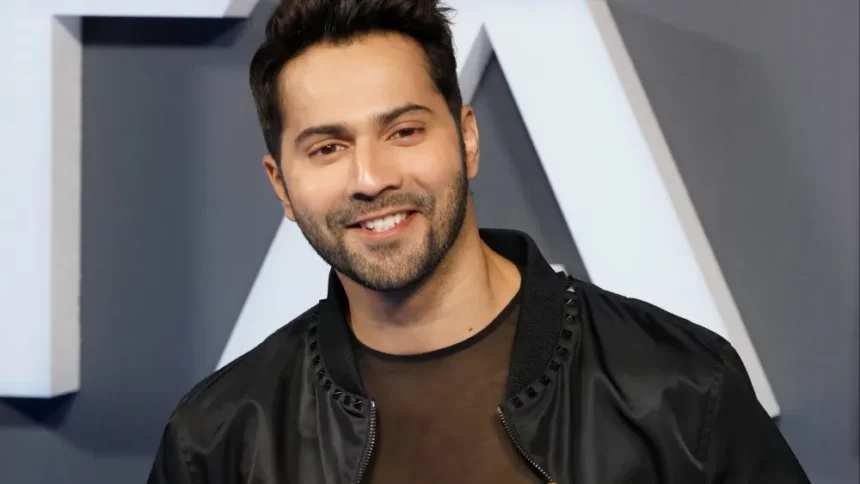
Bollywood actor Varun Dhawan recently found himself at the centre of intense online discussion after the release of a song from his upcoming film Border 2, with some social media users questioning his acting based on brief visuals from the track. Instead of allowing the criticism to spiral unchecked, Dhawan chose to address the comments directly, responding with humour and confidence that quickly shifted the tone of the conversation. His reaction not only drew widespread attention but also sparked a wave of support from fans, reinforcing how modern actors increasingly engage with audiences in real time while navigating scrutiny in the digital age.
The debate emerged soon after the song “Ghar Kab Aaoge” was released online, gaining traction across platforms where users dissected every frame, expression and moment. While many praised the song’s emotional undertone and patriotic sentiment, a section of viewers expressed scepticism about Dhawan’s performance, questioning whether he suited the intensity associated with a film carrying the legacy of the original Border. Such mixed reactions are common in the current media environment, where promotional material is instantly amplified and dissected, often long before audiences have the opportunity to see a complete performance on screen.
Rather than ignoring the criticism, Dhawan acknowledged it publicly, replying to a comment that pointed out doubts about his acting. His response, delivered with light sarcasm and optimism, suggested that the very questions being raised had helped propel the song’s popularity. By framing the criticism as part of the reason the track was gaining attention, he subtly reframed negativity into engagement, a move that resonated strongly with his followers and underscored his comfort with online discourse.
Social media scrutiny and Varun Dhawan’s confident response
The episode highlights the growing influence of social media in shaping narratives around films and performances. In earlier eras, audience reactions were largely confined to theatres and post-release reviews. Today, however, actors are judged instantly on trailers, teasers and even single songs, with opinions spreading at remarkable speed. For Varun Dhawan, whose career has spanned commercial entertainers, romantic dramas and action-oriented roles, stepping into a film like Border 2 naturally invited heightened expectations and scrutiny.
When criticism began circulating, Dhawan’s decision to engage stood out for its tone. Instead of defensiveness or confrontation, he opted for humour, suggesting that curiosity and debate were driving the song’s reach. This approach not only diffused tension but also demonstrated an understanding of how visibility works in the digital era. In a landscape where attention often translates into momentum, his response acknowledged that even scepticism can fuel interest.
Fans quickly rallied behind him, flooding comment sections with messages of encouragement and praise. Many argued that judging an actor’s performance based on a song clip was premature, urging critics to wait for the full film before forming opinions. Others applauded Dhawan’s maturity in handling criticism, noting that his ability to remain composed and witty reflected confidence in his craft. The interaction became a talking point in itself, extending the conversation beyond the song to broader issues of online judgement and artistic evaluation.
This incident also reflects a broader shift in how celebrities manage public perception. Direct engagement with fans and critics has become a key aspect of stardom, blurring the line between performer and audience. Dhawan’s reply illustrated how actors can assert control over narratives without escalating conflict, using personality and perspective to shape how discussions unfold. In doing so, he reinforced a sense of accessibility that many fans value in contemporary stars.
Border 2 expectations and evolving audience conversations
Border 2 carries significant emotional and cultural weight, being a follow-up to the iconic 1997 film Border, which remains etched in public memory for its portrayal of patriotism and sacrifice. Any actor stepping into such a project is bound to face comparisons and heightened expectations, and Varun Dhawan’s casting has been no exception. Known for his versatility and commercial appeal, Dhawan’s presence in a war drama represents a continuation of his efforts to explore varied genres and challenge perceptions about his range.
The release of “Ghar Kab Aaoge” was intended to evoke emotion and nostalgia, connecting audiences to the film’s themes ahead of its theatrical debut. The song’s reception, while largely positive, also opened space for debate about performance, tone and interpretation. In responding to criticism, Dhawan effectively became part of the promotional narrative, with his remarks adding another layer to how audiences perceived both the song and the film.
Such interactions underscore how promotion today is not limited to planned interviews and events but extends into spontaneous exchanges online. Actors are no longer distant figures responding only through formal channels; they are participants in ongoing conversations that can shape anticipation and perception. For Border 2, the dialogue generated by Dhawan’s response arguably amplified interest, drawing attention from those who might not have otherwise engaged with the song.
At the same time, the episode raises questions about how audiences consume and judge art in fragments. Songs, teasers and short clips are often treated as definitive representations, even though they form only a small part of a larger narrative. Dhawan’s experience reflects the challenge actors face in an era of instant judgement, where patience is rare and opinions are often formed quickly. His response, however, suggested confidence in the eventual impact of the full film, implying that performances are best assessed in their complete context.
As anticipation for Border 2 continues to build, discussions around the film, its music and its cast are likely to intensify. Varun Dhawan’s handling of criticism may serve as an example of how stars can navigate this environment with balance, acknowledging audience voices without being defined by them. His reaction demonstrated that confidence, humour and openness can transform scepticism into conversation, keeping the focus on engagement rather than division.