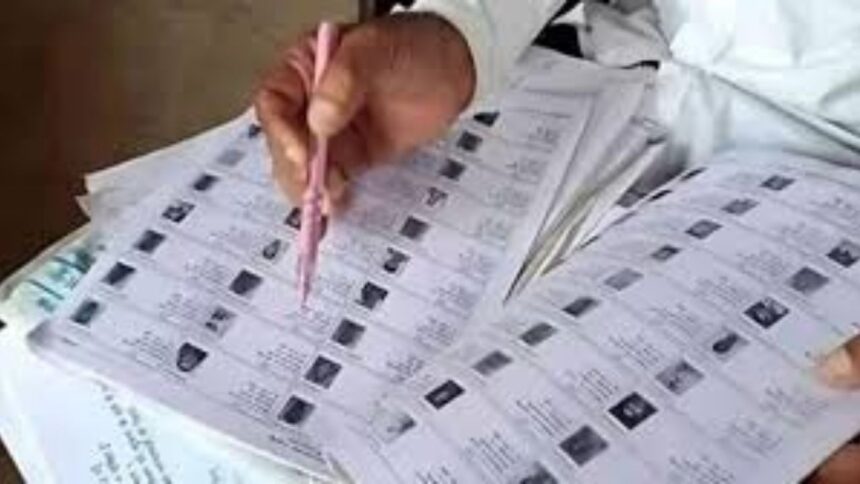
The release of the draft electoral roll for Uttar Pradesh following a special intensive revision has triggered wide public and political discussion, placing the focus squarely on how India’s democratic machinery balances accuracy with inclusion in one of the world’s largest electoral exercises. The revised draft, issued by the Election Commission of India, reflects the outcome of a large-scale verification drive aimed at updating voter records ahead of future elections in the state. With millions of names reportedly deleted from the rolls, the exercise has raised questions about administrative rigor, voter participation, and the safeguards required to ensure that eligible citizens are not excluded from the democratic process.
Uttar Pradesh, India’s most populous state and a key battleground in national politics, has long posed unique challenges for election management. High population mobility, urbanisation, migration for work, and demographic change make the task of maintaining an accurate voter list especially complex. The special intensive revision was conceived as a response to these realities, but its scale and impact have ensured that it is being closely scrutinised by political parties, civil society groups, and ordinary voters alike.
scale of the revision and the process behind the draft voter list
The special intensive revision involved a door-to-door verification exercise carried out by election officials across Uttar Pradesh. The aim was to identify duplicate entries, remove names of deceased voters, and update records where individuals had relocated or were otherwise ineligible to vote from a particular constituency. According to the draft list released after the revision, a substantial number of names have been removed, leading to a noticeable reduction in the total count of registered voters in the state.
Election officials have described the exercise as a routine but necessary step to maintain the integrity of the electoral roll. They argue that outdated or inaccurate voter lists undermine the credibility of elections and can create logistical challenges on polling day. By conducting an intensive revision, the commission says it seeks to ensure that each eligible voter is registered once, in the correct constituency, and with accurate personal details.
The process relied heavily on booth-level officers, who were tasked with physically verifying households and cross-checking existing records. In urban areas, where migration is high and residential patterns change frequently, officials faced the challenge of tracking voters who may have moved temporarily or permanently. In rural regions, the task involved confirming long-standing records that may not have been updated for years. The scale of Uttar Pradesh meant that even minor discrepancies, when aggregated, resulted in large numerical changes.
The draft nature of the list is a critical aspect of the process. The Election Commission has emphasised that the current roll is not final and that citizens have the opportunity to file claims and objections within a specified window. Voters whose names have been deleted can apply for reinstatement by providing proof of eligibility, while new voters can seek inclusion. This corrective phase is designed to address errors and ensure that the final roll reflects ground realities as accurately as possible.
political reactions and concerns over voter inclusion
The publication of the draft voter list has inevitably drawn political reactions, with opposition parties expressing concern over the large number of deletions. Critics argue that mass removals risk disenfranchising genuine voters, particularly among marginalised communities, migrant workers, and the urban poor, who may be harder to reach during verification drives. They have called for transparency in the revision process and greater outreach to ensure that affected voters are informed about how to restore their names to the rolls.
Some political leaders have questioned whether the timing and intensity of the revision could influence electoral outcomes, especially in a state where margins of victory are often narrow in key constituencies. They have urged the Election Commission to publish detailed, constituency-wise data explaining the reasons for deletions and to monitor the claims-and-objections process closely. For these critics, the central issue is not the need for accurate rolls, but the risk that administrative shortcomings could disproportionately affect certain groups.
The Election Commission, however, has rejected suggestions of bias or arbitrariness. Officials maintain that the revision was conducted according to established guidelines and under the supervision of senior officers. They point out that similar exercises have been carried out in the past and that the opportunity for correction is an integral safeguard. The commission has also appealed to political parties to assist voters by spreading awareness about the claims process rather than fuelling mistrust.
Civil society organisations and election observers have taken a more nuanced view, acknowledging the necessity of periodic revisions while stressing the importance of accessibility and communication. They argue that voters must be clearly informed, in multiple languages and through varied channels, about changes to the rolls and the steps required to rectify errors. In a state as large and diverse as Uttar Pradesh, they note, administrative efficiency must be matched by empathy and outreach.
The debate has also revived broader questions about the relationship between electoral integrity and voter participation. Accurate voter lists are essential to prevent fraud and ensure smooth polling, but excessive or poorly communicated deletions can erode public confidence. The challenge lies in striking a balance where the system is robust without becoming exclusionary. Uttar Pradesh’s draft voter list has become a case study in how difficult that balance can be to achieve at scale.
As the claims-and-objections period progresses, much will depend on how responsive the administration is to grievances and how effectively voters are able to navigate the correction process. The final electoral roll, once published, will serve as the definitive register for upcoming elections, making the current phase crucial for safeguarding democratic participation. With national attention focused on the state, the handling of this revision is likely to influence perceptions of electoral governance well beyond Uttar Pradesh.