England showed resilience and resolve on the fourth day of the fifth and final Ashes Test at the Sydney Cricket Ground, steadying themselves after a difficult start to their second innings to remain in contention in a match that continues to ebb and flow. After dismissing Australia for a formidable 567 and conceding a daunting first-innings lead of 183 runs, England were immediately placed under pressure when their reply began with the early loss of an opener and concerns over their captain’s fitness. Yet, through calm batting and a crucial partnership, they reached lunch at 80 for 1, keeping alive hopes of forcing Australia to bat again and extending the contest into a decisive final phase.
The day began with England completing the task of bowling out Australia, but the psychological challenge of batting last on a surface offering uneven bounce quickly became apparent. The dismissal of Zak Crawley in the opening over set a nervous tone, while the sight of skipper Ben Stokes limping from the field added another layer of uncertainty. Against this backdrop, England’s ability to regroup and counterattack reflected both determination and growing maturity in their approach, even as Australia pressed hard for a series-clinching victory.
early blows, starc’s menace, and england’s recovery through duckett and bethell
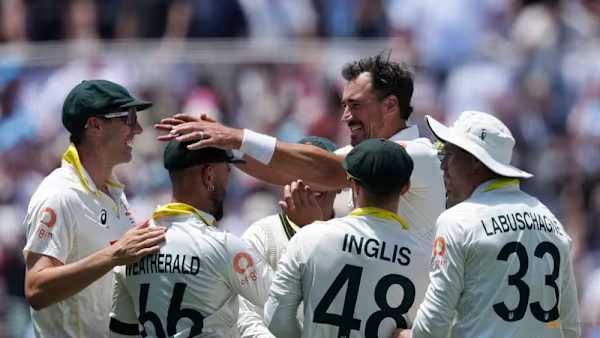
Australia resumed their first innings at 518 for 7 and were wrapped up for 567, but the momentum quickly swung as soon as England began their chase. Mitchell Starc struck with his very first over, producing a full, swinging delivery that trapped Zak Crawley lbw as he attempted to leave the ball. Crawley reviewed the decision, but technology confirmed the on-field call, leaving England 4 for 1 and immediately under strain.
Starc’s early spell was threatening, his pace and movement asking serious questions of England’s batters. The ball was doing just enough in the air and off the pitch to keep the slips and wicketkeeper interested, and Australia sensed an opening to press home their advantage. Crawley’s dismissal reinforced how unforgiving conditions remained, particularly for batters hesitant between attack and defence.
Into this pressure walked Ben Duckett, who would go on to play his most assured innings of the series. Initially edgy, Duckett rode his luck as a couple of edges fell short of the fielders, but he gradually found rhythm and confidence. His footwork improved, and he began to trust his judgment outside off stump, allowing him to play with freedom through the off side.
Duckett’s innings, unbeaten at 40 by lunch, was marked by fluent stroke play and sharp running between the wickets. He struck six boundaries in his 48-ball stay before the interval, repeatedly piercing gaps and forcing Australia to spread the field. Just before lunch, he survived a major scare when a delivery from Michael Neser took the glove and flew to the slips, where Cameron Green spilled a diving chance in front of captain Steve Smith. Duckett was on 37 at the time, and the dropped catch proved a pivotal moment in the session.
Alongside Duckett, Jacob Bethell provided valuable support, reaching 28 not out by lunch. The pair added a 76-run second-wicket stand that steadied England’s innings and restored belief in the dressing room. Bethell showed composure against both pace and bounce, though he endured a moment of concern when struck on the helmet by a sharp bouncer from Green. After being assessed on the field, he continued, ducking another short delivery and carrying on with confidence.
The pitch, meanwhile, offered occasional steep bounce, keeping batters alert and rewarding disciplined bowling. Australia rotated their attack in search of breakthroughs, but Duckett and Bethell resisted, ensuring England went to lunch needing 103 more runs to make Australia bat again.
stokes injury, smith milestone, and australia’s push for series dominance
While England’s recovery with the bat provided encouragement, the morning session was overshadowed by concerns over Ben Stokes. The England skipper bowled just 10 deliveries before leaving the field, clearly uncomfortable, and team management later confirmed he was being assessed for a right adductor issue. His fitness remains a major question mark for the remainder of the Test, with implications not only for England’s bowling resources but also for leadership during a critical phase of the match.
Australia’s imposing first-innings total had been built on commanding centuries from Travis Head, playing as a stand-in opener, and Steve Smith, who continued his remarkable Ashes record with a fluent 138. Smith’s knock was his 13th century in Ashes Tests, the 37th of his Test career, and his fifth at the Sydney Cricket Ground, moving him to sixth on the all-time list of Test centuries and cementing his status as one of the modern greats.
Smith resumed the day on 129 but failed to find his rhythm early, eventually edging behind off Josh Tongue, ending a productive 107-run partnership for the eighth wicket with Beau Webster, who remained unbeaten on 71. England then cleaned up the tail efficiently, taking the last three wickets for 49 runs. Starc was bowled by a full, late-moving delivery from Tongue, while Scott Boland fell for a first-ball duck, caught at first slip off off-spinner Will Jacks.
Tongue finished with figures of 3 for 97 from 20 overs, a reward for persistence on a surface that demanded patience. Despite England’s efforts, Australia’s 183-run lead placed them firmly in control, and their objective remains clear: force a result that completes a dominant 4–1 series victory after retaining the Ashes within the first three Tests.
England, however, are motivated by pride and momentum gained from their breakthrough win in the fourth Test at Melbourne. Narrowing the series margin would represent a moral victory and a statement of progress under Stokes’ leadership, even as injury concerns threaten to complicate matters. With two days remaining, the match remains finely poised, hinging on England’s ability to extend their second innings and set Australia a challenging target, or at least bat long enough to deny them an easy path to victory.
As play continues, attention will remain fixed on Duckett’s composure, Bethell’s resilience, and Stokes’ fitness, while Australia will look to exploit any weakness with their experienced attack. The Ashes finale at Sydney, rich in narrative and individual milestones, has set the stage for a compelling finish that reflects the enduring intensity of cricket’s greatest rivalry.