In an effort to extend the fragile ceasefire in Gaza, White House envoy Steve Witkoff has arrived in Qatar to participate in indirect negotiations between Israel and Hamas. The discussions come at a crucial moment as both sides weigh their options regarding the next phase of the truce.
Negotiators from both parties have resumed talks with mediators for the first time since President Donald Trump assumed office on January 20. The initial 42-day ceasefire agreement, which took effect just before his inauguration, led to the release of 25 living Israeli hostages and the remains of eight others by Hamas. In return, Israel freed approximately 1,800 Palestinian prisoners and five Thai nationals. However, this phase ended on March 1, leaving the future of the ceasefire uncertain.
Israel is now advocating for a two-month extension, starting with the release of about half of the hostages still in captivity. However, Hamas has resisted this proposal, demanding that negotiations immediately shift to the second phase of the original agreement, which includes ending the war and a complete Israeli troop withdrawal. Despite the tensions, Hamas has expressed its willingness to continue the discussions in Doha with “full responsibility and positivity.”
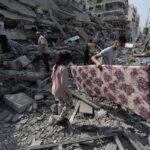
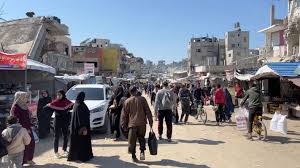
Meanwhile, Israel has blocked all aid deliveries, including food and fuel, to Gaza, citing the need to pressure Hamas into further negotiations. This has led to dire humanitarian conditions, with electricity cut off from Gaza’s only desalination plant, forcing it to operate at minimal capacity using reserve fuel. The blockade has significantly impacted food supplies, with bakeries shutting down and prices soaring. UN Humanitarian Coordinator Muhannad Hadi has warned that further delays in aid delivery could reverse progress made during the ceasefire period.
The crisis has also led to new threats from Yemen’s Houthi movement, which has vowed to resume attacks on Israeli-linked ships in the Red Sea and Gulf of Aden if humanitarian aid remains blocked. Such actions could disrupt global trade and escalate regional tensions further.
Domestically, pressure is mounting on Israeli Prime Minister Benjamin Netanyahu, with families of the remaining hostages demanding urgent action. Protests have erupted in Tel Aviv, calling for an immediate resolution to secure the hostages’ release. Netanyahu has confirmed that the US envoy proposed a temporary ceasefire extension until after Ramadan and Passover, a plan that Israel has accepted. However, Hamas continues to hold at least 24 living hostages and the remains of 35 others, complicating negotiations.
As regional mediators, including Qatar and Egypt, push for a breakthrough, both Israel and Hamas remain locked in a high-stakes negotiation. The outcome of these discussions will shape the trajectory of the conflict and determine whether peace can be achieved or if hostilities will resume.