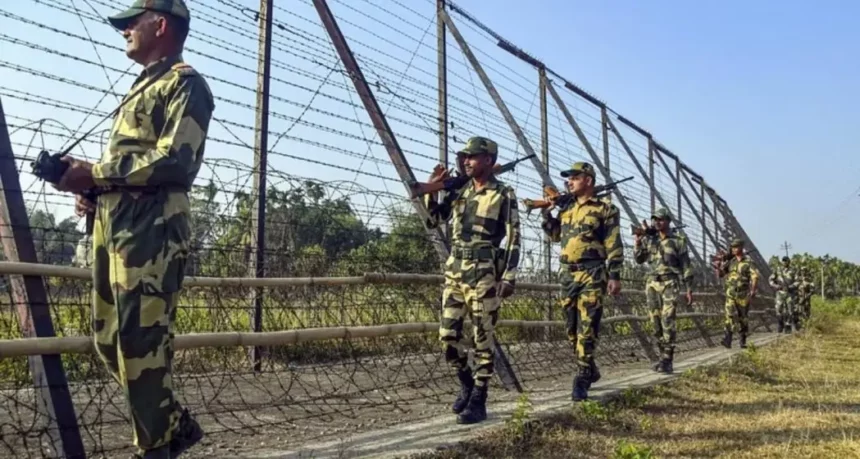
The Union Ministry of Home Affairs (MHA) has reported a significant rise in the number of Bangladeshi nationals arrested while attempting to cross into India illegally. In a statement presented in the Rajya Sabha on Tuesday, Union Minister Nityanand Rai disclosed that at least 2,601 Bangladesh citizens were apprehended along the Indo-Bangladesh border in the past year. The data, covering a span of 13 months from January 2024 to January 2025, revealed that the number of infiltrators nearly doubled following the political transition in Bangladesh in August 2024.
According to the figures shared by the Minister of State for Home Affairs, the number of Bangladeshi nationals caught trying to enter India illegally increased sharply after August 2024. Between August 2024 and January 2025, security forces arrested at least 1,584 infiltrators, compared to 879 in the preceding six months (February-July 2024), marking an 80.2% surge. This escalation coincided with the political turmoil in Bangladesh, which led to the departure of former Prime Minister Sheikh Hasina on August 5, 2024. The country has since been governed by a caretaker administration under Nobel laureate Muhammad Yunus.
The upheaval in Bangladesh has reportedly triggered a wave of illegal migration, with thousands of citizens attempting to cross into India fearing religious persecution and human rights violations. The matter was a key agenda item during the recent meeting between the border security chiefs of India and Bangladesh in New Delhi. India shares a 4,096.7 km-long border with Bangladesh, of which 864.482 km remains unfenced, posing a significant challenge to border security efforts.
To curb infiltration, the Indian government has ramped up surveillance and security along the border. Minister Rai highlighted several measures undertaken to strengthen border control, including the deployment of advanced surveillance equipment such as Hand-Held Thermal Imagers (HHTI), Night Vision Devices (NVD), Unmanned Aerial Vehicles (UAVs), CCTV/PTZ cameras, Infrared (IR) sensors, and the Comprehensive Integrated Border Management System (CIBMS) pilot project in Dhubri, Assam. Additionally, security personnel conduct continuous patrolling, maintain observation posts, and coordinate joint operations with the Border Guard Bangladesh (BGB) and local police forces.
Further steps to enhance border security include the installation of floodlights and solar-powered illumination along border areas, increased deployment of boats and floating Border Outposts (BOPs) in riverine regions, and reinforced intelligence networks to track human trafficking syndicates. The Indian government is also upgrading border fencing with additional barriers in sensitive areas to deter illegal crossings.
The rising trend in illegal infiltration from Bangladesh remains a serious concern, prompting the Indian government to intensify efforts to secure the border and mitigate potential security threats. The evolving political situation in Bangladesh continues to impact migration patterns, making border management a critical aspect of India’s internal security strategy.