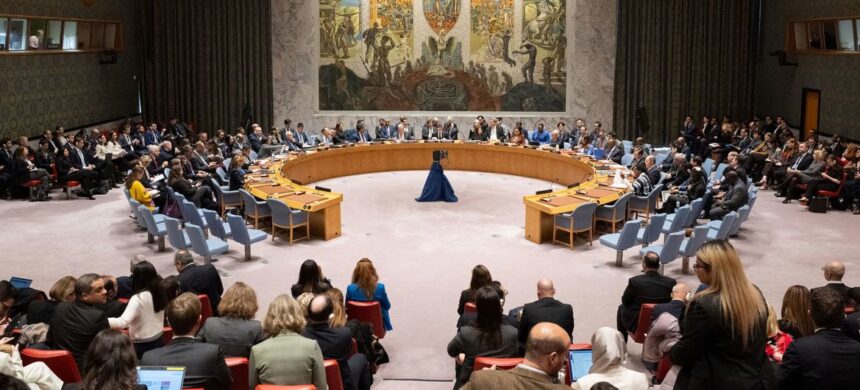
As the United Nations General Assembly approaches, the United States and the UN are intensively discussing a potential reconstruction plan for Gaza designed to prevent the assembly from descending into conflict over the symbolic recognition of Palestine. The proposed plan, which could receive UN endorsement, includes the establishment of a one-year technocratic government, the deployment of an international stabilization force, disarmament of Hamas, and a clear rejection of mass deportations of Palestinians. These discussions aim to create a framework that balances immediate humanitarian and governance needs in Gaza while managing the sensitive political dynamics surrounding Palestinian state recognition. With several countries, including the UK, France, Canada, Belgium, and Malta, likely to recognize Palestine at a conference on September 22, the need for a coordinated reconstruction and governance plan has become increasingly urgent. The plan also reflects broader regional concerns about stability, security, and the prevention of further escalation in Gaza and the West Bank, particularly in light of ongoing Israeli military operations and annexation plans.
Diplomatic Efforts to Stabilize Gaza and Coordinate International Responses
UK Foreign Secretary David Lammy has highlighted the urgency of converting any potential ceasefire into a lasting peace through monitoring mechanisms, the disarmament of Hamas, and a revised governance framework for Gaza. During a visit to Qatar, the United Arab Emirates, and Saudi Arabia, Lammy emphasized that the post-conflict governance of Gaza must focus on stability, humanitarian relief, and the reconstruction of civil infrastructure. The proposed technocratic government would operate for a year, bridging the gap between immediate post-conflict needs and the eventual restoration of Palestinian self-governance. The UN-backed plan, discussed in detail with US Secretary of State Marco Rubio, is designed to balance the competing priorities of international stakeholders, ensure Palestinian territorial integrity, and prevent unilateral actions by Israel or other actors that could further destabilize the region.
Israeli Prime Minister Benjamin Netanyahu has, however, maintained a hardline stance regarding Gaza, signaling a permanent Israeli presence in the territory and expressing intentions to annex parts of the West Bank. These positions complicate international efforts to coordinate a reconstruction plan that aligns with Palestinian interests and the broader vision of a two-state solution. Meanwhile, European and Gulf leaders have stressed that displacement of Palestinians is unacceptable and constitutes a “red line,” with Egypt in particular asserting that mass deportation cannot occur under any circumstances. The recognition of Palestine by the UK and other European countries is intended to signal support for Palestinian sovereignty, but it must be carefully managed to avoid inflaming tensions or creating the perception of rewarding Hamas.
The Palestinian Authority, led by President Mahmoud Abbas, is expected to play a central role in post-conflict governance. Abbas is scheduled to visit London before the UN conference, although the US has announced it will not issue visas to him and his delegation for the General Assembly, a decision that has drawn European protests. The Palestinian leadership has committed to staging elections within a year of a ceasefire, covering Gaza, the West Bank, and East Jerusalem. In the interim, a technocratic government would oversee administrative functions and ensure continuity of essential services, while working with international partners to stabilize the region and rebuild critical infrastructure.
Hamas Disarmament and Political Integration as Core Challenges
The disarmament of Hamas remains one of the most contentious issues for European and Gulf leaders. Arab and Muslim states, including Qatar, Saudi Arabia, and Egypt, have repeatedly emphasized that Hamas must relinquish control of Gaza and surrender its weapons to the Palestinian Authority as part of the peace process. The 22-member Arab League, the European Union, and other supporting countries have collectively stressed that governance, law enforcement, and security across Palestinian territories must fall exclusively under the Palestinian Authority, with appropriate international support. This approach seeks to ensure that any post-conflict governance framework is legitimate, transparent, and capable of providing security and public services to the population while maintaining international oversight and assistance.
Dr. Husam Zomlot, the Palestinian representative in the UK, has outlined that Hamas will remain part of the political, social, and national fabric of Palestine but will be integrated through reform and internal dialogue rather than complete elimination. The aim is to restructure Gaza’s governance without erasing the political presence of Hamas, ensuring that internal Palestinian cohesion is maintained while averting further military escalation. Zomlot emphasized the importance of one law, one government, and one police force across the territories to safeguard territorial integrity and unity. These measures are intended to counter Israeli plans for complete control over Gaza while enabling the Palestinian population to participate in elections that reflect their best interests.
The US and UN discussions also address concerns about Israel’s potential annexation of Gaza and the West Bank. European and Gulf leaders oppose policies that could endorse unilateral Israeli actions, viewing them as threats to Palestinian sovereignty and regional stability. The debate over Hamas candidates in future elections is another significant consideration, balancing the need for democratic representation with international expectations for security and governance reforms. The reconstruction plan, therefore, not only focuses on physical infrastructure and humanitarian aid but also addresses the broader political and security architecture necessary for long-term stability.
The international community is closely watching the unfolding dynamics as the September 22 conference approaches, recognizing that the recognition of Palestine by key nations carries both symbolic and practical implications. The proposed reconstruction plan represents a coordinated attempt to stabilize Gaza, disarm militant factions, and establish a governance framework that satisfies the political, security, and humanitarian imperatives of multiple stakeholders. While the US continues to play a pivotal role in these discussions, the alignment of European, Gulf, and UN perspectives is critical to preventing the UN General Assembly from being overshadowed by disputes over recognition, territorial control, and the legitimacy of Palestinian leadership.
In addition to governance and disarmament, the plan emphasizes reconstruction of essential services, restoration of civil institutions, and the protection of civilians. These measures aim to address the immediate needs of a population affected by extensive conflict while laying the groundwork for longer-term development and political stability. Coordination among the US, UN, and regional partners seeks to ensure that aid and resources are effectively utilized, that Palestinian institutions are strengthened, and that the process of normalization is guided by principles of accountability, transparency, and international oversight.
The ongoing negotiations also reflect lessons learned from previous conflicts in Gaza, where gaps in governance, insufficient oversight, and lack of international coordination exacerbated the humanitarian crisis. By instituting a technocratic government, stabilizing force, and disarmament protocols, the plan seeks to mitigate risks associated with political fragmentation, power vacuums, and renewed hostilities. The approach underscores the need for careful sequencing, balancing immediate reconstruction with longer-term political solutions and safeguarding Palestinian sovereignty.
As the UN General Assembly convenes, the reconstruction plan and associated diplomatic efforts are intended to create a coherent roadmap that addresses the multiple dimensions of the Gaza crisis. By integrating humanitarian, political, and security considerations, the plan seeks to prevent further escalation, ensure accountability, and provide a framework for sustainable governance. Coordination with Palestinian leadership, international partners, and regional stakeholders remains central to the success of these efforts, highlighting the complex interplay of diplomacy, policy, and operational planning required to stabilize Gaza and safeguard the rights of its population.
The discussions between the US and UN exemplify the delicate balancing act of contemporary international diplomacy, where recognition, reconstruction, and security must be carefully orchestrated to prevent renewed conflict while advancing broader goals of regional peace, human rights protection, and post-war recovery. By addressing both immediate and strategic priorities, the proposed Gaza reconstruction plan seeks to offer a viable path forward, reconciling the expectations of multiple actors and creating conditions conducive to sustainable peace and development.